
Inquiry Basket
 Loading ......
Mitochondrial fatty acid β-oxidation (FAO) is the main pathway of fatty acid degradation and is essential for maintaining energy homeostasis in the body. Here we describe in detail the main pathways involved in fatty acid degradation.
Fatty acid oxidation is a crucial metabolic pathway by which cells use fatty acids as a source of energy. It takes place in the mitochondria and involves a series of enzyme-catalyzed reactions that break down fatty acids into acetyl coenzyme A. These reactions ultimately generate energy through the tricarboxylic acid cycle and the respiratory chain. It provides a vital source of energy for maintaining cellular energy balance and physiological function. The following are the main pathways of fatty acid oxidation:
Endoplasmic reticulum transport of fatty acids: Acyl-CoA binds to the cholesterol acyl-CoA-binding protein and is transported through the endoplasmic reticulum to the outer mitochondrial membrane.
(1) Fatty acid acyl transfer: the fatty acid is catalyzed within the mitochondria by acyl transferase (acyl transferase), which transfers the acyl group to coenzyme A, forming acyl-coenzyme A and fatty acyl-coenzyme A.
(2) β-oxidation: acyl-coenzyme A is further catalyzed by acyl-CoA dehydrogenase (acyl-CoA dehydrogenase), which undergoes a dehydrogenation reaction to form the reaction product Δ2-enoyl-coenzyme A. Thereafter, successive enzyme-catalyzed reactions cleave Δ2-enoyl-coenzyme A into propionyl-coenzyme A and fatty acyl-coenzyme A.
(3) Oxidation and hydrolysis: Propionyl coenzyme A is further catalyzed by propionyl coenzyme A dehydrogenase and hydrolase (thiolase), which convert it to acetyl coenzyme A and glutaryl coenzyme A through oxidation and hydrolysis reactions.
(4) The tricarboxylic acid cycle (TCA cycle): Acetyl coenzyme A enters the tricarboxylic acid cycle where it is oxidized to carbon dioxide and the reductants NADH and FADH2 are produced. These reductants enter the respiratory chain and produce ATP in the mitochondria.
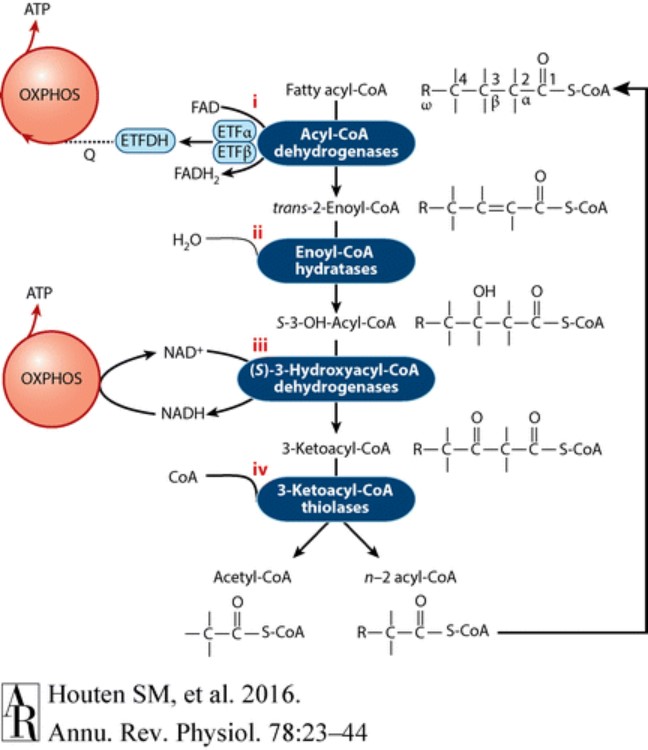 Fig 1. Fatty acid beta oxidation process.
(Houten SM, et al., 2016)
(1) Activation of fatty acids: The oxidation of fatty acids must first be activated, in the presence of ATP, CoA-SH, and Mg2+, by lipid acyl CoA synthase located in the endoplasmic reticulum and outer mitochondrial membrane, to produce lipid acyl CoA. The activated fatty acid is not only a high-energy compound but also has increased water solubility, improving metabolic activity.
(2) Transfer of lipid acyl-CoA: It is carried out in the cytosol, and the enzyme system catalyzing fatty acid oxidation exists in the mitochondrial matrix, so the activated lipid acyl-CoA must enter the mitochondria before oxidation. The mitochondrial inner membrane is lined with carnitine (carnitine I) and carnitine (carnitine II), both isoenzymes. The enzyme I, located on the outer side of the inner membrane, facilitates the conversion of lipid acyl-CoA into lipid acyl-carnitine, which can be transported to the outer side of the inner membrane with the help of translocases (or carriers) on the outer mitochondrial membrane, and then enzyme II catalyzes the release of carnitine from lipid acyl-carnitine, which is then converted into lipid acyl-CoA. Generally, activated fatty acids with less than 10 carbon atoms do not need to pass through this pathway. Instead, they are oxidized directly through the outer mitochondrial membrane.
(3) β-oxidation of fatty acid CoA: After entering the mitochondrial matrix, fatty acid CoA undergoes a four-step reaction of dehydrogenation, water addition, dehydrogenation, and sulfurization catalyzed by the β-oxidation enzyme system of fatty acid, and finally the fatty acyl group is broken to form a molecule of acetyl CoA and a molecule of fatty acid CoA with two fewer carbon atoms than the original one. The final β carbon is oxidized to an acyl group, hence the term β oxidation.
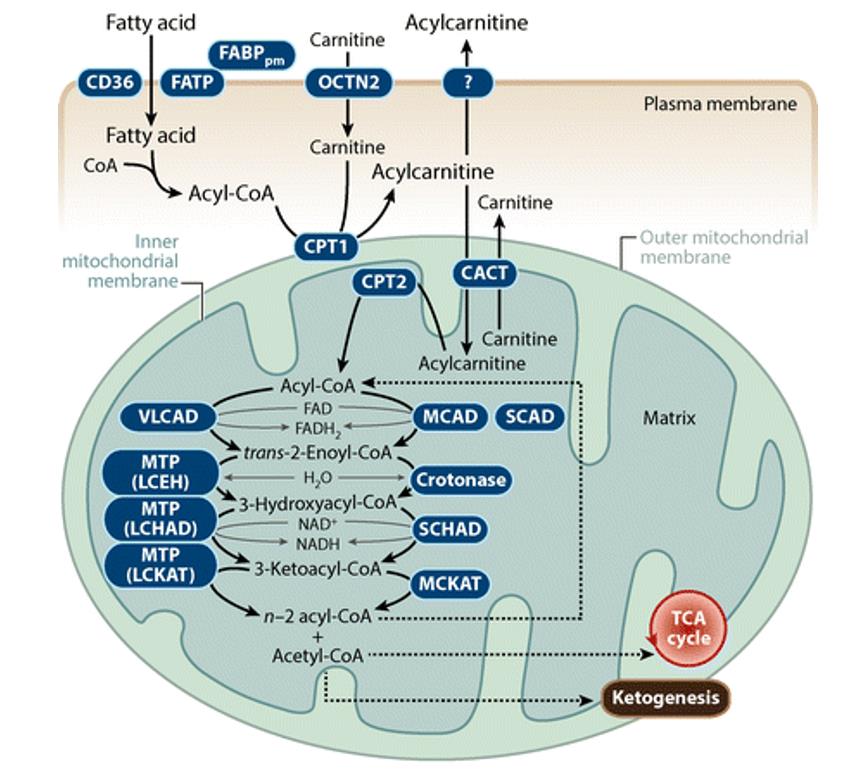 Fig 2. A schematic representation of mitochondrial fatty acid β-oxidation.
(Houten SM, et al., 2016)
Reference
Loading ......
