
Inquiry Basket
 Loading ......
Gabapentin is a synthetic amino acid with a structure similar to γ-aminobutyric acid (GABA). This is a medication with a white solid physical appearance that has a variety of brand names and is commercially available in different dosages in the form of capsules or tablets. Also known as 1-(aminomethyl)cyclohexaneacetic acid, it was primarily used in antiepileptic therapy before it was approved by the Food and Drug Administration in 2002 as a first-line drug for the treatment of postherpetic neuralgia (PHN). Some studies have found that the drug, in combination with traditional antiepileptic drugs, reduces the frequency of seizures and has unique advantages in the treatment of chronic pain, especially in neuropathic pain.
 Figure 1. Structure of GABA and gabapentin
(Source: Patel R, et al. 2016)
Gabapentin is not significantly metabolized in the body and its bioavailability is not proportional to the dose. When the dose is increased, the bioavailability decreases. The bioavailability of gabapentin was approximately 60%, 47%, 34%, 33%, and 27% at doses of 900, 1,200, 2,400, 3,600, and 4,800 mg of gabapentin given in 3 daily divided doses. Food has little effect on the rate and extent of gabapentin absorption. In the internal circulation, most gabapentin is not bound to plasma proteins.
Gabapentin in the body is eliminated from the systemic circulatory system mainly by renal excretion. It has a half-life of 5-7 h and does not change with dose or multiple administrations. The elimination rate constant, plasma clearance, and renal clearance of gabapentin are directly proportional to creatinine clearance. In elderly patients and those with renal impairment, gabapentin plasma clearance is decreased. In addition, hemodialysis removes gabapentin from plasma. Results of a drug trial in adult patients with renal insufficiency showed that subjects with renal insufficiency who received a single oral dose of gabapentin 400 mg had a mean half-life ranging from 6.5 h to 52 h, a renal clearance ranging from 10 to 90 mL/min, and a mean plasma clearance decreasing from approximately 190 mL/min to 20 mL/min. Therefore, gabapentin dosage needs to be adjusted in patients with renal impairment or those requiring hemodialysis.
An overall pharmacokinetic analysis in 253 pediatric patients aged 1 month to 13 years found that oral clearance was directly proportional to creatinine clearance. When normalized to kilograms of body weight, higher oral clearance values are observed in children younger than 5 years of age than in children older than 5 years of age, and the standard oral clearance observed in pediatric patients 5 years of age and older is consistent with the values observed in adults after administration of a single dose. Drug clearance in infants younger than 1 year is highly variable. The standardized oral volume of distribution per kilogram of body weight is constant throughout the age range. Pharmacokinetic data suggest that an effective daily dose in pediatric patients 3-4 years of age with epilepsy should be 40 mg/kg a day, which achieves mean plasma concentrations similar to those achieved by those patients older than 5 years of age receiving gabapentin at 30 mg/kg a day.
Despite its structural similarity to the neurotransmitter GABA, gabapentin does not interact with GABA receptors, is neither metabolically converted to GABA or GABA agonists, nor is it an inhibitor of GABA uptake or degradation. Radioligand binding assays revealed that gabapentin concentrations up to 100 μm had no affinity for many common receptor sites, such as glutamate receptors, NMDA receptors, dopamine D1 or D2 receptors, 5-hydroxytryptamine S1 or S2 receptors, and opioid receptors. Due to the opposing results obtained in several commonly used trials evaluating the effects of drugs on NMDA receptors, there is no uniform understanding of the effects of gabapentin on the receptors at this time. In vitro studies have revealed that gabapentin binding sites in rat brain are distributed in the neocortex and hippocampus, and its high-affinity binding protein has been shown to be an auxiliary subunit of voltage-activated calcium channels, with an associated function that has not yet been elucidated.
The investigators speculate that the primary mechanism of action of gabapentin may be to inhibit calcium inward flow by binding to voltage-gated calcium channel subunits, leading to attenuation of excitatory postsynaptic potentials. As an anticonvulsant drug, gabapentin reduces synaptic transmission by decreasing presynaptic voltage-gated Ca2+ channels. In addition, gabapentin reduces cytokinesis and neurotransmitter release from presynaptic terminals. On the other hand, another study reported that gabapentin reduces excitatory synapse formation by acting on the α2-δ1 subunit of calcium channels. In addition, the supplementary study noted that gabapentin has specific affinity for the α2-δ1 subunit, lower affinity for the α2-δ2 subunit, and no affinity for the α2-δ3 subunit.
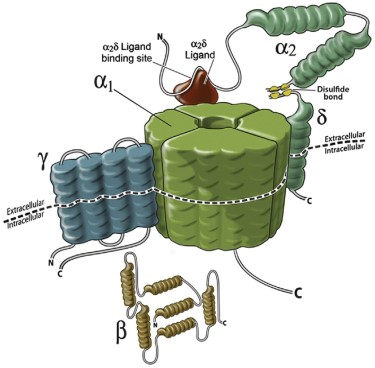 Figure 2. The voltage-gated calcium channel consists of four subunits
(Source: Chincholkar M. 2018)
Gabapentin has significant antiepileptic effects and can be combined with other antiepileptic drugs for combination therapy. Gabapentin is mainly used for the add-on treatment of drug-resistant epilepsy over the age of 12 and limited seizures that cannot tolerate other drugs. It is effective for automatisms and some secondary generalized seizures, and can reduce seizures by 50% in 25% of drug-resistant epileptic patients; it is also effective for tonic-clonic seizures, but ineffective for absence seizures; it is ineffective for photosensitive and muscular-clonic seizures; it can even exacerbate the seizures. Small doses of gabapentin have a sedative effect and may improve psychomotor function.
Gabapentin, with its unique advantages in the treatment of neuropathic pain, has emerged as a therapeutic agent for PHN, a complication of the herpes zoster virus infection, which is a long-term persistent pain left after herpes has been cured. General painkiller therapy is ineffective, and tricyclic antidepressants and sympathetic nerve blockers have limited effect. Some researchers combined gabapentin with ganglionic blocking agents and found that continuous administration of the drug significantly reduced pain analog scores in patients with PHN, effectively alleviated mood changes in patients, and significantly improved quality of life. Combining gabapentin with opioids for two weeks was effective in reducing PHN that could not be controlled by opioids in combination with other pain medications, and in reducing opioid dosage, but gabapentin alone still did not provide good pain control.
Gabapentin also performs well in the treatment of perioperative pain. Postoperative pain is injurious pain due to tissue damage with inflammatory pain, neuropathic pain and visceral pain. Currently, perioperative analgesia is mainly provided with a combination of opioids and nonsteroidal anti-inflammatory drugs (NSAIDs), which have significant side effects. Gabapentin, on the other hand, has good antinociceptive abnormalities and antinociceptive hypersensitivity, along with few side effects. The use of gabapentin for postoperative analgesia not only significantly reduces the dosage of analgesic drugs, enhances the analgesic effect, and reduces the pain score, but also has better clinical efficacy. A study found that with perioperative gabapentin, patients had a significant reduction in VAS and opioid dosage at 4h and 24h postoperatively. The combination of gabapentin and morphine is effective in relieving intractable cancer pain and can significantly reduce morphine requirements.
Alcohol abuse and alcohol dependence are two of the most common alcohol use disorders that develop over the course of chronic alcohol use as a result of a combination of genetic and environmental factors and have become serious social and medical problems in the world today. The current treatment of alcohol dependence is divided into an acute withdrawal period and a post-withdrawal maintenance period. During acute alcohol withdrawal, benzodiazepines (BDZs) are the clinically preferred therapeutic agents to prevent alcohol withdrawal, seizures, and delirium tremens. However, its mechanism of action is similar to that of addiction and carries a risk of abuse, as well as the risk of aggravating cognitive dysfunction, affecting liver function, and excessive sedation and respiratory depression. There are no specific drugs in the post-withdrawal maintenance period, and some of the Food and Drug Administration-approved drugs have a greater phenomenon of adverse effects.
Gabapentin reduces the severity of withdrawal reactions in patients during acute withdrawal from alcohol dependence. In a study of gabapentin for the treatment of severe withdrawal reactions involving 37 subjects, it was found that high doses of gabapentin (up to 3200 mg over 24 h) helped to reduce the severity of withdrawal symptoms. Considering the dangers of acute alcohol withdrawal, not too many clinical trials have applied gabapentin alone to prove its efficacy, and most of them have mostly used it as an adjunct to reduce the dosage of BDZ drugs. It is now widely accepted that gabapentin is used as a therapeutic agent for mild-to-moderate withdrawal reactions or as an adjunct for severe withdrawal reactions. In addition, gabapentin was first approved by the Food and Drug Administration for the treatment of seizures, and co-application of gabapentin may reduce the risk of secondary seizures in patients with acute alcohol withdrawal. During the maintenance phase of abstinence, gabapentin reduces the patient's craving for alcohol and has shown some improvement in mood and sleep. In a clinical trial, gabapentin significantly increased abstinence rates as well as the number of days of non-alcohol use, and significantly improved patients' mood and sleep problems. Of interest, the efficacy of the high-dose group (1800 mg) was better than that of the low-dose group (900 mg), and in terms of safety, no serious adverse effects were found.
Adverse reactions to oral gabapentin commonly include dizziness, somnolence, ataxia, and peripheral edema, diarrhea, constipation, gastrointestinal flatulence, nystagmus, and sensory abnormalities. Occasionally, visual disturbances, depression, and moody tendencies occur. These side effects are common in the early stages of drug use. They are tolerated by most people as long as the dose is increased slowly from a small dose. Children may occasionally be impatient and irritable, but this disappears when the drug is stopped. Symptoms of overdose are severe diarrhea, headache, drowsiness, apathy and even death. Gabapentin is used with caution in patients with seizures, diabetes mellitus, allergies, renal hypoplasia, the elderly, children, pregnancy, and lactating women.
Gabapentin was not originally marketed as a drug that would create a serious dependence or risk of abuse. However, people with a history of substance abuse may abuse any drug, especially those that can affect the dopaminergic reward system. Because of its central nervous system effects, gabapentin has been evaluated for its effectiveness in the treatment of drug abuse and withdrawal, and alcohol withdrawal and dependence. The use of gabapentin for off-label indications must be carefully evaluated for long-term safety and efficacy.
Several studies have reported the potential effects of discontinuing gabapentin, with patients beginning to experience withdrawal symptoms 12 hours to 7 days after discontinuation. The most common symptoms are confusion and disorientation; other symptoms include sweating, unspecified gastrointestinal symptoms, tremor, tachycardia, hypertension, and insomnia. Individual cases present with sedation, catatonia and seizures. Various withdrawal symptoms may occur after gabapentin is discontinued, either abruptly or gradually. Re-administration of the drug is effective in relieving withdrawal symptoms.
Table 1. Gabapentin withdrawal cases
| Age (years), Sex | Dosage (mg/d) of Gabapentin | Onset of Symptoms (days) | Symptoms |
| 67, F | 7200 | – | Tremors, sweating, excitation, pallor, exophthalmia |
| 33, M | 3600 | 3 | Confusion, diaphoresis, agitation, tachycardia, hyperreflexia, tremulousness |
| 53, F | 700 | 3 | Confusion, disorientation, agitation, nervousness |
| 41, M | 1200 | 0.5 | Insomnia, anxiety, diaphoresis, headache, palpitations |
| 81, F | 800 | 1 | Flu-like symptoms, hypertension, slurred speech, drooling, disorientation, weakness, insomnia |
| 76, F | 3600 | 4 | Akathisia, agitation, confusion |
(Source: Mersfelder TL, et al. 2016)
References
| Target | Cat. No. | Product Name | Expression System | Tag/Conjugate | Application | |
| Gabapentin | DAGB326 | Gabapentin [BSA] | N/A | BSA | ELISA, LFIA | Inquiry |
| DAG-WZ008 | Gabapentin [HRP] | HRP | IA | Inquiry | ||
| DAG-WZ009 | Gabapentin [OVA] | OVA | IA | Inquiry |
| Target | Cat. No. | Product Name | Host | Isotype | Application | |
| Gabapentin | CABT-RM214 | Mouse Anti-Gabapentin Monoclonal antibody, clone 43DF3 | Mouse | IgG1 | ELISA, LFIA | Inquiry |
Loading ......
