
Inquiry Basket
 Loading ......
The ELISA kit for cardiac lipid metabolism markers represents an advanced diagnostic tool aimed at accurately quantifying specific biomarkers involved in lipid metabolism and their impact on cardiovascular health. These kits utilize enzyme-linked immunosorbent assay (ELISA) technology to detect and measure key biomarkers at the lowest concentration, enabling researchers to investigate the complex relationships between lipid metabolism disorders, inflammation, and the development of cardiovascular disease. The accurate evaluation of these biomarkers provides valuable insights into the molecular mechanisms of atherosclerosis, myocardial dysfunction and other cardiac metabolic disorders, and supports basic research and clinical applications.
 Figure 1. Summary of cardiomyocyte fatty acid metabolism in healthy hearts. (Drosatos, Konstantinos.2016)
Cardiac inflammation caused by lipid metabolism disorder is a key pathway for the development and progression of atherosclerosis and other cardiovascular diseases. When lipids are modified through oxidative processes, they trigger inflammatory reactions, thereby driving vascular pathology. In particular, oxidized low density lipoprotein (oxLDL) has been identified as a key factor in this process, which directly leads to endothelial dysfunction, foam cell formation and plaque formation. OxLDL is recognized by scavenger receptors on macrophages, leading to the formation of lipid laden foam cells, which constitutes early atherosclerosis. Unlike natural LDL, oxLDL has pro-inflammatory properties that stimulate the release of cytokines and adhesion molecules, thereby amplifying the inflammatory cascade. This process forms a vicious cycle, in which inflammation promotes further lipid modification, thereby triggering additional inflammatory responses.
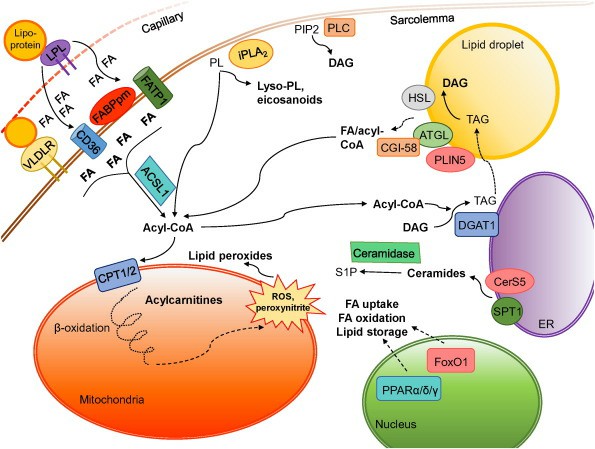 Figure 2. Lipid metabolism and signaling in cardiac lipotoxicity. (Kenneth D'Souza,et al. 2016)
The ELISA kit for cardiac lipid metabolism markers serves multiple applications in basic research, drug development, and clinical diagnosis
Basic Research Applications
These kits enable researchers to explore the fundamental mechanisms linking lipid metabolism with cardiac pathophysiology. Researchers can quantify the changes of oxLDL, Salusin alpha and other biomarkers.
Preclinical Drug Development
In drug research, these tests provide valuable tools for evaluating the efficacy of research compounds targeting lipid metabolism and cardiovascular inflammation.
Clinical Research and Risk Stratification
These kits support translational studies to examine the prognostic value of lipid metabolism biomarkers. Epidemiological studies can establish an association between biomarker levels and cardiovascular outcomes.
Diagnostic Applications
The quantification of specific lipid metabolism markers can complement traditional lipid analysis, especially in cases where traditional risk factors cannot fully explain disease susceptibility.
Excellent sensitivity and specificity
Modern ELISA kits demonstrate outstanding detection capabilities, with sensitivity typically reaching picograms per milliliter level. This allows for accurate quantification of low abundance biomarkers that cannot be detected by traditional methods.
High throughput
These detection microplate formats are capable of processing multiple samples simultaneously, significantly improving efficiency compared to standalone measurement techniques.
Robust performance characteristics
These kits typically have excellent reproducibility, low intra - and inter batch coefficients of variation, ensuring reliable results across experiments and over time.
Case Study 1: Employing the Human Salusin-alpha ELISA Kit for Quantitative Serum Analysis Reveals Its Role as a Protective Biomarker in Early Atherosclerosis
Background and reasons: Salusin alpha is a bioactive peptide with anti atherosclerotic properties. It mainly inhibits the formation of foam cells by downregulating acyl coa: cholesterol acyltransferase-1 (ACAT-1) in macrophages derived foam cells. Despite its potential significance in cardiovascular lipid metabolism, reliable quantitative methods are still limited. The human Salusin α ELISA kit is used to solve this methodological gap and study the relationship between the level of Salusin a and the development of early atherosclerosis.
Results: This study used a competitive ELISA method, when applied to clinical samples, this test showed that, compared with the healthy control group, the recorded subclinical atherosclerosis subjects had significantly lower levels of circulating Salusin α. After adjusting the traditional cardiovascular risk factors, this negative correlation still exists, which indicates that Salusin alpha may be an independent atherosclerotic development protective factor.

Case Study 2: Utilizing the Human Oxidized LDL ELISA Kit (CML-LDL) for Specific Detection of Carbamethyl-Lysine Modified LDL Correlates Circulating Levels with Coronary Artery Disease Severity
Background and reasons: Oxidized low density lipoprotein is a kind of strictly modified lipid particles. Compared with natural lipid particles, its atherogenic properties are enhanced. OxLDL drives atherosclerosis through a variety of mechanisms, including enhancing the uptake of macrophage scavenger receptors, promoting inflammatory response and inducing endothelial dysfunction. The CML-LDL ELISA kit is designed to specifically target and quantify arginine modifications on LDL particles, providing a specific method for evaluating this pathological biomarker.
Experimental methods and results: This test adopts the principle of double antibody sandwich ELISA, where specific antibodies target specific epitopes on oxidized LDL. Compared with non-specific oxidation measurement techniques, this method has significant advantages as it focuses on modifying structural definitions with established pathological significance. This kit adopts copper oxidized LDL standard, achieving accurate quantification and comparability across experiments.


We collect and process clinical samples (serum/plasma) to eliminate hemolysis/hyperlipidemia and ensure compliance with pre analytical quality standards prior to testing.

We initialize the ELISA kit by preparing calibration samples constructed from standard curves and running low/high concentration quality control materials.

We add the processed sample to a pre coated microplate, incubate to form a sandwich complex, and perform sequential washing to remove non-specific binding.

We measured absorbance using a microplate reader, and calculated tumor marker concentrations using a validated regression model.

We cross validate the results based on the quality control scope, address potential interferences (such as hook effects), and generate clinically actionable reports.
Dysregulation of cardiac lipid metabolism is a fundamental driving factor for cardiovascular diseases (CVDs), and understanding its mechanisms requires reliable tools to quantify key biomarkers of lipid balance and inflammation. The Creative Diagnostics heart lipid metabolism biomarker ELISA kit not only simplifies the technical challenges of lipid research, but also advances the broader goal of improving CVD prevention, diagnosis, and treatment. For researchers seeking new insights into cardiac metabolic health, these kits represent an economically efficient, user-friendly, and scientifically rigorous solution.
A: Although traditional lipid analysis measures the circulating concentration of lipids (LDL, HDL, triglycerides), cardiac lipid metabolism markers provide information about the functional modifications and biological activities of lipid species. Oxidative markers such as LDL and Salusin alpha reflect pathological processes such as oxidative modifications and regulatory responses, which more directly drive the development of cardiovascular disease.
A: The selection of reagent kits should be guided by several factors, including specific research questions, target biomarkers, required sensitivity, sample type, and species reactivity. Consider whether your focus is on atherogenic factors (such as OxLDL) or protective factors (such as Salusin alpha), and ensure that the kit has been validated for your specific sample matrix and has provided sufficient sensitivity for your expected concentration range.
A: Proper sample handling is crucial for reliable results. Most reagent kits require the use of appropriate anticoagulants to collect serum or plasma samples. Samples should usually be divided equally and stored at -80 ° C to prevent freeze-thaw cycles that may degrade biomarkers. For the measurement of oxidized LDL, special attention should be paid to minimizing ex vivo oxidation during sample collection and processing.
A: Although each ELISA kit measures one analyte, researchers can perform multiple tests in parallel to generate a comprehensive biomarker profile. Some manufacturers offer coordination panels with matching protocols and calibrators to facilitate multi labeling methods. The combination of lipid metabolism markers with inflammatory markers and traditional risk factors typically provides the most comprehensive cardiovascular risk assessment.
References
Loading ......
