
Inquiry Basket
 Loading ......
BK Virus (BKV) stays in latent form within most people who carry it as a member of the human polyomavirus family. The virus becomes active in immunocompromised patients especially organ or hematopoietic stem cell transplant recipients triggering multiple clinical problems. BK virus-associated diseases include BKVAN, HC, urinary tract stenosis, and additional systemic manifestations that occur less frequently. Persistent infection with BK virus is believed to lead to the formation of urinary tract tumors.
The administration of broad immunosuppressive treatments leads to a substantial increase in BKV reactivation incidents among transplanted individuals. The reactivation of BKV results in BKVAN which creates the highest incidence of graft loss in kidney transplant patients while hemorrhagic cystitis stands as the most common issue in patients who received hematopoietic stem cell transplants. Disease monitoring and intervention development requires an understanding of BKV infection processes and its clinical symptoms.
Children typically acquire their first BKV infection through respiratory or oral transmission. The first infection stage shows no symptoms before the virus moves into latency and mainly stays inside renal tubular epithelial cells and urinary system epithelial cells. The normal immune system keeps viral replication at bay and prevents major disease manifestation.
BK virus reactivates in immunocompromised hosts such as organ transplant recipients and chemotherapy patients, which leads to urine-based viral shedding followed by blood viral dissemination and finally renal or bladder epithelial infections that cause organ damage. The early viral replication proteins like T-Ag disrupt normal cell cycle control which leads to unending cell division of infected cells that may result in tumor-like features.
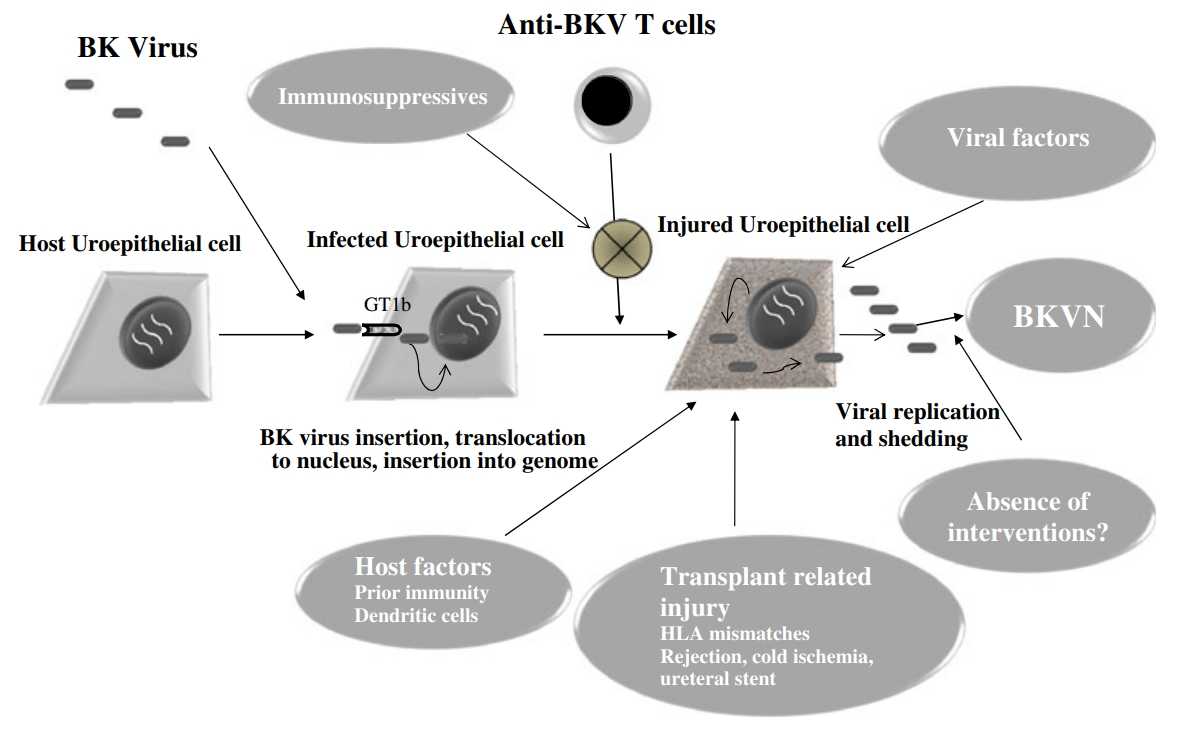 Figure 1. Pathogenesis of BK virus nephropathy: a complex interplay of host, organism, transplant, and immunosuppression factors (Source: Dharnidharka VR, et al. 2011)
1. BK Virus-Associated Nephropathy (BKVAN)
BKVAN stands as the gravest clinical consequence of BKV infection which most commonly affects patients who have received kidney transplants. The renal tubular cells in transplanted kidneys undergo active viral replication which leads to epithelial cell damage and triggers both inflammation and fibrosis in the surrounding interstitial tissue. Patients in a clinical setting usually present with non-specific symptoms that manifest as increased serum creatinine levels or reduced kidney function in the transplanted organ. A biopsy is often required for diagnosis. The absence of timely medical intervention poses a risk of losing half of transplanted kidneys.
2. Hemorrhagic Cystitis (HC)
Most patients who undergo hematopoietic stem cell transplantation develop HC within two months which presents with gross hematuria along with urinary frequency dysuria and suprapubic pain. Blood clots can cause urinary tract obstructions which eventually result in severe renal dysfunction. The grading scale for HC severity ranges from I to IV and severe cases may need bladder irrigation or surgical procedures.
3. Ureteral Stenosis
Kidney transplant recipients frequently experience ureteral stenosis from chronic inflammation and fibrosis triggered by BKV. Renal function decline happens without pain and requires diagnostic imaging and functional tests for confirmation.
4. Other Rare Manifestations
BK virus can disseminate to the lungs, eyes, liver and central nervous system in patients with extreme immunosuppression and cause interstitial pneumonia, retinitis or meningoencephalitis. These manifestations remain uncommon during clinical practice.
Recent scientific studies indicate that BKV could contribute to the formation of urinary tract tumors specifically in the bladder and renal pelvis areas. T-Ag an early protein plays a role in tumorigenesis through its ability to block tumor suppressor proteins p53 and Rb which leads to unchecked cellular growth. Studies with animal models demonstrate T-Ag's role in tumor generation and researchers have found BKV DNA or its antigens present in some human urinary tract cancer tissues. The precise causal relationship between these phenomena has not been established and demands additional research.
Managing BK virus infection risks in patients who have received transplants.
The reactivation of BK virus poses a significant threat to patients who receive kidney and hematopoietic stem cell transplants. Risk factors include:
Following kidney transplant surgery 30-50% of recipients show BK virus-positive urine within their first year and one-third of these cases develop viremia while 5-10% develop BKVAN. BKVAN typically reaches its highest incidence rate within 6 to 12 months following a transplant. BK virus-associated nephropathy represents a leading factor in kidney transplant rejection which makes consistent monitoring of viral load and timely detection of BK virus reactivation essential. Medical management frequently requires dose modifications of immunosuppressive medications to manage viral replication while maintaining graft acceptance. When viral replication remains uncontrollable it becomes essential to alter immunosuppressive therapy or introduce antiviral medications.
Hematopoietic Stem Cell Transplant recipients experience hemorrhagic cystitis incidence rates between 10 percent and 30 percent. Patients undergoing Hematopoietic Stem Cell Transplant show increased HC risk due to pre-transplant radiation therapy and immunosuppressive drug use combined with viral reactivation. Severe HC greatly reduces quality of life while also extending hospital stays and raising the risk of infections.
Real-time quantitative PCR (qPCR) remains the standard method for scientists to measure viral nucleic acid levels in plasma or urine when researching BKV activation or in infection model evaluations. ELISA methods that use antigen-antibody interactions serve as important tools in virology research by enabling researchers to measure antibody levels and immune response kinetics as well as screen potential therapeutic targets.
Our high-sensitivity ELISA kits for BKV research facilitate studies of infection mechanisms and aid vaccine development along with antiviral drug evaluation.
Anti-polyomavirus BK (BKV) IgG ELISA Kit (DEIASL161)
Size
96T
Species Reactivity
Human
Application
Qualitative and semiquantitative
Detection Sample
serum and plasma
Can't find the proper products? Simply Contact Us or Submit an Online Inquiryto receive our dedicated support.
References
| Target | Cat. No. | Product Name | Size | Species | Application | Detection Sample | |
| BKV | DEIASL161 | Anti-polyomavirus BK (BKV) IgG ELISA Kit | 96T | Semi-quantitative | serum and plasma | Inquiry |
| Target | Cat. No. | Product Name | Host | Isotype | Application | |
| BKV VP1 | CABT-NS1131 | Rabbit Anti-BKV VP1 Monoclonal Antibody, clone NEG447A | Rabbit | IgG | ELISA | Inquiry |
| CABT-NS1132 | Human Anti-BKV VP1 Monoclonal Antibody, clone NEG447A | Human | IgG1 | ELISA | Inquiry | |
| CABT-CS613 | Mouse Anti-BKV VP1 Monoclonal antibody, clone 4C3 | Mouse | IgG1 Kappa | WB, IHC, ELISA | Inquiry | |
| Polyomavirus early antigen | DMABT-Z60972 | Anti-Polyomavirus Early Antigen Monoclonal antibody, Clone RaE | Rat | IgG2b | WB, IP, ICC, IF | Inquiry |
| Polyomavirus Large T antigen | DMABT-Z59919 | Anti-Polyomavirus Large T antigen Monoclonal antibody, Clone RaLV | Rat | IgG2b | WB, IP, ICC, IF | Inquiry |
| Polyomavirus Medium T | DMABT-Z60955 | Anti-Polyomavirus Medium T Monoclonal antibody, Clone RaOV | Rat | IgG2b | IP, ICC, IF, WB | Inquiry |
| Polyomavirus PyMT | DMAB7134 | Anti-Polyomavirus PyMT Monoclonal antibody, Clone Hmv-Hmv | Mouse | IgG1 | IF, WB, IP | Inquiry |
| Target | Cat. No. | Product Name | Expression System | Tag/Conjugate | Application | |
| Polyomavirus Major Capsid VP1 | DAG-P2867 | Polyomavirus Major Capsid VP1 (full length) | S. cerevisiae | KLH | ELISA, WB, SDS-PAGE | Inquiry |
| DAG-P2869 | Polyomavirus Major Capsid VP1 (full length) | S. cerevisiae | KLH | ELISA, WB, SDS-PAGE | Inquiry |
Loading ......
