

Inquiry Basket
 Loading ......
Creatinine results from muscle metabolism yet functions in multiple unexpected ways throughout human physiology aside from its basic role as a waste product marker. Despite creatinine's established use as a renal function marker its complete biological impact and health implications are widely underestimated. The article explores the detailed life cycle of creatinine and its physiological functions while examining its vital connection to human diseases to provide insights that connect laboratory research with practical health results.
The primary origin of creatinine comes from the degradation of phosphocreatine which stores energy in skeletal muscle tissue. 80% of endogenous creatinine production occurs through this process while the remaining amount results from meat intake. Once formed, creatinine undergoes a two-step metabolic pathway: Creatinase transforms creatinine into creatine and then metabolizes it into N-acetylcysteine and methylglycine. During excretion, kidneys become the primary organs responsible for filtering over 90% of circulating creatinine through the glomeruli while exhibiting minimal tubular secretion. The effective clearance mechanism maintains consistent serum creatinine levels in healthy persons which renders it the preferred biomarker for renal function evaluation.
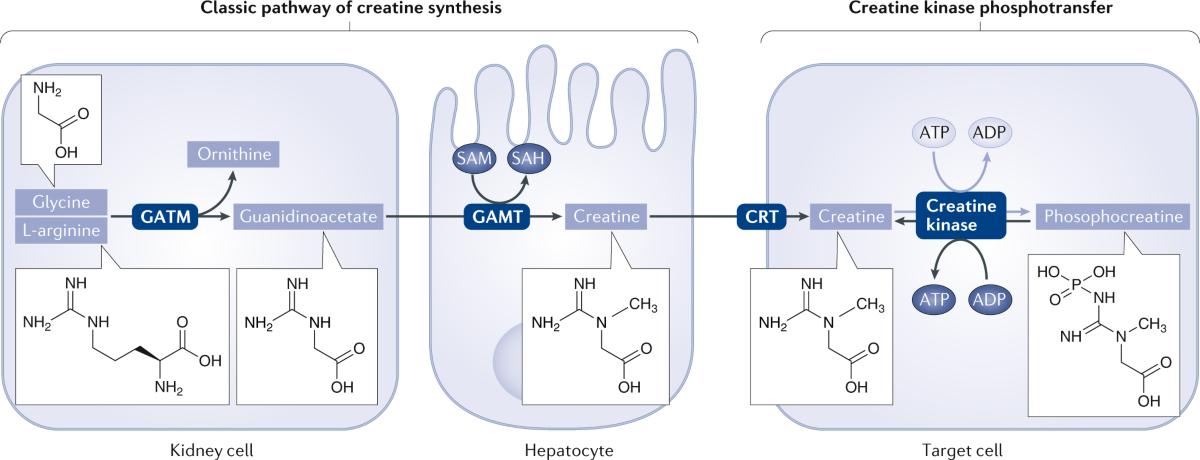 Figure 1. Pathway of endogenous creatine synthesis.(Sources: Kazak L, et al. 2020)
Creatinine proves to be a significant factor in systemic homeostasis despite its classification as a metabolic waste product. Its most evident role lies in waste clearance: Creatinine binds to toxins and nitrogenous compounds which helps in detoxification and stops harmful substances from building up. It functions as a mild diuretic by facilitating sodium and water excretion which moderates fluid balance while playing an essential role in preserving blood pressure and tissue hydration.
The function of creatinine in acid-base regulation remains underappreciated. The oxidation process of creatinine produces carbon dioxide that the body eliminates through respiration to buffer blood pH levels indirectly. The dual excretory function through both kidneys and lungs demonstrates its capability to maintain internal stability.
The primary function of medical significance for creatinine involves its role in energy metabolism. Creatinine functions as an immediate energy store by facilitating ATP regeneration during intense muscle activity. The reason athletes and people with substantial muscle mass display slightly increased creatinine levels is a natural physiological adaptation instead of an abnormal health indication.
Creatinine demonstrates its true importance through its ability to diagnose medical conditions. An increase in serum creatinine levels serves as an important warning signal for kidney dysfunction. Glomerulonephritis and diabetic nephropathy along with hypertensive kidney disease interfere with glomerular filtration which leads to creatinine build-up. Many non-renal diseases like congestive heart failure and myeloma can increase creatinine levels which proves its function as a multisystem indicator.
Medical professionals generally overlook cases of hypocreatininemia in clinical evaluations. The presence of reduced levels of creatinine for extended periods suggests disorders that cause muscle wasting such as advanced cancer or malnutrition and indicates liver function impairment since the liver produces creatine precursors. A surprising effect of severe kidney disease is that it can decrease creatinine production due to muscle atrophy—a case which illustrates the complexity of making sense of "low" creatinine measurements.
For healthcare providers, creatinine levels serve as both compass and map. A rising trend in chronic kidney disease patients might necessitate dialysis planning, while abrupt spikes could indicate acute injury from nephrotoxins. In cardiology, creatinine clearance calculations guide diuretic dosing in heart failure management. Meanwhile, persistently low levels in elderly patients may prompt investigations for sarcopenia or occult malignancies.
Emerging research further expands creatinine's horizons. Studies suggest that urinary creatinine ratios (e.g., protein-to-creatinine ratio) enhance diagnostic accuracy for preeclampsia and lupus nephritis. In critical care, creatinine kinetics help predict outcomes in sepsis-associated AKI. Even in oncology, baseline creatinine levels influence chemotherapy dosing and nephrotoxicity monitoring.
While indispensable, creatinine has blind spots. Its dependence on muscle mass complicates interpretations in extremes of age or body habitus. A bedridden elderly patient with atrophied muscles may have "normal" creatinine despite advanced CKD—a pitfall mitigated by combining estimates like eGFR with cystatin C. Similarly, vegetarians or malnourished individuals might exhibit lower baselines, requiring personalized reference ranges.
This is where next-generation biomarkers (e.g., urinary TIMP-2/IGFBP7) and imaging techniques complement creatinine's narrative. Yet, none have dethroned this century-old marker due to its cost-effectiveness and longitudinal interpretability.
From its humble origins as a metabolic end-product to its current status as a diagnostic linchpin, creatinine embodies the interplay between physiology and clinical medicine. Its biological roles—ranging from pH regulation to energy metabolism—reveal an evolutionary optimization where even "waste" molecules acquire multifaceted functions. For patients, understanding creatinine transcends numerical lab results; it represents a story of muscle vitality, renal resilience, and systemic balance. As precision medicine advances, creatinine's tale continues to evolve, reminding us that in biology, no molecule is merely a bystander—it's a narrator of health and disease.
For individuals, regular creatinine monitoring during routine checkups serves as a window into kidney health and metabolic status. Managing dietary protein levels along with proper hydration and avoiding substances harmful to kidneys like NSAIDs helps maintain healthy creatinine dynamics. An understanding of creatinine's biological functions enables clinicians and patients to synchronize preventive measures with precise medical treatments.
Creatinine functions as more than just a waste product in the body.Creatinine removes nitrogenous waste produced by muscle metabolism through kidney excretion but also plays a key role in maintaining systemic homeostasis.Creatinine plays a role in fluid balance regulation by promoting diuresis to eliminate surplus sodium and water which helps prevent edema and hypertension.The oxidation of creatinine produces carbon dioxide which assists in pH buffering by respiratory elimination.Research indicates creatinine functions as an energy reserve during intense muscle activity by transforming creatine precursors into ATP.The consistent serum concentration of creatinine makes it a key biomarker for evaluating renal health because any deviations can indicate conditions ranging from kidney dysfunction to metabolic diseases.
The increase of serum creatinine levels mirrors the degradation of glomerular filtration rate which serves as the essential waste elimination function of the kidneys.Under diabetic nephropathy or glomerulonephritis conditions which damage nephrons the kidneys lose their ability to excrete creatinine properly resulting in elevated blood creatinine levels.However, the correlation isn't linear: The limitations of creatinine as an early disease detection tool become evident because its levels remain stable until renal function declines by approximately 50%.Non-renal factors also matter: Creatinine levels can temporarily increase when someone experiences severe dehydration or muscle breakdown through rhabdomyolysis or follows high-protein diets.Persistent elevation of certain markers occurs alongside conditions such as hypertension or cardiovascular disease which increase the stress on kidneys.To determine the exact cause using differential diagnosis one must combine creatinine testing with urine albumin evaluation or imaging studies as well as new biomarkers like cystatin C.
Yes, but with nuances. Cooked meat consumption particularly red meat leads to a temporary 10–30% rise in serum creatinine which can resemble early kidney dysfunction.Long-term protein deficits, which appear frequently in vegan diets and cases of malnutrition, reduce baseline creatinine levels that can hide underlying muscle atrophy. Key considerations include:
Creatine supplements: Athletes widely use these supplements because they increase phosphocreatine levels which indirectly leads to higher creatinine.
Hydration status: Standardized fasting tests become essential because dehydration increases creatinine concentration and overhydration decreases it.
Cooking methods: When meat undergoes high-temperature grilling or frying it speeds up the transformation of creatine into creatinine.
CKD patients should maintain a protein intake between 0.6–0.8 g/kg/day to achieve both nutritional adequacy and renal protection.
The widespread use of creatinine in diagnostics is due to its stable nature although the clinical situation should be considered.
BUN (Blood Urea Nitrogen): BUN serves as a sensitive indicator for immediate physiological changes such as dehydration and GI bleeding but does not accurately reflect renal function.A rising BUN: When the BUN:creatinine ratio rises above 20:1 it commonly indicates prerenal conditions such as hypovolemia.
Cystatin C: Cystatin C stands out as a new biomarker because it does not depend on muscle mass and helps diagnose early CKD better while also working effectively for patients at the extremes of age.Limited availability together with high costs prevent widespread cystatin C application.
eGFR (estimated GFR): The CKD-EPI formula pairs creatinine with demographic factors to estimate renal function yet loses precision when used for pregnant or obese patients.
Despite its limitations creatinine continues to be the primary diagnostic test with cystatin C and iohexol clearance used to clarify uncertain cases.
Sustainable management focuses on preserving renal reserve:
Hydration: Patients with advanced CKD should drink 2–3 liters of water daily to prevent prerenal azotemia yet avoid conditions of fluid overload.
Dietary tweaks: Lowering intake of processed meats alongside potassium-rich foods (for those with hyperkalemia) and NSAIDs (which cause nephrotoxicity) helps reduce kidney stress.Diets high in antioxidants from berries and leafy greens help fight oxidative stress that affects diabetic nephropathy.
Exercise moderation: High-intensity exercise induces muscle breakdown which causes a temporary rise in creatinine levels.CKD patients find low-impact activities such as swimming and yoga to be safer forms of exercise.
Blood pressure control: ACE inhibitors and ARBs lower intraglomerular pressure which helps to slow the progression of chronic kidney disease.
Avoid nephrotoxins: At-risk populations should use contrast dyes, aminoglycosides and heavy metals with extreme caution.
Medical treatment of primary conditions (such as pyelonephritis with antibiotics or urinary obstruction relief) stands as the essential approach for acute elevations.
As researchers uncover creatinine's multifaceted roles beyond waste metabolism—from ATP regeneration to pH modulation—Creative Diagnostics provides the advanced tools to decode its biological complexity. Our specialized portfolio, including high-purity creatinine analogs, metabolomic assay kits, and antibodies targeting creatinase pathways, supports cutting-edge studies on muscle-energy dynamics, renal filtration mechanisms, and systemic homeostasis. With rigorously validated reagents and customizable platforms, we enable precise exploration of creatinine's molecular cross-talk in metabolic disorders or aging. Visit our product listings to accelerate your next discovery in biochemical physiology.
References
| Target | Cat. No. | Product Name | Host | Application | |
| Creatinine | DMAB27374 | Anti-Creatinine Monoclonal antibody, clone NBC20353 | Sheep | ELISA, WB, Dot, IHC, IA | Inquiry |
| Target | Cat. No. | Product Name | Type | Host | Conjugate | Application | |
| Creatinine | DAG-WT2531 | Creatinine control | Synthetic | N/A | Unconjugated | Calibration, Control | Inquiry |
| Creatinine | DAGA-369 | Creatinine Standard (98%) | N/A | N/A | ELISA | Inquiry | |
| Creatinine | DAG608S | Creatinine [BSA] | Synthetic | N/A | BSA | ELISA, LFIA | Inquiry |
| Creatinine | DAG1075 | Creatinine(N) [HRP] | Synthetic | N/A | HRP | N/A | Inquiry |
| Target | Cat. No. | Product Name | Size | Species Reactivity | Application | |
| Creatinine | DEIABL-M4 | Cr(Creatinine) Assay Kit(Colorimetric) | 96T | Universal | Quantitative | Inquiry |
| Creatinine | DEIA-XYL4 | Creatinine ELISA Kit | 96T | Human, Research Animal | Quantitative | Inquiry |
Loading ......
