
Inquiry Basket
 Loading ......
Snakebite envenomation is considered a neglected tropical disease, affecting tens of thousands of people each year. Currently, the recommended treatment for snakebite is the use of antivenoms, or serum therapy, by neutralizing the toxins of the venom used in its production. Snake venom is an extremely complex mixture composed mainly of proteins (±90–95%), in addition to peptides, carbohydrates, segments derived from nucleic acids, metal ions, biogenic amines, lipids, and free amino acids, which have different biological activities. Effective antivenoms are expected to be able to neutralize the major toxins in a venom.
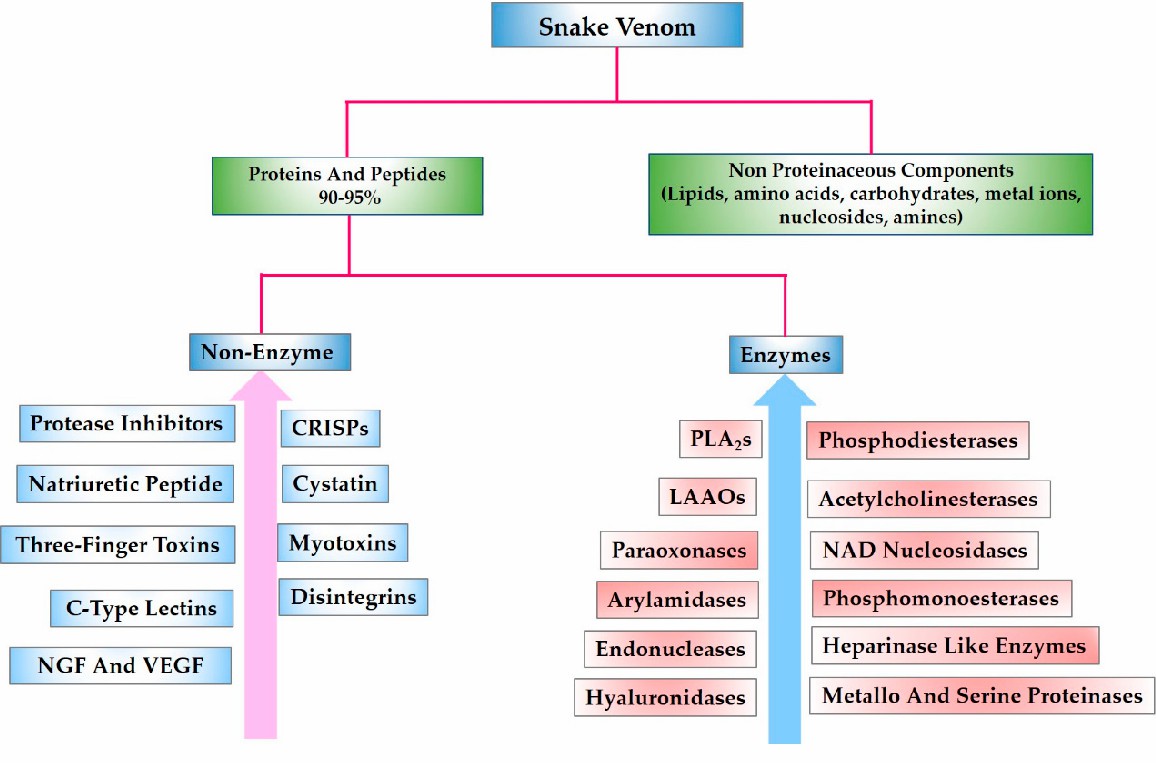 Fig. 1 Snake venom composition
Generally, viperid venoms are cytotoxic, hemotoxic, and occasionally myotoxic, due to the snake venom metalloproteinases (SVMPs), which weaken the walls of capillaries and blood vessels, and cause hemorrhage. SVMPs and phospholipases A2 (PLA2) can also cause tissue damage at the bite site, leading to muscle weakening and tissue necrosis. Elapid venoms (and small part of viperid venoms), on the other hand, contain neurotoxins (primarily cause systemic neurotoxicity), which block neuromuscular signaling. These toxins can eventually block signaling to the lung muscles, causing respiratory paralysis and death.
In the management of snakebite, the most important clinical decision is what and what dose of antivenom to give. The specificity and dose of the antivenom are based on an accurate diagnosis of the snake species. This leads to the application of immunologically based assays such as ELISA to detect and quantify specific venom to confirm snake identification and to guide the dosage of antivenom to give. In addition, the measurement of free venom of the patient after therapy to determine if sufficient antivenom has been given. Immunoassays can also be used for the evaluation of the cross-reactivity of antivenoms.
< Loading ......
