
Inquiry Basket
 Loading ......
Chimeric antigen receptor (CAR) T-cell therapy has been considered as a major scientific breakthrough in cancer immunotherapy. CAR-T cell therapy works by using re-engineered cell surface receptor. So far two clinically approved CAR-T–cell therapies (Kymriah® and Yescarta®) have significant clinical efficacy in treating CD19-positive B cell cancers. Various research to design other novel CAR constructs to increase the range of targeted cancers are also growing. Thus, reagents that detect CAR expression on the T cells surface are critical for the validation and optimization of CAT-T therapy.
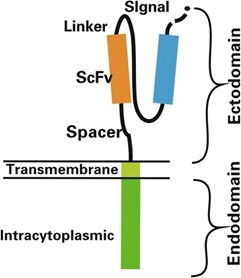 Fig. 1 Structure of chimeric antigen receptor (CAR).
(Zhang C.; et al. Biomark Res. 2017)
The structure of CAR mainly consists of three parts: ectodomain, transmembrane domain, and endodomain. Among them, the antigen-binding domain of a CAR usually consists of a single-chain variable fragment (scFv), composed by linking the variable light (VL) and variable heavy (VH) regions by a short linker. Currently, the majority of linkers used in CAR T cells encompass some variation of a polypeptide based on glycine (Gly) and serine (Ser) repeats. For example, the (Gly4Ser)3–linker consists of three repeats of the pentapeptide Gly–Gly–Gly–Gly–Ser. The use of these residues is intended to confer flexibility and minimize the risk for interference of the linker with the proper folding and function of the connected protein domains.
The presence and quantity of the CAR protein on the cell surface can be assayed via fluorescent CAR-staining agents and flow cytometry. Many reagents exist for CAR detection with different sensitivity and specificity. Table 1 summarizes their general properties.
Conventional anti-IgG antibodies and Protein L have low prices, but polyclonal reagents have significant batch to batch differences. Antigen-Fc is more CAR-specific than polyclonal anti-IgG antibodies and Protein L, but it has less stability in solution due to the non-specifically binding of Fc receptors. Anti-idiotype antibodies can specifically bind the variable regions of a particular scFv with high stability, low background and the ability to discriminate between different types of CARs. However, most anti-idiotype antibodies are difficult-to-obtain and more expensive. Comparing with anti-linker antibodies, since most scFv-based CAR contains a repeating glycine-serine linker sequence or whitlow linker sequence, the use of anti-linker antibodies in flow cytometry can therefore monitor the expression of scFv-based CAR on the cell surface with high specificity and compatibility.
Table 1 General properties of CAR detection reagents
| Reagent | Universality | Stability | Specificity | Compatibility | Availability |
| Anti-IgG antibody | High | High | Low | Low | Easy |
| Protein L | High | High | Low | Low | Easy |
| Antigen-Fc | Low | Low | High | Moderate | Easy |
| Anti-idiotype antibody | Low | High | High | High | Hard |
| Anti-linker antibody | High | High | High | High | Easy |
Creative Diagnostics now provides G4S linker antibodies and Whitlow 218 linker antibodies which could be widely used in different types of CAR detection to address the limitations of traditional detection reagents.
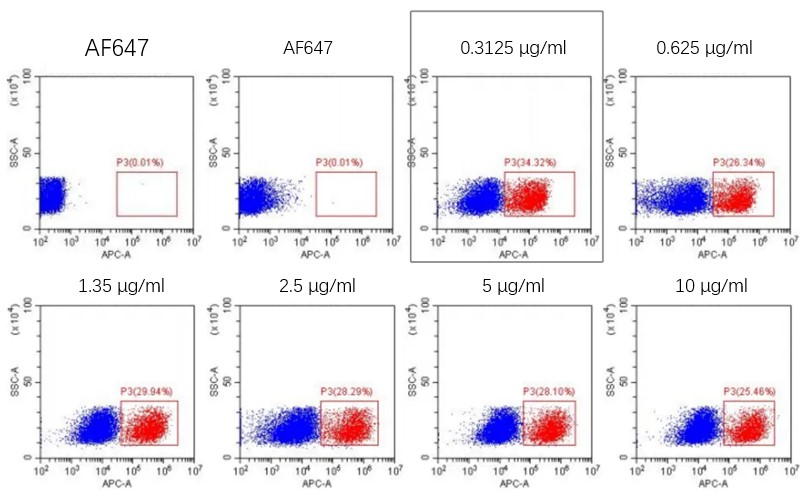 Fig. 2 Detection of CAR Positive Rate using different concentration of G4S linker antibody. (Cat. No. CABT-L0438Y)
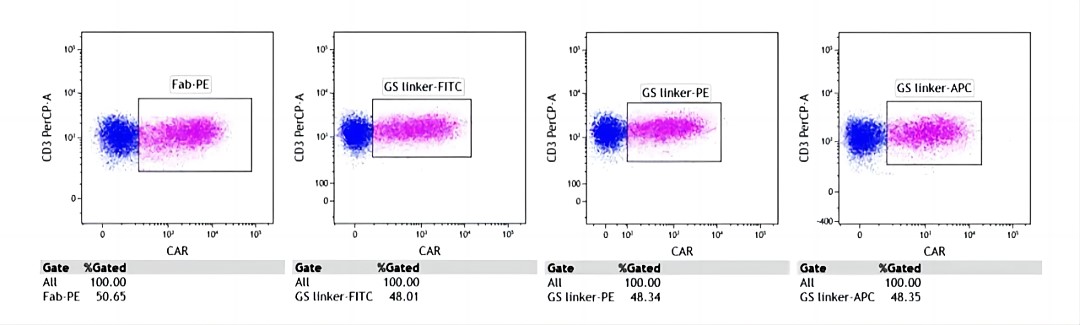 Fig. 3 Detection of CAR Positive Rate using G4S linker antibody. (Cat. No. CABT-L0438YP, CABT-L0438YF, CABT-L0438YA)
References
Loading ......
