
Inquiry Basket
 Loading ......
Adeno-associated virus type 9 (AAV9) belongs to one of the serotypes of adeno-associated viruses. AAV is a parvovirus (25 nm) of the family Parvoviridae, which has an unenveloped capsid and stores genetic material in the form of single-stranded DNA. The 4.7kb genome of AAV consists of an open reading frame, including the rep gene encoding proteins related to viral replication, the cap gene encoding the structural proteins needed for capsid formation, and the aap gene needed to assemble capsid proteins. At present, according to the composition of AAV capsid proteins, there are 13 AAV1-AAV13 serotypes, and there are differences in their tendency and transduction efficiency in different tissues. These differences can be used to selectively target specific cells, among which AAV9 has been proved to have the highest tendency to the central nervous system.
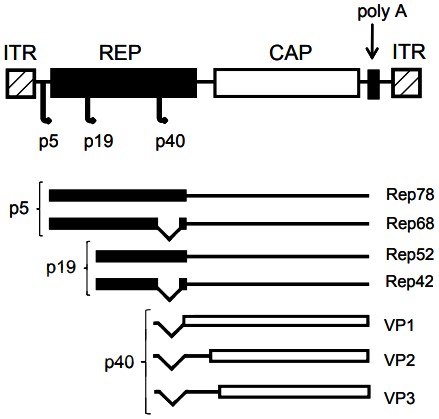 Figure 1. Genome structure of wild-type AAV
(Source: Martini SV, et al. 2011)
AAV9 cannot replicate itself and needs to rely on helper viruses such as adenovirus and herpes simplex virus to replicate and infect mitotic or non-mitotic cells. These characteristics make them potential reagents for gene therapy of mitotic cells (such as neurons). When applied to gene therapy, recombinant AAV vectors are constructed by replacing open reading frames with selected genes while maintaining ITRs, and the auxiliary functions required to maintain the cleavage cycle are provided by co-transfection with plasmids containing genes conferring these requirements.
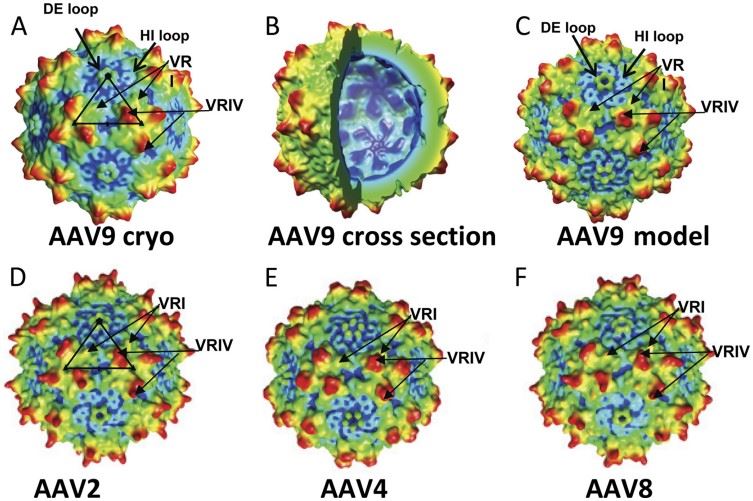 Figure 2. Comparison of several AAV structures at 9.7-Å resolution
(Source: DiMattia MA, et al. 2012)
Studies have found that intravascular administration of scAAV9 not only results in high blood-brain barrier permeability, but also exhibits high transduction to the dorsal root ganglia, lower spinal cord motor neurons, and different neurons throughout the brain. Based on its unique ability to cross the blood-brain barrier, AAV9 has now become one of the most important gene carriers in the field of gene therapy, especially in central nervous system diseases (CNS).
For the treatment of many CNS diseases, gene therapy can replace traditional pharmacological methods, correct genetic defects directly and permanently, and avoid repeated treatment. AAV has become the preferred vector for CNS gene therapy. Extensive preclinical studies have shown that AAV9 has the highest tendency to the central nervous system, can naturally cross the blood-brain barrier, can be widely and effectively transferred to the central nervous system, and has highest transduction efficiency among different serotypes of AAV vectors.
Central nervous system (CNS) diseases are diverse, including tumors, cerebrovascular diseases, neurodegenerative diseases, spinal cord diseases and so on. According to World Health Organization statistics, more than 3 billion people worldwide suffer from neurological diseases. Since 1990, the total number of disabilities, diseases and premature deaths caused by neurological diseases has increased by 18%. Due to the existence of the blood-brain barrier (BBB), the central nervous system is one of the most difficult diseases to treat.
Due to its unique properties, AAV9 have been extensively investigated in the context of CNS gene therapy. As depicted in Table 1, AAV9 administration has been tested in motor neuron disorders, lysosomal storage disorders, a neurotransmitter disorder, a glycogen storage disorder and epilepsy. Theoretically, the most suitable candidates for vascular AAV9-mediated gene therapy, considering its natural properties, would be disorders: a) with a defined genetic cause, so that it is possible to directly target the affected gene; b) presenting an early-onset, favoring vector administration during childhood, when neuronal tropism is likely more robust; c) affecting both CNS and peripheral organs, in order to fit the natural AAV9 biodistribution.
Table 1. Summary of some clinical trials for CNS disorders using AAV9
| Disease classification | Disease | Route and local of administration | Transgene | Clinical trial (phase) | Identifier |
| Motor neuron diseases | Spinal Muscular Atrophy type 1 (SMA) | Intravenous | SMN | Phase 1 | NCT02122952 |
| Glycogen storage disorders | Late-Onset Pompe Disease | Intramuscular injection in the tibialis anterior muscle | GAA | Phase 1 | NCT02240407 |
| Lysosomal Diseases | GLB1 deficiency | Intravenous | Human Beta-galactosidase | Phase 1 | NCT03952637 |
| Epilepsy | SCN1A-positive Dravet Syndrome | intracerebroventricular infusion | reGABA | Phase 1 | NCT06283212 |
| CLN7 Disease | intrathecal | CLN7 | Phase 1 | NCT04737460 | |
| Neurodevelopmental disorders | Rett Syndrome | intrathecal | miniMECP2 | Phase 1 | NCT06152237 |
Abbreviations: SMN-survival motor neuron; GAA-Acid alpha-glucosidase; GLB1-Beta-galactosidase-1; SCN1A-Sodium Voltage-Gated Channel Alpha Subunit 1; reGABA-GABAergic regulatory element; CLN7-ceroid lipofuscinosis neuronal 7; MECP2-Methyl-CpG Binding Protein 2.
(Source: Data obtained from clinicaltrials.gov)
Although AAV9 can cross the blood-brain barrier independently of animal age, different objects and time of administration will bring different results. It has been found that AAV9-IV shows different transduction characteristics in the central nervous system after intravenous injection in newborns or adult subjects. Table 2 summarizes the main studies on exploring the results of AAV9-IV injection in different animals and at different time points.
Table 2. Related study of partial AAV9-IV injection at different time points in different animal models
| Animal model | Time of injection | Genome | Promoter | Viral titer | Time post-injection | Cellular transduction in the brain | Cellular transduction in the spinal cord |
| 1. Neonatal/infant rodents | |||||||
| Mouse | P1 | SC | CBA | 4×10¹¹vg/animal | 10 or 21 days | Neurons and astrocytes in several brain regions | High transduction of MNs |
| Rat | P1 | SS | CAG | 2×10¹²vg/animal | 4-12 weeks | Neurons and astrocytes in several brain regions | |
| 2. Adult rodents | |||||||
| Mouse | 6 weeks | SC | CMV | 3×10¹¹-2×10¹²vg/animal | 2-4 weeks | - | Transduction of MNs and astrocytes |
| Mouse | 8-12 weeks | SC | CBA | 2.5×10¹⁰-1.6×10¹²vg/animal | 4 weeks | Neurons and astrocytes (neuronal predominance in some regions) | Transduction of MNs and astrocytes |
| 3. Cats | |||||||
| Cats | P2 | SC | CMV | 1.5×10¹²vg/animal | 15 days | - | 34-39% MN |
| 4. Non-human primates | |||||||
| Cynomolgus macaque | P1 | SC | CBA | 1×10¹⁴vg/kg | 21 days | - | Transduction of MNs |
| Rhesus macaque | P1 | SC | CMVie | 1012-1015vg/kg | 2 months | Widespread neuronal targeting | - |
Abbreviations: SS-single-stranded; SC-self-complementary; vg-viral genome; CMV-cytomegalovirus promoter; CMVie-cytomegalovirus immediate early synapsin intron promoter; CBA-chicken β-actin promoter; CAG-hybrid promoter comprising the CMV immediate-early enhance, CBA promoter and CBA intron 1/exon 1; vg-viral genomes; MN-motor neuron
(Source: Saraiva J, et al. 2016)
Ideally, the central nervous system gene vector should have: 1) effective transduction and no miss effect; 2) appropriate level and duration of transgene expression in order to produce therapeutic effect without cytotoxicity; 3) lack of pathogenicity and immunogenicity, resulting in no adverse reaction to treatment; and 4) large-scale efficient vector production with a high level of purity.
The characteristics of AAV9 meet these requirements, which explains why the vector system is currently most widely used in preclinical and clinical studies of the central nervous system. Another advantage is the stable expression of transgenes in the central nervous system, at least 8 years in non-human primates and 10 years in the human brain. This persistent gene expression in undivided cells explains why AAV9 is so suitable for gene therapy for central nervous system diseases, most of which are chronic and affect mitotic cells.
However, AAV9 also has some limitations, highlighting the importance of further optimization methods. One of these disadvantages relates to the delay in transgene expression (maximum expression is about 2 weeks) compared to other vectors, as it requires second chain synthesis. On the other hand, despite the low immunogenicity of AAV9, the human immune system can still recognize and respond to them, which also has the possibility of reducing the effectiveness of gene therapy. The researchers found that about 30-80% of people have pre-existing anti-AAV antibodies. Therefore, timely detection of the expression level of anti-AAV9 antibody is very important to evaluate the effect of gene therapy.
Creative Diagnostics provides you with AAV9-related antibodies, antigens and ELISA test kits to meet your needs and help you obtain AAV9-related test results in a timely manner. We hope to work with you to promote AAV gene therapy research, speed up the pace of clinical application, and bring well-being and happiness to patients.
References
| Target | Cat. No. | Product Name | Size | Species | Application | Detection Sample | |
| AAV9 | DEIAAV9 | AAV9 Titration ELISA Kit | 96T | N/A | Quantitative | Cell culture supernatants, purified virus preparations | Inquiry |
| DEIASL348 | Anti-AAV9 antibody ELISA Kit | 96T | Human | Qualitative | Serum | Inquiry | |
| DEIASL348M | Mouse Anti-AAV9 antibody ELISA Kit | 96T | Mouse | Qualitative | Serum | Inquiry |
| Target | Cat. No. | Product Name | Host | Isotype | Application | |
| AAV8/9 | CABT-B9066 | Anti-AAV8/9 (intact particle) monoclonal antibody, clone BEL9/0 | Mouse | IgG2a, κ | ICC/IF, IHC-Fr, IHC-P, IP | Inquiry |
| AAV9 | DPAB-AV01 | Anti-AAV9 (intact particles) monoclonal antibody, clone BEL0 | Mouse | IgA, κ | ICC/IF, IHC-Fr, IHC-P, ELISA, Dot blot | Inquiry |
| CABT-L21Y197 | Human Anti-AAV9 (intact particle) monoclonal antibody, clone BEL0 | Human | IgG1 | ELISA, Control | Inquiry | |
| CABT-L6458Z | Mouse Anti-AAV9 monoclonal antibody, clone BEL0 | Mouse | IgG | IA | Inquiry |
| Target | Cat. No. | Product Name | Expression System | Tag/Conjugate | Application | |
| AAV9 | DAGC521L | AAV9 Empty Capsids | N/A | Unconjugated | ELISA | Inquiry |
| DAGC521 | AAV9 capsids (ELISA Control) | N/A | Unconjugated | As a positive control in ELISA, a 1:4 dilution in ASSB 1x and analysis at least in duplicates is recommended. | Inquiry |
Loading ......
