Vaccine Development
Accelerating Vaccine Innovation with Protein Biochip Technology
Vaccine development is a complex and multi-stage process that requires cutting-edge technologies to ensure the safety, efficacy, and protective immunity of the final product. At Creative Diagnostics, we provide state-of-the-art Protein Biochip technology to support each critical phase of vaccine research and development. From discovering potential antigens to evaluating post-vaccination immune responses, our platform offers high-throughput, accurate, and reliable data to guide your vaccine development journey.
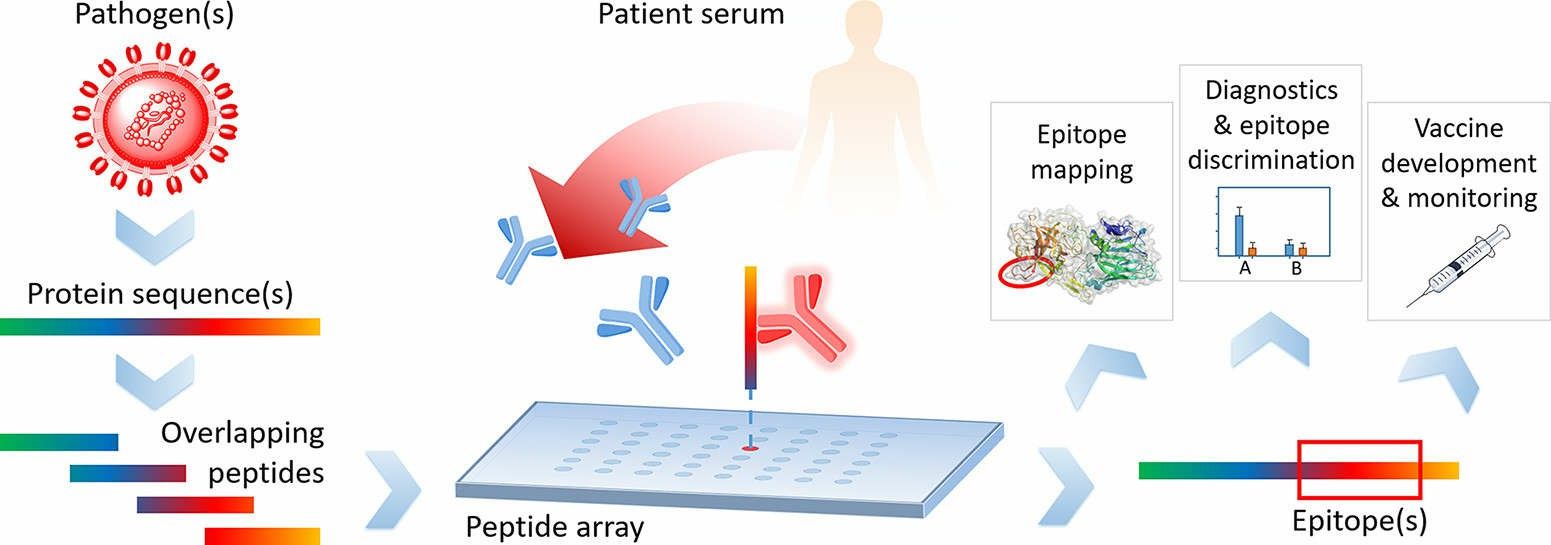 Figure 1. Typical workflow of a peptide microarray experiment. (Source: Heiss K, et al. 2020)
Our Core Vaccine Development Services
Explore our specialized services within the Vaccine Development field, including Antigen Discovery, Antigen Mutation Analysis, Immunogenicity Assessment, Adjuvant Efficacy and Post-Vaccination Immune Response. Each of these services is designed to address specific challenges in vaccine development, from identifying the most promising antigens to ensuring the vaccine's long-term effectiveness. Our Protein Biochip technology enables precise analysis, accelerating the development of vaccines that can address both known and emerging infectious diseases.
1. Antigen Discovery: Identifying Key Targets for Vaccine Development
The first step in vaccine development is the identification of antigens capable of triggering a protective immune response. Creative Diagnostics' Protein Biochip platform provides researchers with the tools to efficiently identify and validate pathogen-associated antigens, ensuring the selection of optimal vaccine candidates. Our high-throughput technology supports rapid screening and immunogenicity testing, helping to accelerate the timeline from discovery to vaccine formulation.
2. Antigen Mutation Analysis: Assessing Viral Variability for Effective Vaccines
As pathogens evolve, mutations can alter their antigenic surfaces, potentially rendering existing vaccines ineffective. Antigen mutation analysis is essential to understanding how genetic variations affect immune responses. Our Protein Biochip technology supports the identification of mutation hotspots, providing critical insights for the optimization of vaccine candidates and the prediction of immune escape phenomena.
3. Immunogenicity Assessment: Ensuring Vaccine Effectiveness
Immunogenicity refers to the ability of an antigen to induce a specific immune response. Our Protein Biochip platform offers precise, high-throughput screening of multiple immunogenicity markers, including antibody production and T cell activation. By evaluating the strength, specificity, and durability of immune responses, we help ensure that your vaccine can generate long-lasting protection without adverse effects.
4. Adjuvant Efficacy: Optimizing Vaccine Formulations
Adjuvants play a crucial role in enhancing the immune response to vaccines. Our platform enables comprehensive analysis of adjuvant efficacy, including interaction with antigens, immune potentiation, and cytokine release. Whether you are developing vaccines for infectious diseases or cancer immunotherapies, we provide the insights needed to optimize adjuvant selection and improve vaccine performance.
5. Post-Vaccination Immune Response: Monitoring Vaccine Effectiveness
Tracking immune responses post-vaccination is critical to understanding the duration and robustness of protection. Our Protein Biochip technology allows real-time monitoring of immune responses, helping researchers identify key biomarkers and evaluate the effectiveness of vaccines. With comprehensive data on cytokine release, antibody production, and T cell activation, we provide the tools to predict vaccine efficacy and ensure long-term immunity.
Array Example
| Stage | Example Marker/Feature Combination | Target Application | Possible Sample Preparation |
| A. Antigen Discovery | - Broad proteome array (hundreds of pathogen proteins/fragments) - Targeted multi-antigen array for known virulence or surface proteins - Overlapping peptide libraries if epitope-level resolution is needed | 1. Identify novel or dominant antigens recognized by sera from infected/recovered individuals 2. Prioritize top candidates for vaccine formulations | - In vitro: Culture supernatants from B-cell / PBMC reactivity screens - In vivo: Serum from infected or immunized animals/patients, to measure which antigens are strongly bound by antibodies |
| B. Antigen Mutation Analysis | - Mutation-scanning peptide array (systematic single or multiple amino acid substitutions) - Variant-based protein array (WT + known mutant strains/lineages) | 1. Determine how sequence changes affect antibody/T cell recognition (immune escape) 2. Compare cross-reactivity among strains/variants (e.g., seasonal vs. pandemic influenza, viral variants) | - In vitro: T/B cell culture supernatants tested against mutant peptides - In vivo: Serum from animals/humans exposed to WT or mutant strains; see if antibodies cross-bind each variant |
| C. Immunogenicity Assessment | - ADA (Anti-Drug Antibody) or anti-protein arrays: measure IgG/IgM/IgE against candidate antigen - Cytokine release arrays (IFN-γ, IL-2, IL-4, IL-6, etc.) - T cell surface markers (CD4/CD8 subsets, activation/regulatory markers) | 1. Gauge how strongly a candidate antigen triggers B/T cell responses 2. Detect unwanted immunogenicity (e.g., autoantibodies, high IgE) 3. Characterize Th bias (Th1 vs. Th2) | - In vitro: PBMCs or splenocytes co-cultured with candidate antigen, measure secreted antibodies/cytokines - In vivo: Serum for isotype profiling; ex vivo T cell restimulation assays from spleen or lymph nodes |
| D. Adjuvant Efficacy | - Innate cytokines: IL-1β, IL-6, TNF-α, IL-12 - Th polarization: IFN-γ, IL-4, IL-5, IL-13, IL-17 - Regulatory: IL-10, TGF-β - Chemokines (MCP-1, RANTES, CXCL10) | 1. Evaluate early innate immune activation and subsequent adaptive response 2. Compare different adjuvants for potency and safety (e.g., pro-inflammatory side effects) | - In vitro: Macrophage or DC culture supernatants ± adjuvant - In vivo: Serum samples at early timepoints post-immunization (day 1, 3, 7), measure cytokine/chemokine profiles |
| E. Post-Vaccination Immune Response | - Antibody Isotypes: IgM → IgG class switching (IgG1, IgG2a, etc.), IgA for mucosal - Cell-mediated: Th1 vs. Th2 vs. Th17 cytokines - Memory markers (CD44, CD62L, CD27, CCR7 for T cells; IgD/IgG memory for B cells) | 1. Track humoral (isotype switching) and cell-mediated (Th polarization) responses over time 2. Correlate vaccine-induced protective immunity with specific isotypes or T/B memory subsets | - In vitro: PBMC or splenocyte restimulation with vaccine antigen, measure cytokines/antibodies - In vivo: Longitudinal serum sampling (days/weeks post-vaccination), or ex vivo T/B cell phenotyping from lymphoid tissues (spleen, LN) |
Why Choose Creative Diagnostics for Vaccine Development?
- High Throughput and Sensitivity: Our Protein Biochip platform enables the simultaneous detection of multiple targets with picomolar-level sensitivity, ensuring accurate and efficient analysis at every stage of vaccine development.
- Comprehensive Services: We offer end-to-end support from antigen discovery to post-vaccination monitoring, providing you with a complete data-driven approach to vaccine R&D.
- Customization: Tailored solutions for specific research needs, from antigen screening to immune response analysis, allowing you to achieve breakthroughs in vaccine development.
- Expertise in Vaccine Research: Our platform has been trusted by researchers and institutions globally to advance vaccine development and improve public health.
Take the next step in accelerating your vaccine development process. Explore our specialized services today, or contact us to learn more about how Creative Diagnostics can support your research goals.
Reference
- Heiss K, Heidepriem J, Fischer N, et al. Rapid response to pandemic threats: immunogenic epitope detection of pandemic pathogens for diagnostics and vaccine development using peptide microarrays. J Proteome Res. 2020;19(11):4339-4354.
- Custom Protein Arrays
- Drug Screening and Toxicity Assessment
- Immunoprofiling
- Oncology Drug Screening
- Signaling Pathway Analysis
- Spatial Multi-Omics and Targeted Proteomics
- Vaccine Development
- Antibody Profiling
- Protein-Protein Interaction Studies
- Allergen Screening
- Protein-Nucleic Acid Interaction Analysis