Small Molecule Interference with Protein-Nucleic Acid Interactions
Introduction
The development of drugs now includes a novel approach that targets protein-nucleic acid interactions with small molecules. The project aims to find small molecules that can disrupt or change protein-nucleic acid interactions to create novel therapies for diseases.
Protein-nucleic acid interactions enable the processes of gene expression regulation and DNA replication/repair as well as RNA splicing. Cancers and neurodegenerative diseases along with infectious diseases can result from abnormal protein-nucleic acid interactions. Through binding to proteins or nucleic acids small molecule drugs restore normal cellular functions because they block or modulate these critical interactions.
New developments in structural biology together with computational chemistry progress and high-throughput screening techniques have essentially accelerated research progress in this field. Small molecule inhibitors aimed at oncogenes such as MYC and p53 currently show encouraging antitumor results along with minimal side effects during clinical trials. Small molecular compounds that interfere with viral protein and host nucleic acid interaction represent innovative antiviral drug development strategies.
Protein Array Technology: A Powerful Force in Drug Discovery
The protein array services we provide enable faster discovery and development of small molecules that interact with protein-nucleic acid complexes. Through the use of advanced technology platforms, we deliver complete solution sets for detecting and refining compounds that can influence these interactions.
- Near-Infrared Fluorescent Labeling Chip
Near-infrared fluorescence-based detection technology achieves high sensitivity and specificity when identifying protein-nucleic acid binding events. The system precisely detects and measures molecular interactions within complex biological mixtures while minimizing background noise to enhance measurement accuracy. - Laser Confocal Chip Scanner
The scanner's advanced imaging capabilities enable researchers to analyze protein expression and interaction patterns at high resolution. The technology facilitates comprehensive research into protein-small molecule binding dynamics and interaction characteristics. - Silicon-Based Protein Chip
Scientists use this platform to provide a stable yet flexible surface designed for protein immobilization. The material maintains reliable operational outcomes under diverse experimental settings because of its superior biocompatibility and chemical stability.
Applications in Drug Development
- Targeting Transcription Factors
Transcription factors manage gene expression through their attachment to unique DNA segments. Small molecules disrupt DNA binding processes which modulates gene expression. Specific anticancer therapies work by targeting transcription factors NF-κB and STAT3 to stop their DNA binding which leads to reduced cancer cell growth. Our protein array technology allows for high-throughput screening and quantitative binding analysis of small molecules which speeds up anticancer drug development. - Inhibiting Virus Protein-Host Nucleic Acid Interactions
During antiviral medication development researchers use small molecules to stop viral proteins from binding with host cell nucleic acids which inhibits replication of viruses and prevents infections. Drugs against HIV and HBV work by disrupting how viral reverse transcriptase and capsid proteins interact with host cell nucleic acids. The protein array technology developed by us allows researchers to evaluate how small molecules block viral protein interactions with host nucleic acids to advance antiviral drug development. - Modulating Nucleic Acid Modification Enzyme Activity
DNA methyltransferases and enzymes that modify histones control gene expression by making changes to nucleic acids and histones. Small molecules achieve enzyme modulation which results in changes to gene expression patterns. The inhibitor 5-aza-2'-deoxycytidine restores tumor suppressor gene activity by disrupting DNA methylation. Our protein array technology examines how small molecules regulate nucleic acid modification enzymes and enhances drug screening through quantitative detection methods of nucleic acid modifications.
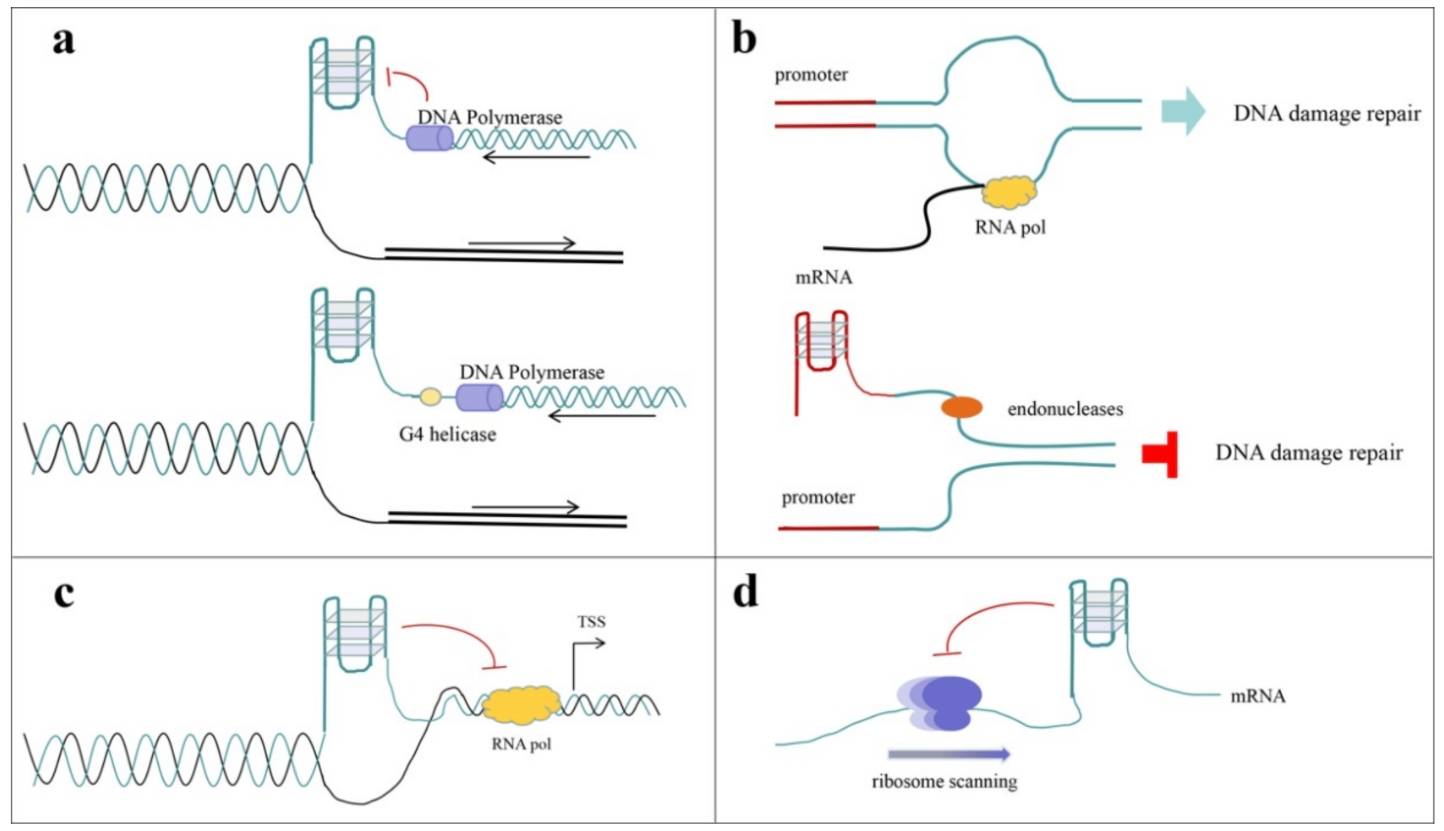 Figure 1. Role of G-quadruplexes in Cellular Events (Source: Sun ZY, et al. 2019)
Service Content Examples
Array Design for Small-Molecule Screening
| Panel Name | Marker Combination | Target Application | Possible Sample Preparation |
| G Quadruplex Targeting | G-quadruplex binding proteins, Telomere-associated proteins, Oncoproteins | Identify small molecules that stabilize or disrupt G-quadruplex structures | - In vitro: Synthetic G-quadruplex DNA - In vivo: Cell lysates from cancer cells |
| RNA-Binding Protein Inhibition | HuR, FUS, TDP-43, hnRNPs | Screen for inhibitors of RNA-binding protein interactions | - In vitro: Purified RNA-binding proteins and target RNA - In vivo: Disease model tissues |
| Helicase Modulation | DNA helicases (e.g., WRN, BLM), RNA helicases (e.g., DDX5, DDX17) | Discover small molecules that modulate helicase activity | - In vitro: Recombinant helicases and substrate nucleic acids - In vivo: Cells with helicase deficiencies |
Example Antigen/Protein Combinations
| Array Design | Example Antigen/Protein Combinations | Target Application | Possible Sample Preparation |
| Nucleic Acid Binding Proteins | - G-quadruplex binding proteins (e.g., POT1, TRF2) - RNA-binding proteins (e.g., HuR, TDP-43) - Helicases (e.g., WRN, DDX5) | 1. Study small molecule inhibition of protein-nucleic acid interactions 2. Evaluate effects on cellular processes | - In vitro: Recombinant proteins and synthetic nucleic acids - In vivo: Cell extracts |
| Cancer-Related Targets | - Oncoproteins interacting with DNA/RNA (e.g., MYC, p53) - Telomerase components (e.g., TERT, TERC) | 1. Identify novel anticancer agents targeting nucleic acid-protein interactions 2. Validate therapeutic efficacy in cancer models | - Clinical samples: Tumor biopsies - Disease models: Cancer cell lines and xenografts |
Our protein array services aim to accelerate the discovery and development of small molecules targeting protein-nucleic acid interactions. By integrating near-infrared fluorescent labeling chips, laser confocal chip scanners, and silicon-based protein chips, we enable high-throughput and high-sensitivity analysis of small molecule-protein-nucleic acid interactions, providing robust support for drug development.
References
- D'Abramo CM, Archambault J. Small molecule inhibitors of human papillomavirus protein-protein interactions. Open Virol J. 2011;5:80-95.
- Almaqwashi AA, Paramanathan T, Rouzina I, Williams MC. Mechanisms of small molecule–DNA interactions probed by single-molecule force spectroscopy. Nucleic Acids Res. 2016;44(9):3971-3988.
- Sun ZY, Wang XN, Cheng SQ, Su XX, Ou TM. Developing novel G-quadruplex ligands: From interaction with nucleic acids to interfering with nucleic acid–protein interaction. Molecules. 2019;24(3):396.
- Custom Protein Arrays
- Drug Screening and Toxicity Assessment
- Immunoprofiling
- Oncology Drug Screening
- Signaling Pathway Analysis
- Spatial Multi-Omics and Targeted Proteomics
- Vaccine Development
- Antibody Profiling
- Protein-Protein Interaction Studies
- Allergen Screening
- Protein-Nucleic Acid Interaction Analysis