Antibody Profiling
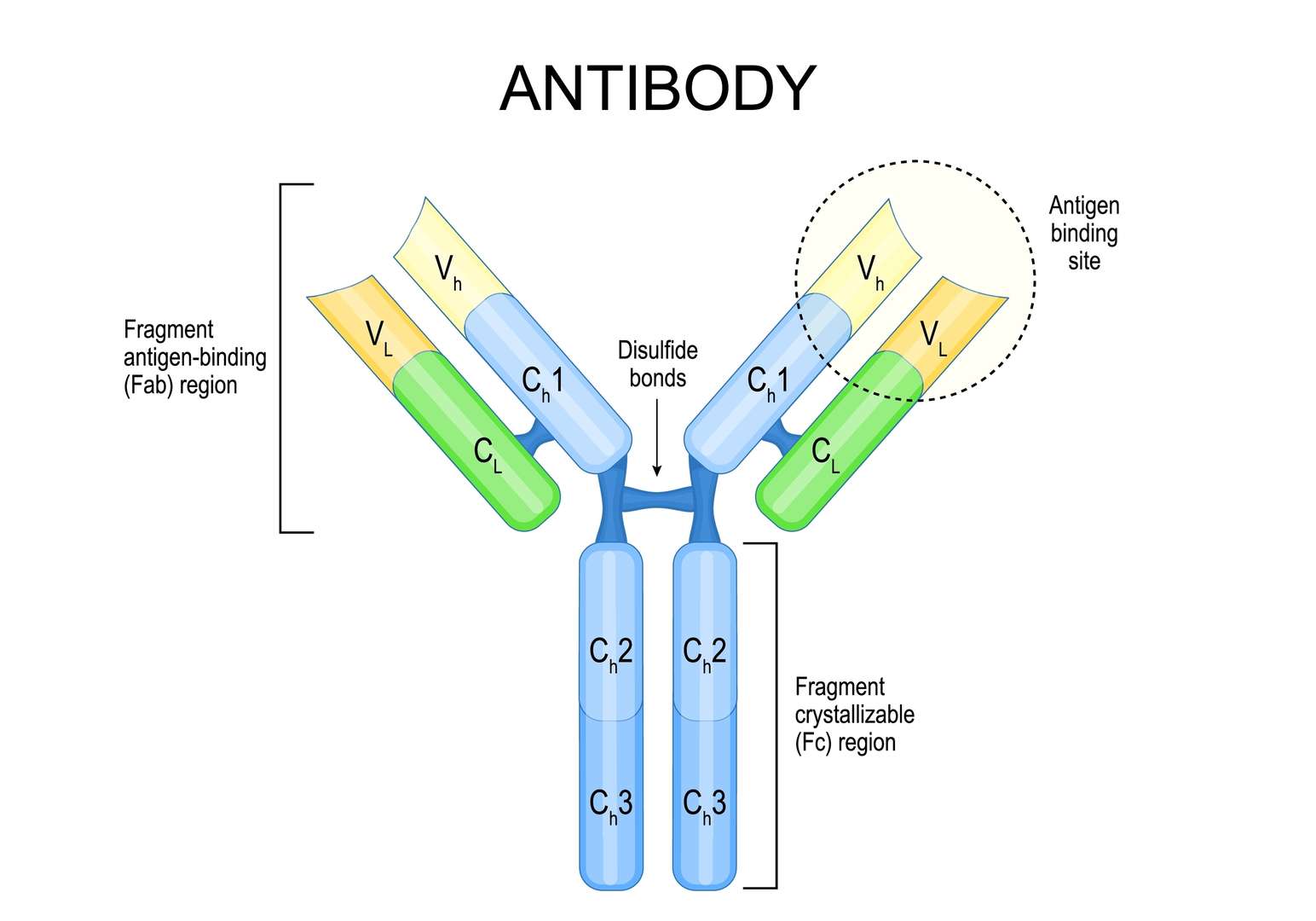
Antibodies function as essential immune system components which identify foreign pathogens and remove them while also regulating immune response activities. Through Antibody Profiling scientists can thoroughly analyze both the different types of antibodies present and their quantities and functions within biological samples or individuals. Antibody profiling enables us to assess immune system status while evaluating vaccines and providing diagnostic and therapeutic support along with drug development research opportunities.
Our Antibody Profiling Services
- Autoantibody Detection:
Doctors use autoantibody detection to diagnose illnesses where body cells are attacked by the immune system including systemic lupus erythematosus and rheumatoid arthritis. Learn More - Monoclonal and Polyclonal Antibody Analysis:
Researchers and clinicians frequently use monoclonal and polyclonal antibodies as both scientific investigation instruments and medical treatments. This evaluation service thoroughly assesses vital antibody quality aspects like purity and titer while also examining specificity and affinity to support antibody research and its production applications. Learn More - Therapeutic Antibody Monitoring:
Through monitoring therapeutic antibodies we can learn about their concentration and immunogenicity in patients which enables better drug delivery optimization and therapeutic effect improvement while keeping track of adverse reactions. Learn More - Antibody Subclass Profiling:
Each antibody subclass displays distinct biological functions. The evaluation of the body's immune response to antigen exposure can be achieved through antibody subclass analysis which also supports vaccine research and disease characterization. Learn More
Array Example
| Panel / Focus | Example Marker/Antigen Combination | Target Application | Possible Sample Preparation |
| A. Autoantibody Detection | - Systemic autoantigens: dsDNA, Sm, RNP, SSA/Ro, SSB/La, Scl-70, Centromere proteins (SLE, Sjögren's, Scleroderma) - Organ-specific: GAD65/IA-2 (Type 1 diabetes), TPO/Thyroglobulin (thyroid), Transglutaminase (celiac), etc. | 1. Screen for autoimmune markers (SLE, RA, T1D, celiac, etc.) 2. Classify disease subtypes based on autoantibody profiles 3. Monitor progression or therapy response by autoantibody titers | - In vitro: Culture supernatants from B-cell/hybridoma lines if studying autoantibody production - In vivo: Serum/plasma from patients or animal models (autoimmune-prone strains); optionally synovial fluid or CSF for local autoantibody detection |
| B. Monoclonal & Polyclonal Antibody Analysis | - Epitope mapping arrays: overlapping peptides of the antigen - Off-target or cross-reactive protein panels to see if an antibody binds unintended targets - Specific domain or mutant forms of the antigen to refine binding specificity | 1. Define binding specificity or epitope recognition of a monoclonal/polyclonal Ab 2. Check cross-reactivity with related proteins or potential off-targets 3. Compare multiple clones for best specificity and affinity | - In vitro: Purified mAb or polyclonal Ig from ascites/serum, typically labeled or detected via secondary Ab - In vivo: Not as common; if used, typically measuring how an in vivo–generated mAb (e.g., from hybridoma) performs on broad epitope arrays |
| C. Therapeutic Antibody Monitoring | - Anti-idiotype or anti-Fc reagents to capture the therapeutic mAb - Drug target to measure free vs. bound target (e.g., antigen arrays for PD-L1 if the drug is anti-PD-L1) - ADA detection (anti-drug antibodies) if immunogenicity is a concern | 1. Pharmacokinetic (PK) analysis: measure drug levels over time 2. Anti-drug antibody (ADA) screening: detect immunogenic response 3. Efficacy correlation: see if target antigen levels drop or if free vs. bound target changes | - In vitro: Culture supernatants if producing or testing the therapeutic Ab in cell systems - In vivo: Serum/plasma from dosed animals/patients at timepoints for PK; measure ADA, free vs. bound target to confirm drug engagement |
| D. Antibody Subclass Profiling | - Mouse: IgG1, IgG2a/c, IgG2b, IgG3, IgM, IgA, IgE - Human: IgG1, IgG2, IgG3, IgG4, IgM, IgA (IgA1/IgA2), IgE - Isotype-specific detection reagents or anti-subclass antibodies | 1. Determine the class-switch patterns post-immunization or infection 2. Monitor immunotherapy-induced changes in IgG4 vs. IgE, etc. (e.g., allergy desensitization) 3. Assess isotype balance in vaccine efficacy or host defense | - In vitro: B cell culture or hybridoma supernatants measuring isotype switching - In vivo: Serum from vaccinated or infected subjects (mice/humans) at multiple timepoints to see IgG1 vs. IgG2 (mouse) or IgG subclass distribution (human), plus mucosal samples for IgA analysis |
Our Near-Infrared Microarray Protein Chip Technology Platform
Based on independent innovation, Creative Diagnostics combines advanced technologies such as laser confocal microscopy, near-infrared fluorescence labeling, and special functional silicone membranes with protein chips to establish a unique high-throughput protein chip detection platform. This platform has significant advantages such as high throughput, multi-index joint detection, and high cost performance, and can provide comprehensive and accurate antibody profiling services for the majority of scientific research users.
Features of Our Detection Platform:
- High Throughput and Automation: High-throughput detection and automated operation become feasible through the use of special functional silicone membranes alongside near-infrared fluorescence labeling technology.
- High Sensitivity and Broad Spectrum: The special functional silicone membranes offer high sensitivity and wide detection spectrum capabilities together with excellent biocompatibility.
- Precise Detection: The laser confocal system delivers high sensitivity along with a broad measurement linear range and high image resolution while avoiding any distortion.
Service Highlights
- Customized Services: Our team delivers custom experimental design and data analysis services tailored to meet your particular requirements.
- Professional Technical Team: Our skilled technical team offers professional technical support and consulting services.
- Strict Quality Control: Our quality control standards guarantee that experimental results maintain both accuracy and reliability.
Service Cycle and Process
- Project Consultation: Customers communicate with our technical team to clarify experimental objectives and specific needs.
- Experimental Design: Our technical team develops a detailed experimental plan based on customer needs.
- Sample Preparation: Customers provide qualified samples or entrust us with sample preparation.
- Experimental Operation: Our technicians perform experimental operations according to the experimental plan.
- Data Analysis: We conduct professional analysis of experimental data and provide detailed analysis reports.
- Results Delivery: We deliver experimental results and analysis reports to customers.
Creative Diagnostics pledges to be your dependable partner for antibody profiling thanks to our superior technology platform and full range of services and skilled professional team while supporting your R&D projects to achieve success. We are eager to partner with you in developing a better future.
- Custom Protein Arrays
- Drug Screening and Toxicity Assessment
- Immunoprofiling
- Oncology Drug Screening
- Signaling Pathway Analysis
- Spatial Multi-Omics and Targeted Proteomics
- Vaccine Development
- Antibody Profiling
- Protein-Protein Interaction Studies
- Allergen Screening
- Protein-Nucleic Acid Interaction Analysis