Functional Protein Arrays
FPA Technology
In modern proteomics and systems biology, Functional Protein Array (FPA) technology has emerged as a powerful tool driving scientific innovation. By enabling high-throughput analysis of thousands of proteins, FPA helps researchers uncover protein functions, post-translational modifications, and molecular interactions-accelerating advances in disease diagnostics, drug development, and biomarker discovery.
FPA technology immobilizes thousands of purified proteins on a solid surface, analyzing their interactions with other biomolecules (e.g., small molecules, antibodies, DNA, RNA) to reveal biological functions. Unlike traditional analytical protein arrays, FPAs offer deeper insights into post-translational modifications (such as phosphorylation, ubiquitination, acetylation) and protein-protein interactions, providing robust technical support for disease mechanism studies and precision medicine.
At Creative Diagnostics, we offer tailored FPA services to deliver precise, high-efficiency support for your projects.
Why Choose Us?
- High-throughput, high-precision: Quickly screen and analyze the functional activities of up to thousands of proteins.
- Customizable solutions: Fully tailored protein arrays to meet specific research objectives.
- Versatile applications: Suitable for drug screening, biomarker discovery, immune analysis, and more.
- Comprehensive support: From array design to data analysis, we provide end-to-end technical assistance to ensure reliable, accurate research outcomes.
Applications of Our FPA Services
Drug Screening and Target Discovery
FPA technology enables the rapid identification of target proteins that bind to specific drugs or small molecules, accelerating drug target validation and novel drug development. For example, FPA has been used to identify interactions between a chemical inhibitor and cell-cycle-related proteins, providing fresh insights for anti-cancer drug development. This technology offers the advantage of high-throughput screening, allowing numerous potential targets to be tested within a short period, which helps reduce experimental timelines and development costs.
Biomarker Discovery and Disease Diagnostics
FPA technology plays a pivotal role in identifying protein biomarkers linked to specific diseases, advancing precision medicine and personalized treatment. For example, in ovarian cancer research, FPAs were utilized to screen patient serum for antibody responses, leading to the identification of protein biomarkers for early diagnosis and prognostic evaluation. This technology offers the advantage of detecting low-abundance biomarkers while simultaneously analyzing multiple disease markers, delivering multidimensional diagnostic insights.
Post-Translational Modification (PTM) Analysis
FPAs efficiently detect post-translational modifications (PTMs), offering critical data for signal transduction research. A notable application of this technology is its use in analyzing phosphorylation events in yeast proteomes, where it helped identify novel phosphorylation substrates that provide valuable insights into signaling pathways and disease mechanisms. This technology allows for the simultaneous analysis of multiple PTMs, enabling a deeper exploration of their roles in cellular signaling.
Antibody and Immune Response Analysis
FPAs support the development of new vaccines and immunotherapies by analyzing antigen-antibody binding activities. In one application, FPAs were employed to evaluate antibody responses to candidate vaccines, helping to identify the most immunogenic antigens and optimize vaccine design. This technology efficiently assesses diverse antibody responses with high precision, facilitating detailed antibody characterization.
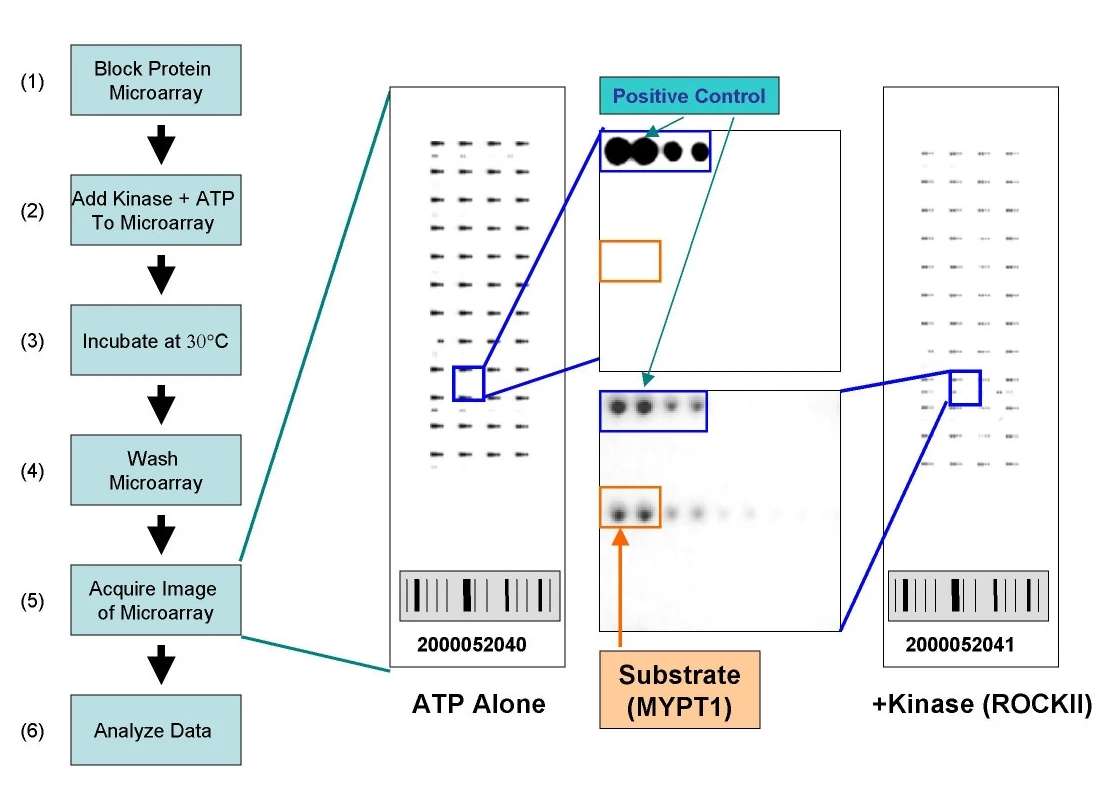 Figure 1. Microarray kinase substrate identification assay. (Source: Meng L, et al., 2008)
Collaborate with Us
- Discuss Project Needs
Share your research goals and requirements with our expert team. We'll craft a customized protein array plan for you. - Array Design and Production
Based on your specifications, we'll design and produce high-quality, functional protein arrays. - Data Analysis and Reporting
Receive detailed experimental data and analysis reports to support your research with confidence.
Through Creative Diagnostics' customized services, you can obtain precise experimental data and drive your projects toward success. Contact us today and embark on a new chapter in your proteomics research!
Reference
- Meng L, Michaud GA, Merkel JS, et al. Protein kinase substrate identification on functional protein arrays. BMC Biotechnol. 2008;8:22.
- Custom Protein Arrays
- Drug Screening and Toxicity Assessment
- Immunoprofiling
- Oncology Drug Screening
- Signaling Pathway Analysis
- Spatial Multi-Omics and Targeted Proteomics
- Vaccine Development
- Antibody Profiling
- Protein-Protein Interaction Studies
- Allergen Screening
- Protein-Nucleic Acid Interaction Analysis