Case Studies for DSP
Human lmmune Cell Profiling Analysis
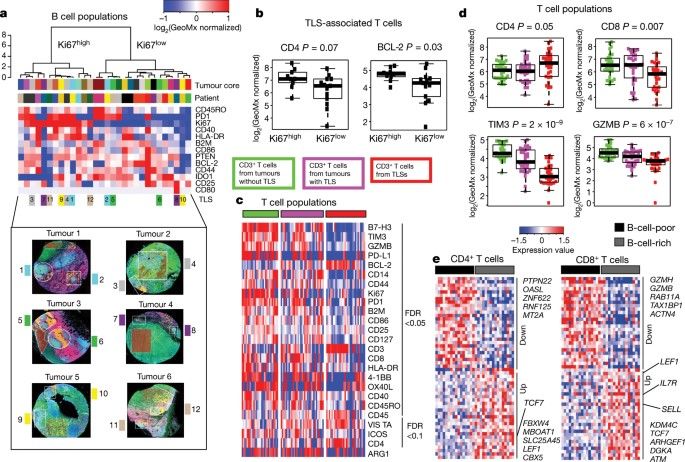 Digital spatial-profiling data and gene-expression microarray data from Danish patients treated with anti-CTLA4. (Cabrita R, et al.; 2020)
Our professional team has more than ten years of experience in Digital Spatial Profiler (DSP) digital spatial multi-omics analysis, and can provide you with high-quality spatial multi-omics services, including DSP spatial proteomics, DSP-CTA cancer spatial transcriptomics, and DSP-WTA spatial whole transcriptome analysis services. We rely on strict control of service quality and professional analysis of results to provide you with reliable results to meet your needs.
Digital Spatial Profiling (DSP) is a multi-omics platform that combines spatial information of gene expression and protein expression, aiming to gain a deeper understanding of the organizational mechanisms of cells within tissues. DSP technology achieves high-throughput, high-resolution gene or protein expression analysis through oligonucleotide tag pairs complementary to target genes, affinity reagents (such as antibodies or RNA probes), and photolysis photon technology.
Among them, oligonucleotide tags can be labeled by complementary binding to target genes or conjugated to antibodies, and then affinity reagents (such as antibodies or RNA probes) are used to bind to target molecules, and then photolysis photons (such as ultraviolet rays) trigger the release of oligonucleotide tags. These released tags are then collected and used for sequencing analysis. Finally, ROIs are dynamically configured using a programmable digital micromirror array (DMD) to achieve virtual mapping of regions of different shapes and sizes. DMD can be configured with up to 2 million total lenses to support single-cell resolution analysis.
DSP technology is widely used in oncology, immunology, neuroscience, infectious diseases and other fields, especially in the study of tumor microenvironment and immune microenvironment. DSP technology can analyze the in-situ expression profiles of up to 570 protein groups or 18,000 whole transcriptomes in each microenvironment area on a single slice (FFPE or fresh frozen) by selecting points of interest (ROI).
| Alzheimer's Pathology | Parkinson's Pathology | Alzheimer's Pathology Extended |
| Autophagy | Glial Cell Subtyping |
| IO Drug Target | Immune Activation Status | Immune Cell Typing | Pan-Tumor |
| MAPK Signaling | PI3K/AKT Signaling | Cell Death |
| Alzheimer's Pathology | Alzheimer's Pathology Extended | Parkinson's Pathology | Autophagy |
| Glial Cell Subtyping |
| IO Drug Target | Immune Activation Status | Immune Cell Typing | Pan-Tumor |
Human lmmune Cell Profiling Analysis
Digital spatial-profiling data and gene-expression microarray data from Danish patients treated with anti-CTLA4. (Cabrita R, et al.; 2020)


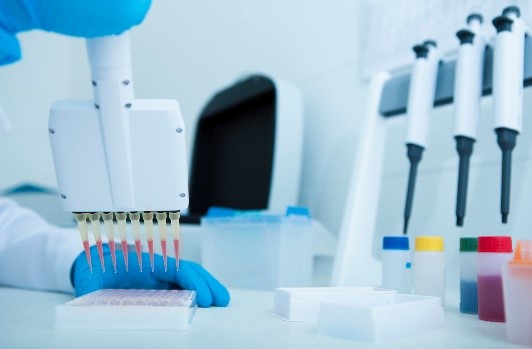
DSP technology can perform spatial multi-omics analysis of proteome and transcriptome simultaneously. Its core principle is to use DNA oligos coupled to antibodies or RNA probes to label targets, release oligos through laser cutting and quantify.
The core advantages of DSP are:
DSP is compatible with conventional clinical sample types:
The data analysis process of DSP includes:
For example, in the study of ischemic stroke, DSP revealed the spatial gradient changes of reduced neuronal proteins and increased inflammatory markers in the core area.
Typical application scenarios:
Reference