Autoantibody-Nucleic Acid Complex Analysis
The presence of autoantibodies that identify nucleic acids serves as an essential diagnostic feature of many autoimmune conditions. The formation of Autoantibody-Nucleic Acid Complexes (AACs) critically influences both disease development and clinical manifestation in these autoimmune conditions. Creative Diagnostics uses advanced microarray protein chip technology to provide extensive AAC analysis capabilities which support both disease diagnosis monitoring and therapeutic target discovery.
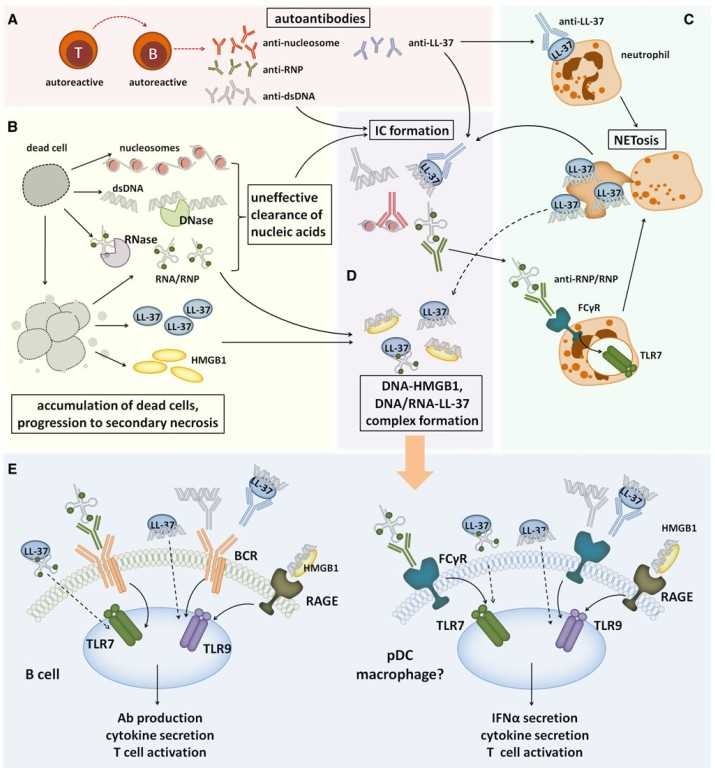 Figure 1. Model for sensing self-nucleic acids in SLE
(Source: Celhar T, et aL. 2012)
Our Services
1. High-Resolution Identification and Profiling of Autoantibody-Nucleic Acid Interactions for Enhanced Disease Diagnosis:
- Application: Our microarray platform facilitates the exact detection of autoantibodies that target an extensive array of nucleic acid antigens including dsDNA, ssDNA, RNA and disease-associated sequences found in patient serum or plasma. Our service offers complete AAC profiles necessary for early detection and precise diagnosis of autoimmune diseases such as SLE and Sjogren's syndrome along with others.
- Benefit: Our platform delivers complete and specific autoantibody profiles useful for differential diagnosis and disease subtype identification while offering insights into disease progression.
- Example: Discover autoantibody binding patterns to RNA sequences that are specific to Sjogren's syndrome patients and can be differentiated from other connective tissue diseases.
2. In-depth Characterization of Autoantibody Isotypes and Subtypes within Nucleic Acid Complexes for Understanding Pathogenic Mechanisms:
- Application: Identify the precise antibody isotypes (IgG, IgM, IgA) alongside their subtypes which bind to nucleic acid targets. Understanding the underlying immunological mechanisms and autoimmune response stage requires this information.
- Benefit: The process of identifying specific autoantibodies that cause tissue damage and inflammation helps clinicians select appropriate targeted treatment strategies.
- Example: Doctors must determine if IgG1 or IgG3 antibodies bind with dsDNA to form complexes in active lupus nephritis patients for personalized treatment targeting these specific isotypes.
3. High-Throughput Discovery of Novel Autoantigens and Autoantibodies for Biomarker Development and Therapeutic Target Identification:
- Application: The high-throughput microarray platform we developed enables patients' samples to be tested against extensive nucleic acid sequences which comprise both newly discovered and less-documented molecules. Researchers can now identify previously undiscovered autoantigens and their associated autoantibodies which might contribute to autoimmune disease development through this method.
- Benefit: Detect new biomarkers that enable early detection of diseases or disease activity tracking while finding new therapeutic targets to intervene in autoimmune pathways.
- Example: Conduct screenings of idiopathic inflammatory myopathy patient samples using a short RNA sequence library to discover new autoantibodies which may help in disease diagnosis or reveal fresh pathogenic mechanisms.
Technical Platform Advantages - Powering Accurate and Reliable AAC Analysis
- Comprehensive Nucleic Acid Antigen Library: Our chips allow for customization with a wide range of relevant nucleic acid antigens to achieve full coverage of both established and possible autoantibody targets.
- High Sensitivity and Specificity: Our detection methods and optimized surface chemistry together enable precise identification of AACs while keeping background noise low.
- Quantitative Data Output: Provides quantitative measurements of autoantibody binding to different nucleic acids, allowing for the assessment of disease severity and monitoring of treatment response.
- Customizable Solutions: We offer flexible chip design and assay development services to meet specific research and diagnostic needs.
Clinical Significance in Autoimmune Diseases
The analysis of Autoantibody-Nucleic Acid Complexes using our technology has significant clinical implications:
- Improved Diagnostic Accuracy: Identifying specific AAC profiles can enhance the accuracy of autoimmune disease diagnosis.
- Disease Stratification and Prognosis: Quantitative AAC analysis helps doctors classify patients according to disease severity and predict how their disease will develop over time.
- Monitoring Treatment Efficacy: Essential insights into therapeutic intervention success are provided through monitoring AAC level changes.
- Personalized Medicine Approaches: Detecting specific autoantibodies and nucleic acid targets permits healthcare providers to craft tailored treatment methods.
Driving Innovation in Autoimmune Disease Research
Our AAC analysis services empower researchers to:
- Elucidate Disease Mechanisms: Discover how AACs contribute to both starting and advancing autoimmune diseases through comprehensive research.
- Identify Novel Therapeutic Targets: Research into AAC formation and function helps identify molecules that could serve as drug development targets.
- Develop Advanced Diagnostic Tools: Develop precise and highly sensitive diagnostic tests to enable early detection and ongoing monitoring of autoimmune diseases.
New Horizons in Autoimmune Research
1. Precision Diagnostic Development
- Identify anti-dsDNA antibody glycosylation subtypes (e.g., IgG2a high galactosylation) associated with lupus nephritis
- Establish conformation-sensitive detection standards for anti-nuclear matrix antibodies to enhance early diagnosis of Sjögren's syndrome
2. Targeted Therapy Evaluation
- Quantify the inhibition rate of TLR inhibitors (e.g., Hydroxychloroquine) on complex-induced IFN-α secretion
- Screen nucleic acid clearing agents (e.g., DNase I) for their ability to degrade NETs-DNA complexes
3. Disease Subtyping and Prognosis
- Construct SLE activity scoring models based on anti-Sm antibody-RNA complex abundance
- Analyze dynamic changes in anti-Ro/La antibody-miRNA complexes to predict the progression of primary Sjögren's syndrome
4. New Therapeutic Development
- Evaluate the specificity of CAR-T cells in clearing pathogenic B cells secreting anti-DNA antibodies
- Optimize gene editing vectors (e.g., CRISPR-Cas9) to avoid interactions with serum antibodies
5. Biomarker Discovery
- Screen for biomarkers related to interferon characteristics, such as DNA-LL37 antimicrobial peptide complexes
- Discover lncRNA-autoantibody interaction networks regulating NETs release
Our near-infrared microarray protein chip technology platform provides efficient and precise autoantibody-nucleic acid complex detection services. From disease mechanism analysis to new biomarker discovery, we help accelerate diagnostics and treatments for autoimmune diseases.
Contact us now to get your customized solution!
Reference
- Celhar T, et aL. TLR7 and TLR9 in SLE: when sensing self goes wrong. Immunol Res. 2012 Sep;53(1-3):58-77.
- Custom Protein Arrays
- Drug Screening and Toxicity Assessment
- Immunoprofiling
- Oncology Drug Screening
- Signaling Pathway Analysis
- Spatial Multi-Omics and Targeted Proteomics
- Vaccine Development
- Antibody Profiling
- Protein-Protein Interaction Studies
- Allergen Screening
- Protein-Nucleic Acid Interaction Analysis