T-Cell and B-Cell Profiling
What is T-Cell and B-Cell Profiling?
T cells and B cells are fundamental to the adaptive immune system, playing distinct roles in immune defense. T cells are primarily responsible for cell-mediated immunity, detecting and eliminating infected or malignant cells, while B cells mediate humoral immunity by producing antibodies that neutralize pathogens.
Comprehensive profiling of T-cell and B-cell populations is crucial for understanding immune system dynamics in health and disease. By analyzing their functionality, phenotype, and cytokine secretion profiles, researchers gain critical insights into immune responses, disease progression, and treatment efficacy.
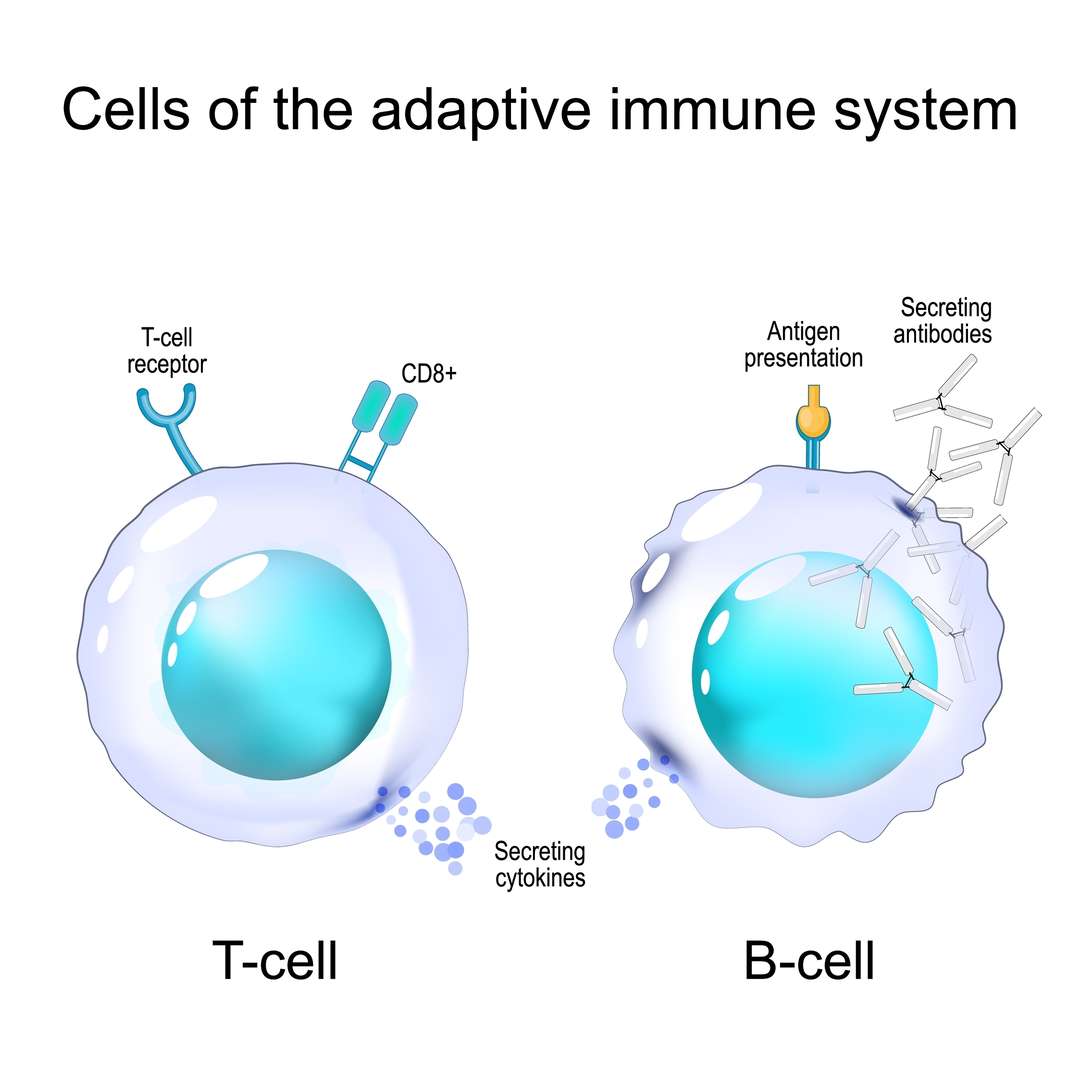 Figure 1. Structure and Anatomy of T-cell and B-cell.
Role of Protein Array Technology in T-Cell and B-Cell Profiling
At Creative Diagnostics, we utilize advanced protein array technology for high-throughput and multiplexed detection of T-cell and B-cell markers, cytokine secretion, and functional activity. Protein microarrays offer unparalleled efficiency in analyzing immune cell interactions, providing:
Simultaneous detection of multiple markers: Enables comprehensive characterization of T-cell and B-cell subsets, including activation, differentiation, and memory status.
High sensitivity and specificity: Near-infrared fluorescence labeling and laser confocal scanning improve detection accuracy, capturing even low-abundance molecules at pg/mL levels.
Rapid, high-throughput analysis: Multi-chamber microarray slides facilitate large-scale sample screening, reducing time and cost while increasing efficiency.
Minimal sample consumption: Requires smaller sample volumes compared to traditional flow cytometry or ELISA-based assays, making it ideal for rare or limited samples.
Our T-Cell and B-Cell Profiling Services
Creative Diagnostics offers a broad spectrum of services tailored to diverse immunological studies:
- Multiparameter Immune Profiling: Simultaneous quantification of surface markers, cytokine secretion, and activation states using high-density protein microarrays.
- Functional Analysis: Assessment of T-cell cytotoxicity, proliferation, and B-cell antibody production to evaluate immune functionality.
- Advanced Data Processing: Comprehensive bioinformatics support, including differentiation status, activation analysis, and immune pathway insights.
- Customized Experimental Design: Flexible microarray platforms allow for tailored assays to meet specific research needs, including custom antibody screening and protein detection.
Array Example
| Panel | Example Antigen/Protein Combination | Target Application | Possible Sample Preparation |
| Broad Proteome Array | - Entire set of pathogen proteins (e.g., ~100–300 for a bacterium, ~10–50 for a virus) - Selected surface/extracellular proteins | 1. Discovery of novel immunoreactive proteins 2. Identification of immunodominant targets for vaccines or diagnostics | - In vitro: Supernatants from stimulated B-cell or T-cell cultures exposed to a specific pathogen extract; these supernatants can contain secreted antibodies/cytokines - In vivo: Sera/plasma from infected or immunized animals/humans |
| Targeted Multi-Epitope | - 20–50 known or putative antigens (e.g., from literature or prior screens) - Overlapping peptides covering each region | 1. Refinement of candidate list from broader proteome array 2. Quick screening of known vaccine candidates against multiple immune sera samples | - In vitro: Supernatants from PBMCs or splenocytes restimulated with each candidate protein/peptide - In vivo: Sera from vaccinated animals at multiple timepoints (day 7, 14, 21, etc.) |
| Epitope Scanning Array | - Peptides (8–20 aa) systematically overlapping one or more proteins of interest - Could be full scanning of a single high-priority antigen | 1. Fine mapping of B-cell or T-cell epitopes 2. Determination of minimal epitope sequences | - In vitro: T-cell proliferation/cytokine release assays (co-cultures of T cells + APCs + array peptides) - In vivo: Sera from immunized animals, then tested for Ig binding to each peptide spot |
Applications of T-Cell and B-Cell Profiling
Our T-cell and B-cell profiling services provide crucial insights across various research and clinical domains, including tumor immunology, autoimmune and inflammatory diseases, vaccine and infectious disease research, and drug screening and development. In tumor immunology, we analyze tumor-infiltrating lymphocytes (TILs) and immune checkpoint markers to evaluate cancer immunotherapy responses. For autoimmune and inflammatory diseases like rheumatoid arthritis and lupus, we investigate immune dysregulation by assessing T-cell and B-cell activity. In vaccine and infectious disease research, we monitor vaccine-induced immune responses by characterizing T-cell activation and B-cell antibody production. Additionally, in drug screening and development, we identify immune-modulating drug targets by studying T-cell proliferation, cytotoxicity, and B-cell antibody secretion.
Why Choose Creative Diagnostics?
Innovative Technology: State-of-the-art protein array technology for precise, high-throughput immune profiling.
Superior Sensitivity & Accuracy: Detection capabilities down to pg/mL levels, ensuring high-quality and reproducible results.
High-Throughput & Cost-Effective: Multi-sample analysis with minimal reagent consumption, reducing experimental costs.
Expert Support & Custom Solutions: Dedicated technical team providing consultation, data interpretation, and tailored assay designs.
Reach out to us today to explore how our cutting-edge T-cell and B-cell profiling services can enhance your immunology research and drug development efforts!
- Custom Protein Arrays
- Drug Screening and Toxicity Assessment
- Immunoprofiling
- Oncology Drug Screening
- Signaling Pathway Analysis
- Spatial Multi-Omics and Targeted Proteomics
- Vaccine Development
- Antibody Profiling
- Protein-Protein Interaction Studies
- Allergen Screening
- Protein-Nucleic Acid Interaction Analysis