CRISPR-Cas System Recognition
What is CRISPR-Cas?
CRISPR-Cas (Clustered Regularly Interspaced Short Palindromic Repeats and associated proteins) is an adaptive immune system in prokaryotes, found in most archaea and many bacteria. It provides immunity against viruses and plasmids by integrating short sequences from invading pathogens into CRISPR arrays, then guiding Cas proteins to recognize and cut complementary DNA or RNA.
The CRISPR-Cas system mainly consists of two parts:
1. CRISPR arrays: Containing short repeat sequences and unique spacer sequences acquired from invading pathogens.
2. Cas proteins: Using CRISPR RNA (crRNA) as a guide to identify and cut specific DNA or RNA sequences.
In brief, the system functions through three main stages:
1. Adaptation: Integrating new spacer sequences into CRISPR arrays.
2. Expression: Transcribing CRISPR arrays into precursor crRNA, then processing into mature crRNA.
3. Interference: Cas proteins using mature crRNA as a guide to recognize and cut invading nucleic acids.
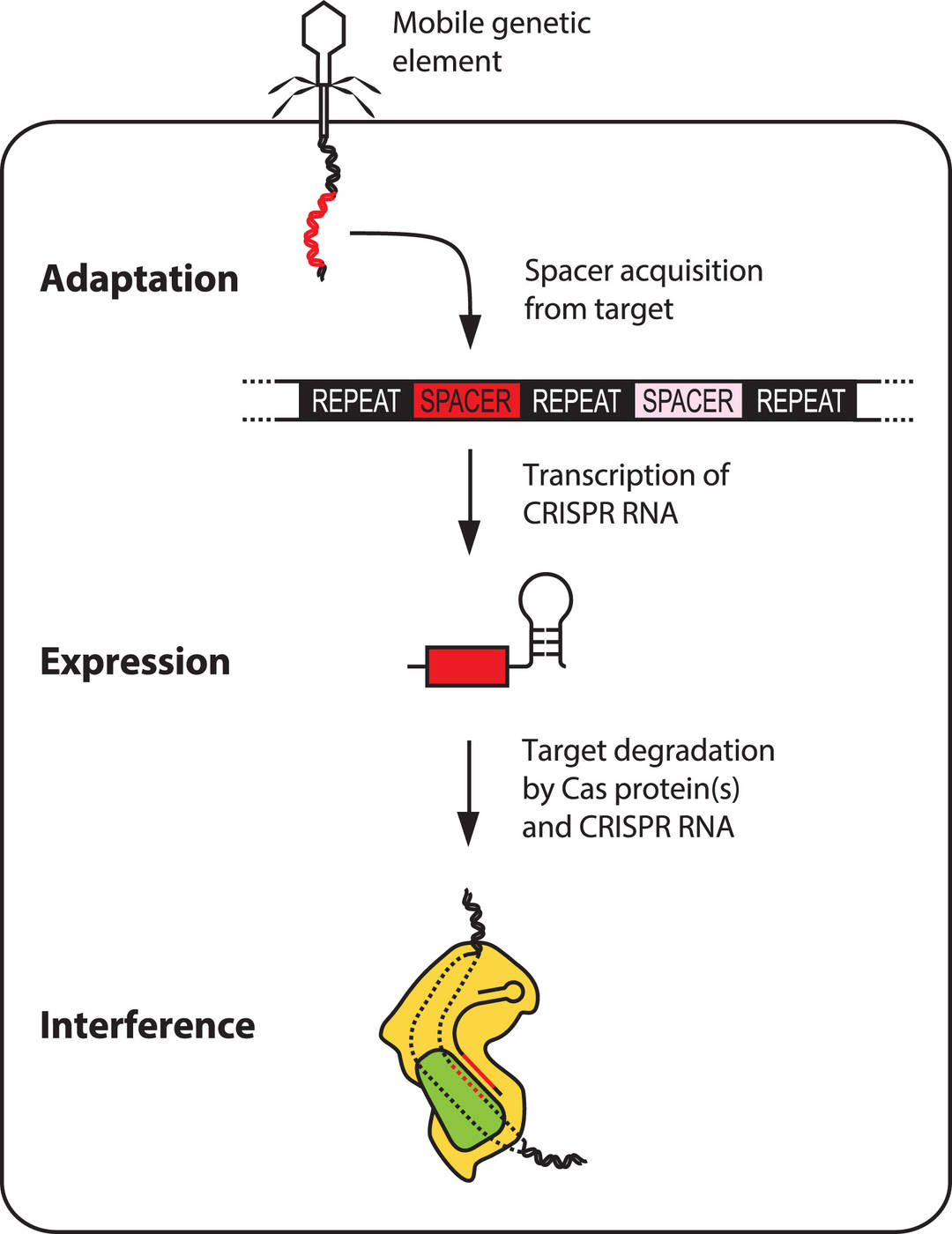 Figure 1. The key steps of CRISPR-Cas immunity (Source: Rath D, et al. 2015)
Protein Arrays for Efficient CRISPR-Cas System Analysis
Protein arrays are crucial for CRISPR-Cas system research, offering:
- Interaction analysis: Identifying and characterizing interactions between Cas proteins and their target nucleic acids.
- Functional screening: Evaluating activity and specificity of different Cas variants or engineered CRISPR systems.
- Mechanistic studies: The study focuses on understanding how CRISPR-Cas systems function during their adaptation phase as well as expression and interference stages.
- Drug discovery: Identification of chemical compounds that can alter CRISPR-Cas system functions through screening to find new therapeutic solutions.
Using advanced platforms our protein array services enable high-throughput analysis that achieves both high sensitivity and minimal sample usage:
Near-Infrared Fluorescent Labeled Chip
The near-infrared fluorescent labeled chips we provide deliver sensitive and specific detection methods which accurately measure protein-nucleic acid interactions within complex biological samples. Background interference decreases while detection accuracy increases.
Laser Confocal Chip Scanner
The laser confocal chip scanner provides high-resolution imaging for clear protein expression patterns and interaction maps. It allows detailed analysis of binding modes and kinetics between CRISPR-Cas system components.
Silicone-Based Membrane as Protein Chip
Our silicone-based membrane protein chips offer a flexible and durable platform with good biocompatibility and chemical stability. This enables analysis under various experimental conditions, enhancing success rates and reliability.
Service Content Examples
Array Design for CRISPR-Cas System Analysis
| Panel Name | Marker Combination | Target Application | Possible Sample Preparation |
| Cas Protein Interaction | Cas9, Cas12a, Cas13a, CrrNA, tracrRNA, crRNA:tracrRNA complex | Study interactions between Cas proteins and guide RNAs, assess binding specificity,gRNA validation | - In vitro: Purified Cas proteins and synthetic guide RNAs - In vivo: Cell lysates from CRISPR-Cas expressing systems |
Example Antigen/Protein Combination for CRISPR Studies
| Array Design | Example Antigen/Protein Combination | Target Application | Possible Sample Preparation |
| CRISPR Component Array | - Full set of CRISPR-Cas proteins (e.g., Cas9, Cas12 variants) - Guide RNAs (crRNA, tracrRNA) - Effector complex components | 1. Study assembly and maturation of CRISPR-Cas complexes 2. Analyze interactions between different CRISPR components | - In vitro: Recombinant protein mixtures - In vivo: Cell lysates from CRISPR-Cas expressing systems |
Our protein array services, based on advanced technology platforms, provide powerful tools for CRISPR-Cas system research. Through Sample Preparation, Microarray Hybridization, Microarray Scanning, and Bioinformatics Analysis, we help you gain in-depth understanding of CRISPR mechanisms, accelerate gene-editing tool development, and create innovative infectious disease diagnostic methods.
Reference
- Rath D, Amlinger L, Rath A, Lundgren M. The CRISPR-Cas immune system: Biology, mechanisms and applications. Biochimie. 2015;117:119-128.
- Custom Protein Arrays
- Drug Screening and Toxicity Assessment
- Immunoprofiling
- Oncology Drug Screening
- Signaling Pathway Analysis
- Spatial Multi-Omics and Targeted Proteomics
- Vaccine Development
- Antibody Profiling
- Protein-Protein Interaction Studies
- Allergen Screening
- Protein-Nucleic Acid Interaction Analysis