Phosphorylation Status Detection
What Is Phosphorylation Status Detection?
Phosphorylation Status Detection is used to detect and measure phosphorylation status in biological sample. It's a phosphorus modification of individual amino acids (largely serine, threonine and tyrosine) by kinases. Phosphatases, on the other hand, break off these phosphate bonds. The level of phosphorylation can dramatically affect the action of a protein, its interaction with it and how it performs other tasks in the cell – it's a vital area of cell biology and biochemistry.
The importance of protein phosphorylation is several:
- Regulation: Phosphorylation regulates multiple cell processes, including signal transduction, cell cycle, differentiation and metabolism. Phosphorylation shifts can be markers of changes in these pathways.
- Disease Impact: Incorrect phosphorylation pattern is associated with multiple diseases such as cancer, neurodegenerative diseases and metabolic syndromes. This change can be detected to uncover the mechanisms of disease and craft targeted treatments.
- Innovations: Having a measurement for phosphorylation status accurately makes it possible to understand cellular signaling networks better and make a difference when designing drugs and therapeutics.
Our Phosphorylation Status Detection Service
At Creative Diagnostics, we specialize in providing comprehensive services for phosphorylation status detection. Our team of experts is here to provide researchers with customized analytical approaches for understanding protein phosphorylation.
- High-Density Arrays: We have thousands of proteins including kinases and phosphatases that we can stain in a high-density array. This makes profiling of protein interactions and changes very large, without needing to prep and isolate samples a lot.
- Functional Analysis: We use functional protein microarrays to examine all kinds of biochemical processes such as kinase-substrate interactions. This capability lets scientists not just monitor phosphorylated proteins but their activity in elaborate biological samples.
- Multiplex Analysis: Our technology can run multiplex tests, meaning we can detect more than one phosphorylated protein. This feature allows for better throughput and gives a more detailed view of cellular signaling networks.
- Labeling Methods: we use high-end labelling such as fluorescent dyes and enzymatic amplification for signal detection capability. That means even phosphorylated proteins with low numbers can be accurately quantified.
Our microarray technology provides multiple benefits for detecting phosphorylation status:
- High Sensitivity: The techniques we use enable high-specificity detection of phosphorylated proteins that exist in small quantities while delivering dependable data to scientists.
- Rapid Data Collection: Our microarrays perform high throughput operations that allow for quick analysis of multiple samples leading to accelerated research timelines.
- Comprehensive Profiling: Our technology analyzes multiple proteins at once to yield a complete perspective of cellular signaling pathways which helps researchers discover main regulatory processes.
- Cost-Effectiveness: Parallel analysis of multiple targets enables researchers to save on reagent costs and sample quantities while performing better than conventional Western blotting or ELISA techniques.
Array Example
| Panel | Phospho Markers (Subset) | Typical Applications | Sample Prep |
| RTK-Focused (Panel A) | EGFR (pY1068), HER2 (pY1248), PDGFR (pY751), VEGFR2 (pY1175) | - Assess RTK inhibitor effects (e.g., EGFRi, VEGFRi) - Oncogenic RTK activation in tumors - Angiogenesis blockade monitoring | - In Vitro: Tumor cell line lysates ± drug -In Vivo: Tumor homogenates from mice or patients, time-course post drug |
| MAPK/PI3K (Panel B) | ERK1/2 (pT202/pY204), p38 (pT180/pY182), JNK (pT183/pY185), AKT (pS473) | - Map core pathways in proliferation & stress - Evaluate synergy with MEK + PI3K dual inhibitors | - In Vitro: Stimulated fibroblasts, immune cells - In Vivo: Tissue lysates or PBMC from treated animals |
| Transcription & mTOR (Panel C) | NF-κB p65 (pS536), STAT3 (pY705), mTOR (pS2448), p70S6K (pT389), 4E-BP1 (pT37/pT46) | - Immune activation (NF-κB, STAT3) - Metabolic & translational control (mTOR, p70S6K, 4E-BP1) - Cancer, autoimmune disorders | - In Vitro: T cell or macrophage cultures ± cytokines - In Vivo: LN or splenic lysates, tumor extracts to see therapy response |
Our Near-Infrared Microarray Protein Chip Technology Platform
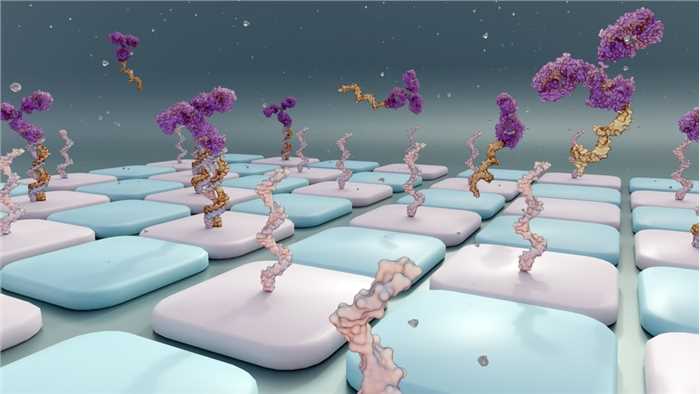
We offer a cutting-edge near-infrared microarray protein chip technology platform that enhances the capabilities of phosphorylation status detection. Our platform combines technologies such as laser confocal microscopy, near-infrared fluorescent labeling chip, and special functional silica gel matrix membrane with protein chips to improve detection sensitivity and specificity, allowing for more precise analysis of protein interactions and drug effects.
Applications of Phosphorylation Status Detection
Our phosphorylation status detection services have broad applications across various research domains:
- Cancer Research: Using our microarrays, we can examine phosphorylation shifts in cancer cells, to pinpoint target molecules and drug resistance.
- Neurodegenerative Diseases: identifying aberrantly phosphorylated proteins of diseases such as Alzheimer's and Parkinson's can provide insights into the course of disease and biomarkers.
- Drug Design: Tracking phosphorylation change over time, throughout drug therapy, can inform drug design and optimization by telling how treatments modify signaling pathways.
- Metabolic Research: Understanding the major proteins involved in insulin signaling circuits can help with metabolic diseases such as diabetes and therapeutic interventions.
Leveraging Creative Diagnostics' advanced near-infrared microarray protein chip technology platform, our unique protein microarray technology significantly enhances the capabilities for phosphorylation status detection. By combining high sensitivity, multiplexing ability, and rapid data collection, we provide researchers with powerful tools to explore the complexities of protein phosphorylation and its implications in health and disease.
- Custom Protein Arrays
- Drug Screening and Toxicity Assessment
- Immunoprofiling
- Oncology Drug Screening
- Signaling Pathway Analysis
- Spatial Multi-Omics and Targeted Proteomics
- Vaccine Development
- Antibody Profiling
- Protein-Protein Interaction Studies
- Allergen Screening
- Protein-Nucleic Acid Interaction Analysis