• Home
  • Products
    • Functional Slides
      • Aldehyde
      • Alkene
      • Amine
      • Azide
      • Carboxyl
      • Epoxy
      • Maleimide
      • NHS
      • PDITC
      • Poly-L-lysine
      • Streptavidin
      • Thiol
    • Microfluidic Chips
      • Basic Flow Chips
      • Cell and Organism Culture Chips
      • Droplet Generator Chips
      • Droplet Sequencing Chips
      • Electrophoresis Microfluidic Chips
      • Gradient Chips
      • LNP & Nanoparticle Preparation Chips
      • Particle and Cell Sorting Chips
      • Permeation Array Chips
      • Porous Media Model Chips
      • Sample Preparation Chips
      • Vascular Simulation Chips
  • Services
    • Custom Protein Arrays
      • Custom Array Design
      • Functional Protein Arrays
      • Large-Scale Screening
      • Specific Protein Detection
    • Drug Screening and Toxicity Assessment
      • Cytokine Release Assay
      • Dose-Response Toxicity Evaluation
      • High-Throughput Drug Screening
      • Off-Target Effects Analysis
    • Immunoprofiling
      • Cytokine Profiling
      • Immune Checkpoint Molecule Detection
      • Immune Escape Mechanism Analysis
      • T-Cell and B-Cell Profiling
    • Oncology Drug Screening
      • Biomarker Discovery
      • Cell Signaling Pathway Mapping
      • Drug Resistance Mechanism Analysis
      • Target Identification
    • Signaling Pathway Analysis
      • Cross-Talk Between Pathways
      • Glycosylation Status Detection
      • Kinase Activity Assay
      • Pathway Activation/Inhibition Profiling
      • Phosphorylation Status Detection
    • Spatial Multi-Omics and Targeted Proteomics
      • Reverse Phase Protein Array (RPPA)
      • Digital Spatial Profiler (DSP)
      • Spatial Proteomics
    • Vaccine Development
      • Adjuvant Efficacy
      • Antigen Discovery
      • Antigen Mutation Analysis
      • Immunogenicity Assessment
      • Post-Vaccination Immune Response
    • Antibody Profiling
      • Antibody Subclass Profiling
      • Autoantibody Detection
      • Monoclonal and Polyclonal Antibody Analysis
      • Therapeutic Antibody Monitoring
    • Protein-Protein Interaction Studies
      • Co-Factor and Complex Formation Analysis
      • Interaction Network Mapping
      • Mutant vs Wild-Type Interaction Comparison
      • Protein Binding Assays
    • Allergen Screening
      • Common Allergen Detection
      • Cross-Reactivity Assessment
      • IgE Antibody Profiling
    • Protein-Nucleic Acid Interaction Analysis
      • Autoantibody-Nucleic Acid Complex Analysis
      • Chromatin Remodeling Complex Interactions
      • CRISPR-Cas System Recognition
      • Epigenetics (DNA Methylation)
      • Gene Splicing Factor - Pre-mRNA Interactions
      • Nucleic Acid Aptamer Screening
      • Pathogen-Associated Molecular Pattern (PAMP) Recognition
      • RNA-Binding Protein Regulation
      • Small Molecule Interference with Protein-Nucleic Acid Interactions
      • Structure-Dependent Interactions
      • Transcriptional Regulation
      • Viral Protein-Host Nucleic Acid Interactions
  • Resource
    • Biomolecular Interactions
    • Cellular Signaling
    • Drug Discovery
    • Immunology & Diagnostics
  • Technology
    • Protein Biochip Technology Platform (Multi Marker)
      • Silica-Based Membrane as Protein Chip
      • Near-Infrared Fluorescent Labeled Chip
      • Laser Confocal Chip Scanner
  • About Us
  • Contact Us
Get A Free Quote
  1. Home
  2. Services
  3. Protein-Nucleic Acid Interaction Analysis
  4. Structure-Dependent Interactions

Structure-Dependent Interactions

Three-dimensional structures adopted by DNA and RNA dictate the precise interactions between proteins and nucleic acids which form the basis of gene regulation. Structure-dependent interactions between molecular structures such as G-quadruplexes, triplex DNA, and RNA hairpins perform essential functions in biological processes such as gene replication and transcription while also influencing epigenetic modifications and contributing to disease development like cancer. Creative Diagnostics provides a full range of services that employ near-infrared microarray protein chip technology for advanced high-throughput and high-sensitivity analysis of essential structure-dependent interactions for drug discovery and functional genomics research.
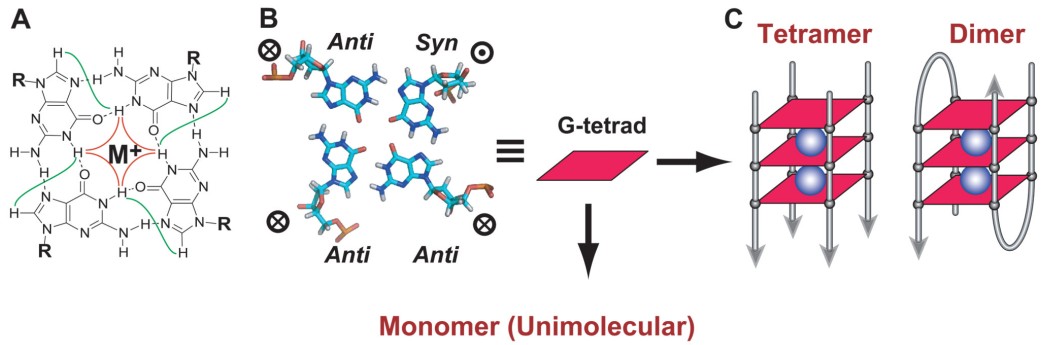
Schematic illustration of a G-tetrad and G-quadruplexFigure 1. An example of a G-tetrad structure and G-quadruplex
(Source: Chen Y, et al. 2012)

Our Application-Focused Services

  • Precise Detection and Characterization of Structure-Dependent Interactions for Targeted Drug Development:
    1. Application: Our platform allows for the detailed analysis of protein binding to specific nucleic acid structures, such as G-quadruplexes, which are implicated in tumor development and are promising targets for anticancer drugs. Our services include G-quadruplex complex conformation analysis with NMR validation alongside protein-nucleic acid dynamic binding kinetics analysis using Surface Plasmon Resonance (SPR) technology as well as drug target screening with binding mode identification.
    2. Benefit: New drug targets should be discovered by examining unique nucleic acid structures and then the binding of prospective drug candidates to these targets must be characterized to create highly specific and effective therapeutic treatments.
    3. Example: Evaluate small molecules for their effectiveness in stabilizing G-quadruplex structures within oncogene promoters and assess their binding kinetics to refine drug candidate selection.
  • High-Throughput Multi-Parameter Joint Detection for Comprehensive Regulatory Network Analysis:
    1. Application: Our technology enables the simultaneous detection of various components involved in structure-dependent interactions, including DNA/RNA binding proteins, transcription factors, and epigenetic modifying enzymes. This allows for a holistic understanding of complex regulatory pathways. We support multi-target analysis in single samples, such as investigating tumor-related pathway protein interaction networks.
    2. Benefit: Understanding how various regulatory molecules interact with distinct nucleic acid structures enables researchers to better comprehend disease mechanisms and discover treatments targeting multiple pathways.
    3. Example: Conduct simultaneous analysis of multiple transcription factors and epigenetic modifiers as they bind to a unique DNA structure found in cancer cells.
  • Customized Solutions for Diverse Research Applications:
    1. Application: We provide flexible and tailored solutions to meet a wide range of research needs, offering full process support from in vitro assays (e.g., EMSA, ChIP) to in vivo analysis (e.g., CRISPR complex analysis). Our services also include data integration and bioinformatics simulation for epigenetic regulatory network modeling.
    2. Benefit: Our services provide specialized experimental designs together with detailed data analysis to explore specific research questions on structure-dependent protein-nucleic acid interactions within different biological systems.
    3. Example: Develop a microarray study focused on CRISPR-Cas complex interactions with genomic regions that create non-standard DNA structures and apply bioinformatics techniques to analyze the resulting effects on gene expression.

Key Advantages of Our Technology Platform

  • Near-infrared Fluorescence Labeling: Offers high signal stability, low background interference, supports full automation, and is compatible with a wide pH range and complex samples.
  • Functionalized Silica Gel Membrane: Provides broad-spectrum binding capability for DNA, RNA, and proteins, with high sensitivity.
  • Laser Confocal System: Enables single-molecule level interaction analysis.

Typical Application Areas

  • Drug Development: G-quadruplex stabilizer screening, telomerase inhibitors.
  • Cancer Research: Understanding the role of non-canonical DNA structures in tumorigenesis.
  • Gene Therapy: Analyzing the interaction of therapeutic molecules with specific nucleic acid structures.
  • Basic Research: Investigating the fundamental principles of structure-dependent protein-nucleic acid interactions.

Reasons to Choose Us

  1. Innovative Technology
  2. Full-Process Quality Control System
  3. Rich Cross-Domain Application Experience
  4. Customized Solutions
  5. High Cost-Performance Ratio
  6. Continuous Technological Innovation

Our Protein-Nucleic Acid Interaction (Structure-Dependent) Detection and Analysis Service, leveraging the advanced near-infrared microarray protein chip technology platform, provides you with high-throughput, high-sensitivity solutions. From basic research to drug development, our services cover multiple key areas in life science research. Our clients gain access to cutting-edge technology support together with complete quality assurance and personalized application experiences through our tailored solutions.

Contact our expert team to discover how we will provide your project with the optimal solution. We plan to collaborate with academic researchers and biotechnology companies to push scientific discovery forward.

Reference

  1. Chen Y, et al. Sequence, stability, and structure of G-quadruplexes and their interactions with drugs. Curr Protoc Nucleic Acid Chem. 2012 Sep;Chapter 17:Unit17.5.
Online Inquiry
✔ ✖ Verification code
Services
  • Custom Protein Arrays
    • Custom Array Design
    • Functional Protein Arrays
    • Large-Scale Screening
    • Specific Protein Detection
  • Drug Screening and Toxicity Assessment
    • Cytokine Release Assay
    • Dose-Response Toxicity Evaluation
    • High-Throughput Drug Screening
    • Off-Target Effects Analysis
  • Immunoprofiling
    • Cytokine Profiling
    • Immune Checkpoint Molecule Detection
    • Immune Escape Mechanism Analysis
    • T-Cell and B-Cell Profiling
  • Oncology Drug Screening
    • Biomarker Discovery
    • Cell Signaling Pathway Mapping
    • Drug Resistance Mechanism Analysis
    • Target Identification
  • Signaling Pathway Analysis
    • Cross-Talk Between Pathways
    • Glycosylation Status Detection
    • Kinase Activity Assay
    • Pathway Activation/Inhibition Profiling
    • Phosphorylation Status Detection
  • Spatial Multi-Omics and Targeted Proteomics
    • Reverse Phase Protein Array (RPPA)
    • Digital Spatial Profiler (DSP)
    • Spatial Proteomics
  • Vaccine Development
    • Adjuvant Efficacy
    • Antigen Discovery
    • Antigen Mutation Analysis
    • Immunogenicity Assessment
    • Post-Vaccination Immune Response
  • Antibody Profiling
    • Antibody Subclass Profiling
    • Autoantibody Detection
    • Monoclonal and Polyclonal Antibody Analysis
    • Therapeutic Antibody Monitoring
  • Protein-Protein Interaction Studies
    • Co-Factor and Complex Formation Analysis
    • Interaction Network Mapping
    • Mutant vs Wild-Type Interaction Comparison
    • Protein Binding Assays
  • Allergen Screening
    • Common Allergen Detection
    • Cross-Reactivity Assessment
    • IgE Antibody Profiling
  • Protein-Nucleic Acid Interaction Analysis
    • Autoantibody-Nucleic Acid Complex Analysis
    • Chromatin Remodeling Complex Interactions
    • CRISPR-Cas System Recognition
    • Epigenetics (DNA Methylation)
    • Gene Splicing Factor - Pre-mRNA Interactions
    • Nucleic Acid Aptamer Screening
    • Pathogen-Associated Molecular Pattern (PAMP) Recognition
    • RNA-Binding Protein Regulation
    • Small Molecule Interference with Protein-Nucleic Acid Interactions
    • Structure-Dependent Interactions
    • Transcriptional Regulation
    • Viral Protein-Host Nucleic Acid Interactions
Services
Immunoprofiling Signaling Pathway Analysis Vaccine Development Antibody Profiling Custom Protein Arrays Oncology Drug Screening Protein-Protein Interaction Studies Allergen Screening Drug Screening and Toxicity Assessment Spatial Multi-Omics and Targeted Proteomics
Technology
  • Protein Biochip Technology Platform (Multi Marker)
Contact Us
  • Tel: (USA)
  • (Europe)
  • Fax:
  • Email:
Privacy Policy | Cookie Policy | © Copyright Creative Diagnostics 2026. All Rights Reserved.
Follow Us On