Autoantibody Detection
Blood autoantibodies sometimes target the body's own tissues which results in inflammation and organ damage. By measuring these antibodies scientists can evaluate both the immune health status of a person and detect possible autoimmune diseases. Early and precise detection improves disease diagnosis rates significantly and provides critical guidance for personalized treatment.
Autoantibodies often function as early indicators for autoimmune diseases which include systemic lupus erythematosus (SLE) and rheumatoid arthritis. Key clinical applications include:
- Early Diagnosis: Autoantibodies appear in more than half of patients who will develop autoimmune diseases prior to symptom emergence which allows for early medical intervention.
- Disease Subtyping: Autoantibody profiling identifies different disease subtypes by detecting markers like anti-dsDNA for SLE and anti-SS-A/Ro for Sjögren's syndrome.
- Treatment Monitoring: Longitudinal tracking of antibody levels helps evaluate responses to immunosuppressive therapies.
Protein Array Provides Service for Autoantibody Detection
We provide full-process assay solutions covering the three phases of research discovery - clinical validation - companion diagnostic development:
| Service Modules | Examples |
| Standard Testing Panel | Pre-configured with 15 clinically validated panels, including 8-plex systemic lupus erythematosus (SLE) panel and 6-marker rheumatoid arthritis (RA) profile |
| Customized Testing | Supports flexible combinations of 50+ targets, expandable to include IgG/IgA/IgM isotype simultaneous analysis |
| Companion Diagnostic Development | Delivers anti-PD-1/CTLA-4 therapy response prediction models, including biomarker validation and IVD translation support |
Our Specialized Service System
We deliver multidimensional testing solutions supporting diverse sample types including serum, cerebrospinal fluid (CSF), and tissue lysates. Our analysis system enables rapid report generation and longitudinal disease progression tracking. Customized service plans are tailored to your experimental needs:
- Antibody Panel Customization
Target Selection Flexibility: Choose from 1,000+ validated antibodies, supporting 5-100 biomarker combinations.
Disease-Specific Coverage: Custom panels for 8 clinical specialties including oncology, neurology, and endocrinology.
Special Epitope Detection: Incorporates post-translational modification analysis (e.g., phosphorylation, glycosylation sites).
- Extended Sample Compatibility
Specialized Processing: Low-abundance antibody enrichment for CSF, antigen retrieval optimization for paraffin-embedded sections.
Micro-volume Testing: Requires only 10 μL serum (1/5 of conventional assays).
Multi-sample Integration: Concurrent analysis of serum + tissue lysates with cross-sample data correlation.
- Tiered Data Analysis
| Customization Level | Service Components |
| Basic Profiling | Antibody expression heatmap + absolute concentration report |
| Advanced Analytics | Machine learning-powered disease risk scoring models (AUC >0.85) |
| Longitudinal Tracking | Personalized antibody dynamics profiles (supports ≥3 timepoint comparisons) |
- Certification Development Support
Method Validation Package: Includes linear range and precision validation.
Regulatory Documentation: Complete validation data packages for CE-IVD/FDA 510(k) submissions.
Cross-platform Verification: 300+ sample consistency validation against MS, ELISA, and other platforms.
Protein Array's Near-Infrared Microarray Protein Chip Technology Platform
Our advanced near-infrared microarray protein chip technology leverages laser confocal, near-infrared fluorescence labeling, and functional silicone membrane to deliver superior performance in autoantibody detection:
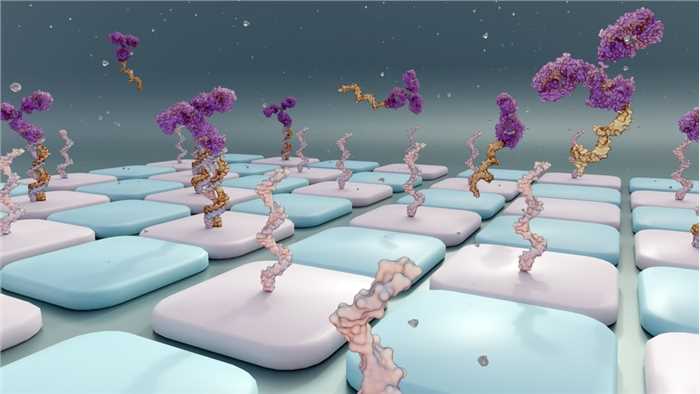
- High-throughput detection: Enables simultaneous analysis of multiple samples, enhancing efficiency and reducing operational time.
- High sensitivity: The functional silicone membrane delivers excellent sensitivity along with extensive applicability since it handles numerous sample types including serum, CSF, and lysates.
- Automatable workflow: Complete automation from sample loading through data acquisition minimizes human error while guaranteeing high reproducibility in the process.
Array Example
| Panel A: Systemic Autoimmune Diseases (SLE, Sjögren's, Scleroderma) | |
| Autoantigen Combination | Relevant Conditions / Target Application |
| 1. dsDNA (double-stranded DNA) 2. Sm (Smith antigen) 3. RNP (U1-Ribonucleoprotein) 4. SSA/Ro (SS-A) 5. SSB/La (SS-B) 6. Scl-70 (topoisomerase I) 7. Centromere proteins (CENP-A, CENP-B) | - Systemic Lupus Erythematosus (SLE): anti-dsDNA, anti-Smith - Mixed Connective Tissue Disease (MCTD): anti-RNP - Sjögren's Syndrome: anti-SSA/Ro, anti-SSB/La - Systemic Sclerosis (Scleroderma): anti-Scl-70, anti-centromere |
| Panel B: Organ-Specific Autoimmune Diseases | |
| Autoantigen Combination | Relevant Conditions / Target Application |
| 1. GAD65, IA-2 (islet antigens) 2. Insulin 3. TPO (thyroid peroxidase) 4. Thyroglobulin 5. Transglutaminase (tTG) | - Type 1 Diabetes: GAD65, IA-2, insulin - Autoimmune Thyroid Disease: TPO, thyroglobulin - Celiac Disease: transglutaminase (tTG) |
| Panel C: Rheumatologic & Others | |
| Autoantigen Combination | Relevant Conditions / Target Application |
| 1. Rheumatoid Factor (RF, typically IgM anti-IgG Fc) 2. Cyclic Citrullinated Peptides (CCP) 3. Collagen Type II (in RA or other arthritides) 4. Myelin Basic Protein (MBP, for MS models or demyelinating conditions) | - Rheumatoid Arthritis: Anti-CCP, Rheumatoid Factor - Multiple Sclerosis / EAE models: Myelin Basic Protein (MBP) - Cartilage Autoimmunity: Type II collagen |
Application of Autoantibody Detection
The near-infrared microarray protein chip technology platform can be applied in several scenarios:
- Liver Disease Differentiation
Separating primary biliary cholangitis (antimitochondrial antibodies) from autoimmune responses that happen after viral hepatitis. Alcoholic liver disease progression monitoring: Anti-CYP2E1 antibody levels serve as a biomarker that corresponds to fibrosis severity to help direct treatment strategies.
- Cancer Immunomonitoring
Breast cancer early screening: combined detection of anti-p53, anti-HER2 and other 7 oncogenic antibodies.
Esophageal cancer risk warning: quantification of anti-SOX2, anti-TP53 antibody concentration gradients.
- Connective Tissue Disorders
Staging of systemic sclerosis: the distinction between anti-Scl-70 antibodies (diffuse) and anti-fixation point antibodies (restricted).
Diagnosis of dermatomyositis: The diagnosis of dermatomyositis requires finding antibodies targeting myositis such as anti-Mi-2 and anti-MDA5.
- Endocrine Disease Management
Prediction of type 1 diabetes mellitus: combined detection of GAD65, IA-2 and ZnT8 antibodies.
Traceability of thyroid dysfunction: differentiating Graves' disease (anti-TSHR) from Hashimoto's thyroiditis (anti-TPO).
- Drug Development Support
Immunogenicity assessment of biosimilars: detection of antidrug antibody (ADA) affinity and neutralizing activity.
Prediction of immune checkpoint inhibitor efficacy: screening for anti-TIF1γ antibodies before PD-1 treatment.
Utilizing Protein Array's advanced near-infrared microarray protein microarray technology platform, Creative Diagnostics is dedicated to helping researchers with autoantibody detection, from early screening to precision diagnostics. We will be your core strategic partner in autoantibody detection, whether for research innovation or clinical practice.
- Custom Protein Arrays
- Drug Screening and Toxicity Assessment
- Immunoprofiling
- Oncology Drug Screening
- Signaling Pathway Analysis
- Spatial Multi-Omics and Targeted Proteomics
- Vaccine Development
- Antibody Profiling
- Protein-Protein Interaction Studies
- Allergen Screening
- Protein-Nucleic Acid Interaction Analysis