Case Studies for RPPA
RPPA Analysis
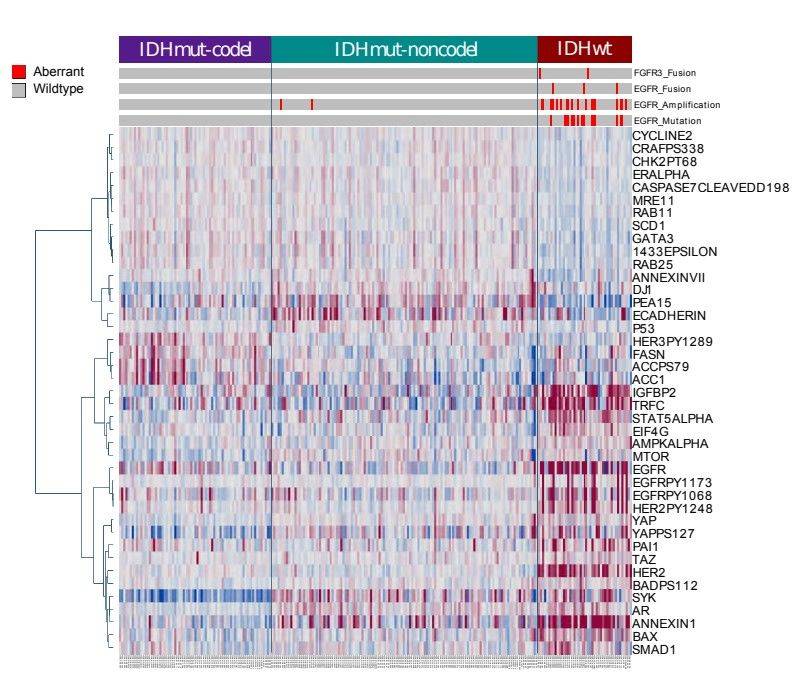 The relative total and phosphoprotein expression levels from reverse phase protein array (RPPA) analysis.
(Cancer Genome Atlas Research Network; et al.; 2015)
We have extensive experience in Reverse Phase Protein Array (RPPA) detection and can provide you with a complete set of RPPA standardized large-scale sample preparation, array, detection and related bioinformatics joint analysis solutions that are exactly the same as The Cancer Genome Atlas (TCGA), and provide personalized additional target analysis services. We know what these fields (clinical translational medicine research and drug development) need, and we can design the experimental plan that best suits your goals.
RPPA technology is a high-throughput proteomics technology that combines planar high-precision large-scale sample protein antigen microarray printing and antibody detection.
The RPPA technology platform is rigorously designed, the process is highly automated, and the quality control is extremely strict. Each time the sample protein antigen microarray is printed, multiple positive standard cell line samples are arrayed together with the sample to be analyzed to ensure the high traceability, high credibility and repeatability of the experimental results. RPPA can analyze up to 500 or more proteins of different abundance in 15 mg of tissue (rice grain size) at one time, and the antibody reaction process and target signal acquisition are independent of each other, avoiding the crosstalk between different target antibody reactions and the incompatibility of signal acquisition caused by the large difference in abundance of different targets. It has ultra-high specificity and sensitivity that other high-throughput proteomics cannot match. It can perform systematic and in-depth detection of a large number of representative targets such as cell surface receptor proteins, key cell signaling proteins and protein modifications (phosphorylation, acetylation, methylation, etc.), proteases, transcription factors, etc., and can also customize the target protein to be studied according to needs for analysis, including direct and indirect upstream and downstream protein network analysis. RPPA can be applied to different fields such as protein function and regulatory mechanism analysis, panoramic scanning of cell signal transduction, tumor marker and protein molecular typing, drug target discovery and drug mechanism analysis.
| Service Details | Covering nearly 400 core targets of key signal pathways in tumor research and drug development. All service-related reagents have been pre-verified. Customers do not need to provide any reagents, only samples. |
| Number of targets | Nearly 400, and increasing |
| Representative Pathways | Cell cycle, programmed cell death, DNA damage and repair, p53 signaling, cell adhesion, cell proliferation, PI3K-Akt, mTOR, AMPK, hypoxia signaling, oxidative stress, VEGF, MAPK, JAK-STAT, PKA, PKC, NF-κB, Wnt, Hippo, Notch, Hedgehog, etc. |
| Service Details | According to research needs, you can freely combine 1 to 5 of the preset 6 target combinations (panels). The corresponding service price per sample will be reduced to varying degrees. All service-related reagents have been pre-verified. Customers do not need to provide any reagents, only samples. |
| Number of targets | 41~340 |
| Representative Pathways | cell cycle, programmed cell death, DNA damage and repair, p53 signaling, cell adhesion, cell proliferation, PI3K-Akt, mTOR, AMPK, hypoxia signaling, oxidative stress, VEGF, MAPK, JAK-STAT, PKA, PKC, NF-κB, Wnt, Hippo, Notch, Hedgehog, etc. |
| Service Details | According to research needs, customers can select any target (including modification sites or special shearing) for personalized customization services. Customers need to provide antibodies related to self-selected targets and bear the cost of RPPA system testing in the pre-experimental stage. |
| Number of targets | User-selected targets |
RPPA Analysis
The relative total and phosphoprotein expression levels from reverse phase protein array (RPPA) analysis.
(Cancer Genome Atlas Research Network; et al.; 2015)

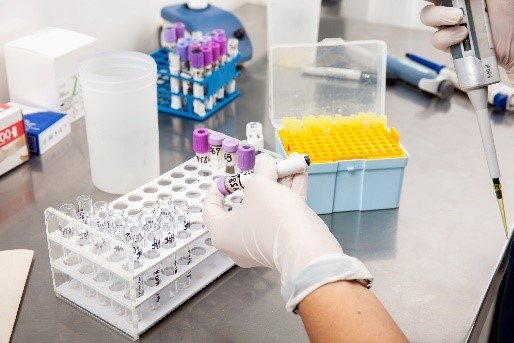
Small Sample Requirement
Standardized Sample Processing and Analysis
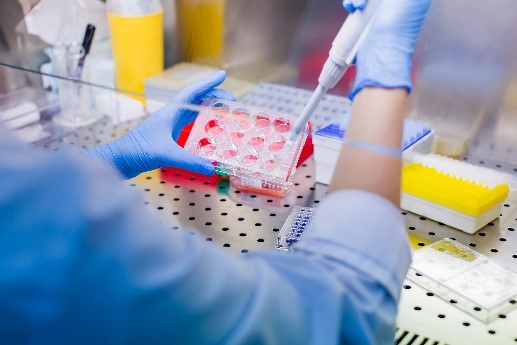
Target Independent Detection High Sample Throughput
High Compatibility of Target Signals with Different Abundances
RPPA is a high-throughput protein analysis technology. The basic idea involves fixing protein samples onto solid phase carriers like nitrocellulose membrane or glass slide during reverse phase chromatography and then using particular antibodies to identify the target protein. The simultaneous analysis of hundreds of proteins for their expression levels and post-translational modifications like phosphorylation and acetylation is achieved through fluorescence or chemiluminescence signal quantification.
Reference