Interaction Network Mapping
What Is Interaction Network Mapping?
Interaction Network Mapping refers to the systematic process of identifying and visualizing molecular interactions between biological elements like proteins, DNA, RNA and small molecules within cells. Interactomes represent intricate networks of molecular interactions which enable scientists to study cellular functions and dynamics. When scientists map biological interactions between molecules as networks where nodes represent molecules and edges show interactions they can analyze the structure, dynamics, and functional modules of biological systems. Understanding molecular mechanisms that control cellular processes and diseases requires this approach.
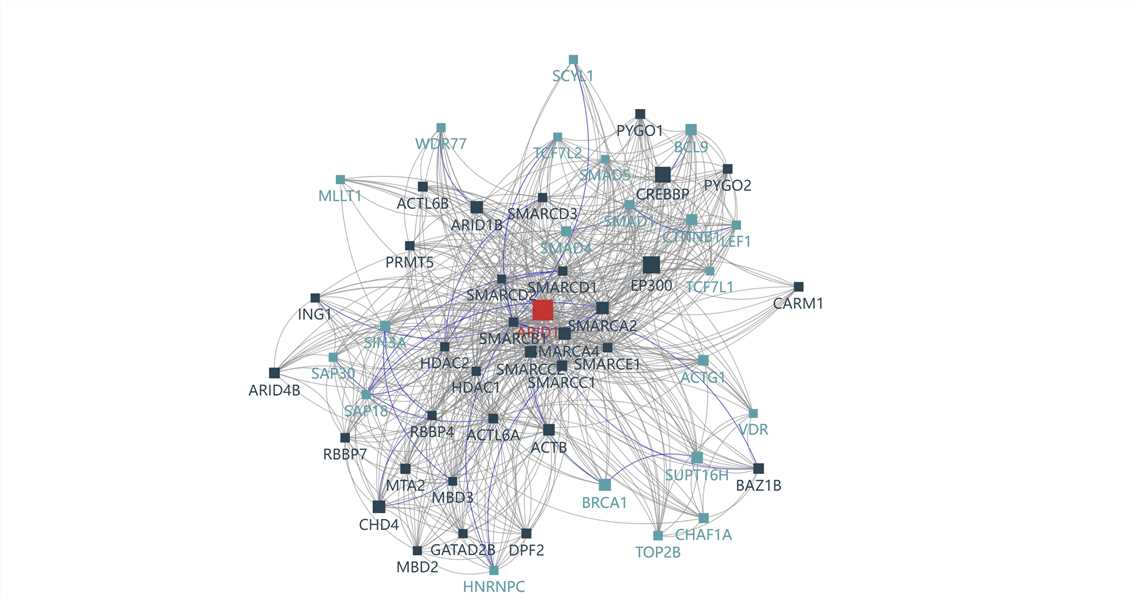
Interaction Network Mapping is crucial for:
- Understanding Cellular Function: This field shows how proteins and biomolecules function together through pathways and processes.
- Disease Research: The mapping of protein-protein interaction networks reveals central hubs which can serve as potential therapeutic targets for diseases including cancer and neurodegenerative disorders.
- Drug Development: Through the detection of central network nodes researchers can target altered disease pathways during drug development.
- Dynamic Insights: It captures how interactions change over time or under different conditions, such as during development or in response to environmental stimuli.
Protein Array Technology for Interaction Network Mapping
Protein Array provides a cutting-edge near-infrared microarray protein chip platform that enables Interaction Network Mapping. Protein microarrays function as platforms that attach thousands of proteins onto a solid substrate to facilitate their concurrent assessment when interacting with other molecules. Near-infrared technology improves sensitivity while minimizing background noise which makes it perfect for identifying weak and transient molecular interactions.
- Enhanced Detection of Weak Interactions: The near-infrared platform excels at identifying transient or low-affinity interactions that conventional methods often miss.
- Scalability: The ability to analyze thousands of interactions in parallel makes it ideal for both small-scale targeted studies and large-scale interactome mapping projects.
- Dynamic Analysis: It can capture temporal changes in interaction networks under varying conditions, such as disease progression or drug treatment.
- Versatility: The platform supports diverse applications, including biomarker discovery, drug target validation, and disease-specific interactome studies.
The special functional silicone membrane we employ boasts excellent biocompatibility, high tolerance, and broad-spectrum capabilities. This membrane facilitates automation and high-throughput detection, making it an ideal choice for modern laboratory settings.
With the aid of this platform, we can conduct multi-parameter joint detection. This method captures subtle changes in multiple biomarkers, providing more comprehensive information and enhancing detection accuracy. It allows for the simultaneous collection of multiple test results from a single sample acquisition, significantly streamlining the testing process.
Moreover, our platform enables us to customize various joint detection products based on client requirements. Comparative experimental validation has shown that our customized products outperform traditional protein chips in terms of sensitivity, accuracy, and linear range. They can rival magnetic particle-based testing reagents, offering a robust solution for protein interaction mapping and biomarker analysis.
Array Example
| Array Design | Example Combination | Target Application | Possible Sample Preparation |
| Design A (Broad Proteome) | - Hundreds to thousands of proteins from an organism's genome (or a key subset, e.g., kinome, secretome) - Wild-type forms typically used, or partial coverage if full-length expression is challenging | 1. Discovery of novel binding partners 2. Off-target screening for drug candidates 3. Map global interaction networks | - In vitro: Purified bait protein (or small molecule/antibody) labeled for array probing - In vivo: Cell/tissue lysates can be fractionated, then probed if the array is set up for capturing unknown interactors |
| Design B (Domain-Focused) | - Key domains (SH2, SH3, kinase, catalytic domains) from multiple proteins in a pathway - Mutant variants or phosphorylated vs. non-phosphorylated forms of the same domain | 1. Fine-map critical binding regions 2. Investigate mutation impact (e.g., cancer-associated mutations) 3. Understand how PTMs modulate interactions | - In vitro: Labeled "prey" proteins or peptides, or small molecules targeting a domain - In vivo: Serum or cell lysates with known domain ligands (e.g., a phosphotyrosine-binding domain array probed with fractionated cell lysates) |
| Design C (Complex Assembly) | - Multi-subunit complexes (e.g., transcription factor subunits, receptor-ligand combos) spotted in partial or full assemblies - ± Cofactors (ATP, GTP, metal ions) integrated into assay conditions | 1. Determine subunit requirements for stable assembly 2. Identify cofactor dependencies (e.g., ATP required for kinase complex) 3. Mutant scanning in each subunit | - In vitro: Mix purified subunits or interacting partners in solution, then capture on array - In vivo: Tissue or tumor lysates crosslinked to preserve complexes, then tested for binding on "bait" subunit array |
Application Scenarios of Interaction Network Mapping
Interaction Network Mapping has diverse applications across various fields:
- Disease Research: Identifying PPIs linked to specific diseases can aid in understanding pathogenesis and developing targeted treatments.
- Drug Discovery: Through mapping interaction networks researchers can find potential drug targets and uncover mechanisms of drug action.
- Biotechnology: Mapping interactions serves as a guide for developing new pathways and organisms with specific traits in synthetic biology and metabolic engineering.
- Personalized Medicine: T Through analysis of personal interactomes scientists can create medical treatments that match unique molecular characteristics.
Modern biology benefits greatly from Interaction Network Mapping which allows scientists to better understand complex cellular systems. Our advanced technology platform enables researchers to investigate complex networks more effectively which supports progress in biomedical research and therapeutic development.
- Custom Protein Arrays
- Drug Screening and Toxicity Assessment
- Immunoprofiling
- Oncology Drug Screening
- Signaling Pathway Analysis
- Spatial Multi-Omics and Targeted Proteomics
- Vaccine Development
- Antibody Profiling
- Protein-Protein Interaction Studies
- Allergen Screening
- Protein-Nucleic Acid Interaction Analysis