Protein-Protein Interaction Studies
Proteins serve as essential components that support multiple biological functions inside cells. Cell signaling, gene expression regulation, metabolic pathways and disease development depend heavily on Protein-Protein Interactions (PPIs). Through comprehensive protein interaction research scientists can discover protein functions and cellular networks while identifying potential targets for medical interventions.
Our Protein-Protein Interaction Studies Services
- Protein Binding Assays:
The protein binding assays test the strength of protein interactions with other proteins and small molecule ligands and nucleic acids while determining their binding affinity and specificity. The analysis results show interaction strength and enable researchers to locate binding sites and study how binding influences protein function. Learn More - Interaction Network Mapping:
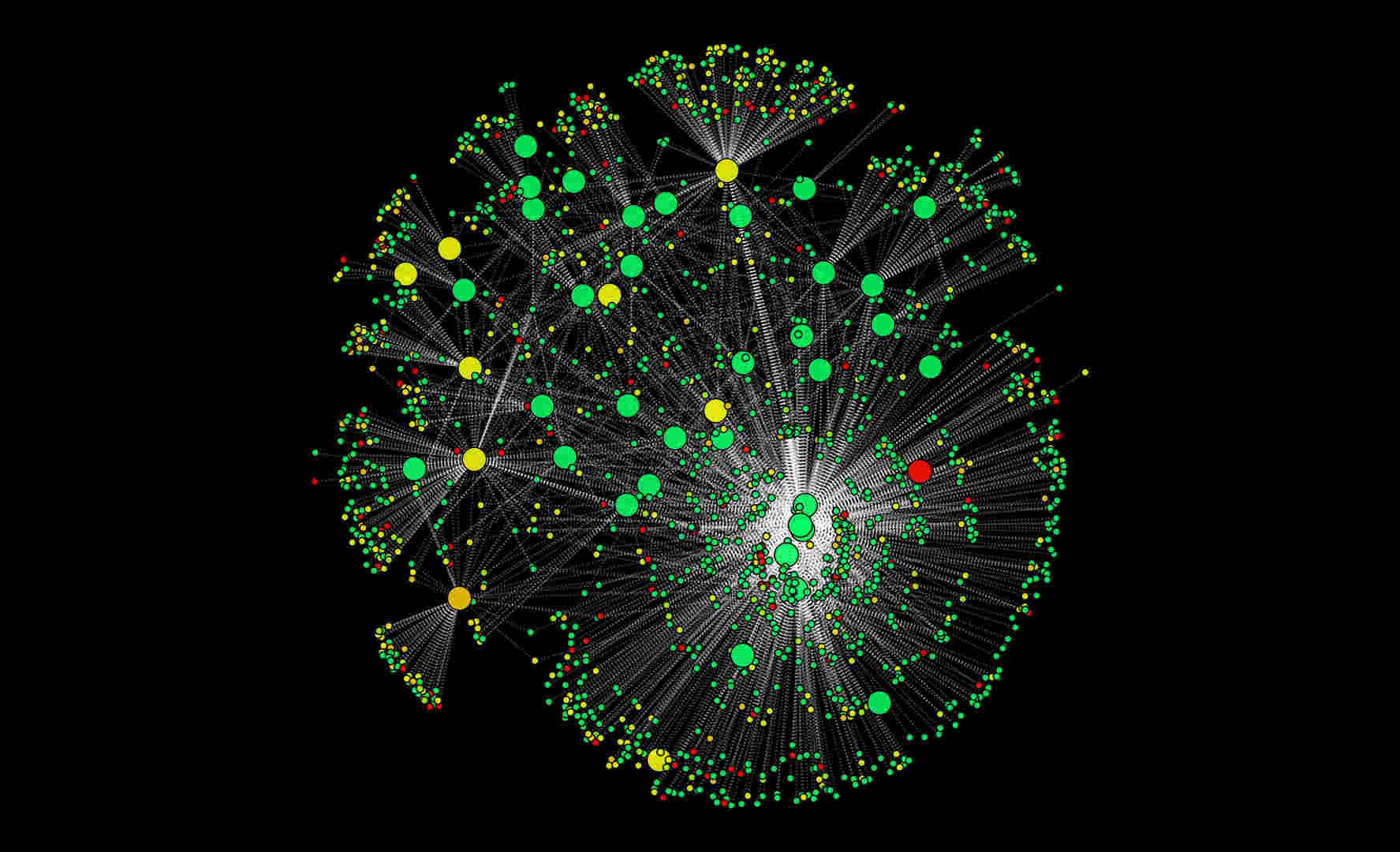
Interaction network mapping involves creating a full network diagram to showcase protein interactions inside cells. Systematic analysis of protein interaction relationships uncovers intricate connections within cell signaling pathways and protein complexes which helps to elucidate cell function and disease mechanisms and reveals functional protein relationships. Learn More - Co-Factor and Complex Formation Analysis:
Proteins need to interact with other proteins or cofactors to perform their biological functions. Examining co-factor and complex formation assesses protein complex composition and stability while determining cofactor influence on protein interactions. Through this research scientists gain insight into how proteins function and how protein complexes operate during cellular processes. Learn More - Mutant vs Wild-Type Interaction Comparison:
Gene mutations may lead to changes in protein interactions, which in turn affect cell function and lead to diseases. Mutant vs. wild-type interaction comparison studies the differences in interactions between mutant proteins and wild-type proteins, revealing the impact of mutations on protein function and the molecular mechanisms of diseases. Learn More
Array Example
| Panel / Focus | Example Marker / Feature Combination | Target Application | Possible Sample Preparation |
| A. Protein Binding Assays | - Bait proteins spotted on the array (e.g., purified receptors, kinases, domains) - Prey solutions: purified ligands, enzymes, or cell/tissue lysates to detect binding - Antibody detection for bound complexes or fluorescently labeled prey | 1. Identify binary binding events (e.g., receptor-ligand, enzyme-substrate) 2. Assess binding affinity or specificity of candidates (e.g., novel ligands, inhibitors) 3. Screen for off-target interactions during early drug discovery | - In vitro: Spot purified proteins on microarray; incubate labeled prey proteins or cell lysates - In vivo: Less common, but serum/tissue extracts can be applied to arrays to identify unknown binding partners if array is set with known capture proteins |
| B. Interaction Network Mapping | - Broad proteome or focused pathway arrays (e.g., entire kinome, transcription factor subsets, adapter proteins) - Multiple baits or multi-spot approach for potential multi-protein complexes | 1. Map complex interaction networks or pathways (e.g., MAPK kinome, immune receptor networks) 2. Discover novel or secondary binding partners 3. Characterize large protein families and how they cross-interact | - In vitro: Apply labeled lysates or labeled "prey" protein cocktails over large arrays of "bait" proteins - In vivo: Tissue lysates, possibly crosslinked to preserve transient complexes, then fractionate or label before applying to large bait arrays |
| C. Co-Factor and Complex Formation Analysis | - Partial vs. full complex subunits (e.g., subunits A, B, C of a large enzyme or receptor) spotted separately - Cofactors included or omitted (metal ions, nucleotides like ATP/GTP, small organic cofactors) | 1. Elucidate synergy among subunits or necessity of certain cofactors (e.g., ATP required for stable assembly) 2. Validate multi-subunit binding patterns in receptor-ligand complexes 3. Assess how cofactor presence modifies interactions | - In vitro: Spot each subunit domain on array, then test additional subunits ± cofactors in solution - In vivo: Tissue extracts crosslinked to stabilize complexes, or immunoprecipitated complexes to dissect subunit composition on capture arrays |
| D. Mutant vs. Wild-Type Interaction Comparison | - WT vs. mutated proteins (e.g., single-point mutations, domain deletions) spotted side by side - Known binding partners or cell lysates as "prey" to compare binding shifts | 1. Identify how specific amino acid changes affect protein–protein interaction 2. Pinpoint critical residues for complex formation (e.g., Y→F phospho-site mutations) 3. Compare disease-associated variants vs. normal for altered binding events | - In vitro: Express/purify WT and mutant variants, spot them on the array, then apply the same "prey" or lysate - In vivo: Typically done with purified forms, but if comparing WT vs. mutant cell lines, their lysates can be tested for changed binding to a reference array of known proteins |
Our Near-Infrared Microarray Protein Chip Technology Platform
Based on independent innovation, Creative Diagnostics combines advanced technologies such as laser confocal microscopy, near-infrared fluorescence labeling, and special functional silicone membranes with protein chips to establish a unique high-throughput protein chip detection platform. This platform has significant advantages such as high throughput, multi-index joint detection, and high cost performance, and can provide comprehensive and accurate protein interaction research services for the majority of scientific research users.
- High Throughput and Automation: The combination of special functional silicone membranes and near-infrared fluorescence labeling technology enables both high-throughput detection and automated system operations.
- High Sensitivity and Broad Spectrum: Special functional silicone membranes demonstrate high sensitivity and high tolerance which enables them to operate across a broad spectrum and show excellent biocompatibility.
- Precise Detection: The laser confocal system has high sensitivity, a large measurement linear range, high image resolution, and no distortion.
Service Highlights
- Customized Services: Our team delivers customized experimental design and data analysis services designed to meet your unique requirements.
- Professional Technical Team: Our professional technical support and consulting services are delivered by our experienced technical team.
- Strict Quality Control: Our strict quality control standards guarantee that experimental results are both precise and dependable.
Service Cycle and Process
- Project Consultation: Customers communicate with our technical team to clarify experimental objectives and specific needs.
- Experimental Design: Our technical team develops a detailed experimental plan based on customer needs.
- Sample Preparation: Customers provide qualified samples or entrust us with sample preparation.
- Experimental Operation: Our technicians perform experimental operations according to the experimental plan.
- Data Analysis: We conduct professional analysis of experimental data and provide detailed analysis reports.
- Results Delivery: We deliver experimental results and analysis reports to customers.
Our superior technology platform combined with comprehensive service offerings and professional service team enables us to become your dependable partner in protein interaction research while ensuring your scientific projects reach successful completion and your research results transform faster. We anticipate our future collaboration will produce remarkable results together.
- Custom Protein Arrays
- Drug Screening and Toxicity Assessment
- Immunoprofiling
- Oncology Drug Screening
- Signaling Pathway Analysis
- Spatial Multi-Omics and Targeted Proteomics
- Vaccine Development
- Antibody Profiling
- Protein-Protein Interaction Studies
- Allergen Screening
- Protein-Nucleic Acid Interaction Analysis