• Home
  • Products
    • Functional Slides
      • Aldehyde
      • Alkene
      • Amine
      • Azide
      • Carboxyl
      • Epoxy
      • Maleimide
      • NHS
      • PDITC
      • Poly-L-lysine
      • Streptavidin
      • Thiol
    • Microfluidic Chips
      • Basic Flow Chips
      • Cell and Organism Culture Chips
      • Droplet Generator Chips
      • Droplet Sequencing Chips
      • Electrophoresis Microfluidic Chips
      • Gradient Chips
      • LNP & Nanoparticle Preparation Chips
      • Particle and Cell Sorting Chips
      • Permeation Array Chips
      • Porous Media Model Chips
      • Sample Preparation Chips
      • Vascular Simulation Chips
  • Services
    • Custom Protein Arrays
      • Custom Array Design
      • Functional Protein Arrays
      • Large-Scale Screening
      • Specific Protein Detection
    • Drug Screening and Toxicity Assessment
      • Cytokine Release Assay
      • Dose-Response Toxicity Evaluation
      • High-Throughput Drug Screening
      • Off-Target Effects Analysis
    • Immunoprofiling
      • Cytokine Profiling
      • Immune Checkpoint Molecule Detection
      • Immune Escape Mechanism Analysis
      • T-Cell and B-Cell Profiling
    • Oncology Drug Screening
      • Biomarker Discovery
      • Cell Signaling Pathway Mapping
      • Drug Resistance Mechanism Analysis
      • Target Identification
    • Signaling Pathway Analysis
      • Cross-Talk Between Pathways
      • Glycosylation Status Detection
      • Kinase Activity Assay
      • Pathway Activation/Inhibition Profiling
      • Phosphorylation Status Detection
    • Spatial Multi-Omics and Targeted Proteomics
      • Reverse Phase Protein Array (RPPA)
      • Digital Spatial Profiler (DSP)
      • Spatial Proteomics
    • Vaccine Development
      • Adjuvant Efficacy
      • Antigen Discovery
      • Antigen Mutation Analysis
      • Immunogenicity Assessment
      • Post-Vaccination Immune Response
    • Antibody Profiling
      • Antibody Subclass Profiling
      • Autoantibody Detection
      • Monoclonal and Polyclonal Antibody Analysis
      • Therapeutic Antibody Monitoring
    • Protein-Protein Interaction Studies
      • Co-Factor and Complex Formation Analysis
      • Interaction Network Mapping
      • Mutant vs Wild-Type Interaction Comparison
      • Protein Binding Assays
    • Allergen Screening
      • Common Allergen Detection
      • Cross-Reactivity Assessment
      • IgE Antibody Profiling
    • Protein-Nucleic Acid Interaction Analysis
      • Autoantibody-Nucleic Acid Complex Analysis
      • Chromatin Remodeling Complex Interactions
      • CRISPR-Cas System Recognition
      • Epigenetics (DNA Methylation)
      • Gene Splicing Factor - Pre-mRNA Interactions
      • Nucleic Acid Aptamer Screening
      • Pathogen-Associated Molecular Pattern (PAMP) Recognition
      • RNA-Binding Protein Regulation
      • Small Molecule Interference with Protein-Nucleic Acid Interactions
      • Structure-Dependent Interactions
      • Transcriptional Regulation
      • Viral Protein-Host Nucleic Acid Interactions
  • Resource
    • Biomolecular Interactions
    • Cellular Signaling
    • Drug Discovery
    • Immunology & Diagnostics
  • Technology
    • Protein Biochip Technology Platform (Multi Marker)
      • Silica-Based Membrane as Protein Chip
      • Near-Infrared Fluorescent Labeled Chip
      • Laser Confocal Chip Scanner
  • About Us
  • Contact Us
Get A Free Quote
  1. Home
  2. Services
  3. Protein-Protein Interaction Studies
  4. Protein Binding Assays

Protein Binding Assays

What Are Protein Binding Assays?

Scientists use Protein Binding Assays as essential experimental methods to understand how proteins interact with various molecules including small molecules, peptides, nucleic acids and additional proteins. These assays yield essential data about the binding strength and interaction dynamics that help understand biological functions and develop medical treatments.
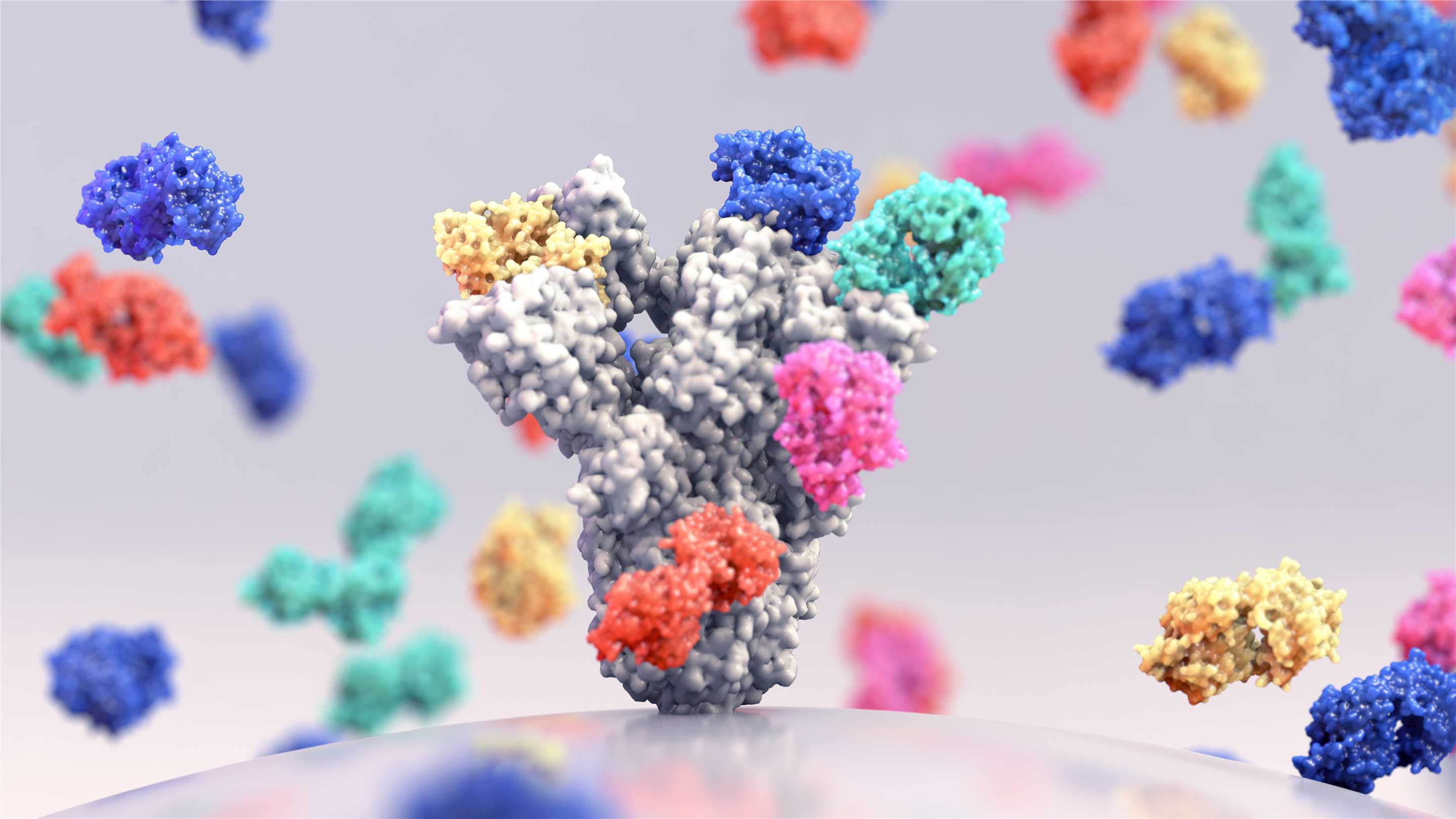
Antibodies bind to multiple sites of the S protein

The assays measure interaction strength through the equilibrium dissociation constant (KD) which shows the ligand concentration necessary to occupy fifty percent of protein binding sites at equilibrium. Protein binding assays help researchers understand drug-target protein interactions and provide predictions for pharmacokinetics (PK) as well as pharmacodynamics (PD) assessments. Plasma protein binding studies help establish the portion of unbound drug which holds therapeutic potential because only drugs without protein attachment produce pharmacological responses. Understanding drug distribution and clearance rates and identifying potential drug interactions depend on protein binding studies. Protein binding assays play an essential role in disease mechanism research while assisting in biomarker discovery and therapeutic compound screening.

Protein Array's Near-Infrared Microarray Protein Chip Technology Platform

Protein Array offers an advanced near-infrared microarray protein chip technology platform to conduct protein binding assays with exceptional precision and efficiency. This cutting-edge platform immobilizes proteins onto microarray surfaces while preserving their native conformations. By introducing fluorescently labeled ligands or interaction partners, the system detects and quantifies binding events with exceptional sensitivity and specificity. Near-infrared detection reduces background noise to provide precise readings for both low-abundance proteins and weak interactions. This platform enables researchers to conduct parallel high-throughput analyses of various protein-ligand and protein-protein interactions. Drug screening and biomarker discovery research studies achieve significant benefits from this capability. The platform operates efficiently with minimal sample volumes resulting in lower reagent consumption while maintaining quick and consistent results. The innovative technology delivers robust assistance to scientific research and drug development through enhanced experimental efficiency and improved data reliability.

Protein Array's Protein Binding Assays offer several distinct advantages:

  • Quantitative and Informative Results: These assays generate detailed insights about interaction strengths and reaction dynamics by measuring both equilibrium constants and kinetic parameters.
  • High Sensitivity and Specificity: Near-infrared detection methods minimize background noise and enable precise analysis of proteins present in low concentrations as well as weak molecular interactions.
  • High Throughput: A single experiment using a microarray format enables researchers to study thousands of interactions together which speeds up the research process.
  • Minimal Sample Requirements: The analysis process requires only small volumes which helps preserve expensive reagents while lowering expenses.
  • Preservation of Protein Functionality: Immobilized proteins maintain their natural structure and functionality which produces trustworthy interaction data.
  • Customizable Design: Researchers can customize assays to match their experimental requirements when analyzing weak interactions or highly cooperative binding reactions.

Applications of Protein Binding Assays

Protein Binding Assays have broad applications across research and development:

  • Drug Discovery and Development: These assays are indispensable for identifying lead compounds by evaluating their binding affinity to target proteins. They also help predict PK/PD properties and assess potential drug-drug interactions.
  • Biomarker Discovery: The identification of diagnostic or prognostic biomarkers is facilitated through these assays which profile disease-associated protein interactions or autoantibodies.
  • Understanding Molecular Mechanisms: Protein binding research reveals essential biological functions through studies of signal transduction pathways and enzymatic control systems.
  • Antimicrobial Development: Understanding how antibiotics bind plasma or tissue proteins helps optimize dosing regimens.
  • Structural Biology: These assays characterize binding sites on proteins to inform rational drug design.
  • Personalized Medicine: By analyzing individual variations in protein-drug interactions, these assays support tailored therapeutic strategies.

Leveraging the advanced near-infrared microarray protein chip technology platform from Protein Array, Creative Diagnostics revolutionizes Protein Binding Assays by combining precision with efficiency. The assays play a crucial role in advancing molecular mechanism knowledge while speeding up novel therapeutic development. In all applications from drug discovery to biomarker identification to fundamental research Creative Diagnostics delivers reliable data that supports major scientific advancements.

Online Inquiry
✔ ✖ Verification code
Services
  • Custom Protein Arrays
    • Custom Array Design
    • Functional Protein Arrays
    • Large-Scale Screening
    • Specific Protein Detection
  • Drug Screening and Toxicity Assessment
    • Cytokine Release Assay
    • Dose-Response Toxicity Evaluation
    • High-Throughput Drug Screening
    • Off-Target Effects Analysis
  • Immunoprofiling
    • Cytokine Profiling
    • Immune Checkpoint Molecule Detection
    • Immune Escape Mechanism Analysis
    • T-Cell and B-Cell Profiling
  • Oncology Drug Screening
    • Biomarker Discovery
    • Cell Signaling Pathway Mapping
    • Drug Resistance Mechanism Analysis
    • Target Identification
  • Signaling Pathway Analysis
    • Cross-Talk Between Pathways
    • Glycosylation Status Detection
    • Kinase Activity Assay
    • Pathway Activation/Inhibition Profiling
    • Phosphorylation Status Detection
  • Spatial Multi-Omics and Targeted Proteomics
    • Reverse Phase Protein Array (RPPA)
    • Digital Spatial Profiler (DSP)
    • Spatial Proteomics
  • Vaccine Development
    • Adjuvant Efficacy
    • Antigen Discovery
    • Antigen Mutation Analysis
    • Immunogenicity Assessment
    • Post-Vaccination Immune Response
  • Antibody Profiling
    • Antibody Subclass Profiling
    • Autoantibody Detection
    • Monoclonal and Polyclonal Antibody Analysis
    • Therapeutic Antibody Monitoring
  • Protein-Protein Interaction Studies
    • Co-Factor and Complex Formation Analysis
    • Interaction Network Mapping
    • Mutant vs Wild-Type Interaction Comparison
    • Protein Binding Assays
  • Allergen Screening
    • Common Allergen Detection
    • Cross-Reactivity Assessment
    • IgE Antibody Profiling
  • Protein-Nucleic Acid Interaction Analysis
    • Autoantibody-Nucleic Acid Complex Analysis
    • Chromatin Remodeling Complex Interactions
    • CRISPR-Cas System Recognition
    • Epigenetics (DNA Methylation)
    • Gene Splicing Factor - Pre-mRNA Interactions
    • Nucleic Acid Aptamer Screening
    • Pathogen-Associated Molecular Pattern (PAMP) Recognition
    • RNA-Binding Protein Regulation
    • Small Molecule Interference with Protein-Nucleic Acid Interactions
    • Structure-Dependent Interactions
    • Transcriptional Regulation
    • Viral Protein-Host Nucleic Acid Interactions
Services
Immunoprofiling Signaling Pathway Analysis Vaccine Development Antibody Profiling Custom Protein Arrays Oncology Drug Screening Protein-Protein Interaction Studies Allergen Screening Drug Screening and Toxicity Assessment Spatial Multi-Omics and Targeted Proteomics
Technology
  • Protein Biochip Technology Platform (Multi Marker)
Contact Us
  • Tel: (USA)
  • (Europe)
  • Fax:
  • Email:
Privacy Policy | Cookie Policy | © Copyright Creative Diagnostics 2026. All Rights Reserved.
Follow Us On