Antigen Mutation Analysis
Antigen Mutation Analysis: A Key Step in Vaccine Development
During the virus lifecycle, viruses accumulate mutations that alter their antigenic surface, leading to antigenic drift or shift, allowing the virus to escape immune surveillance by the host. Antigenic drift is most commonly observed in influenza viruses, rendering previously effective vaccines and immune responses ineffective against new variants. Antigenic shift, on the other hand, occurs when genetic reassortment causes mutations on the virus surface, forming new viral subtypes, often leading to outbreaks or pandemics.
One important task of mutation analysis is identifying mutation hotspots. These hotspots are critical amino acid residues involved in antibody-antigen interactions. When mutations occur at these sites, they can significantly reduce antibody affinity, affecting the vaccine's protective efficacy. As viruses evolve, vaccine protection may diminish, especially for vaccines targeting specific antigenic mutations.
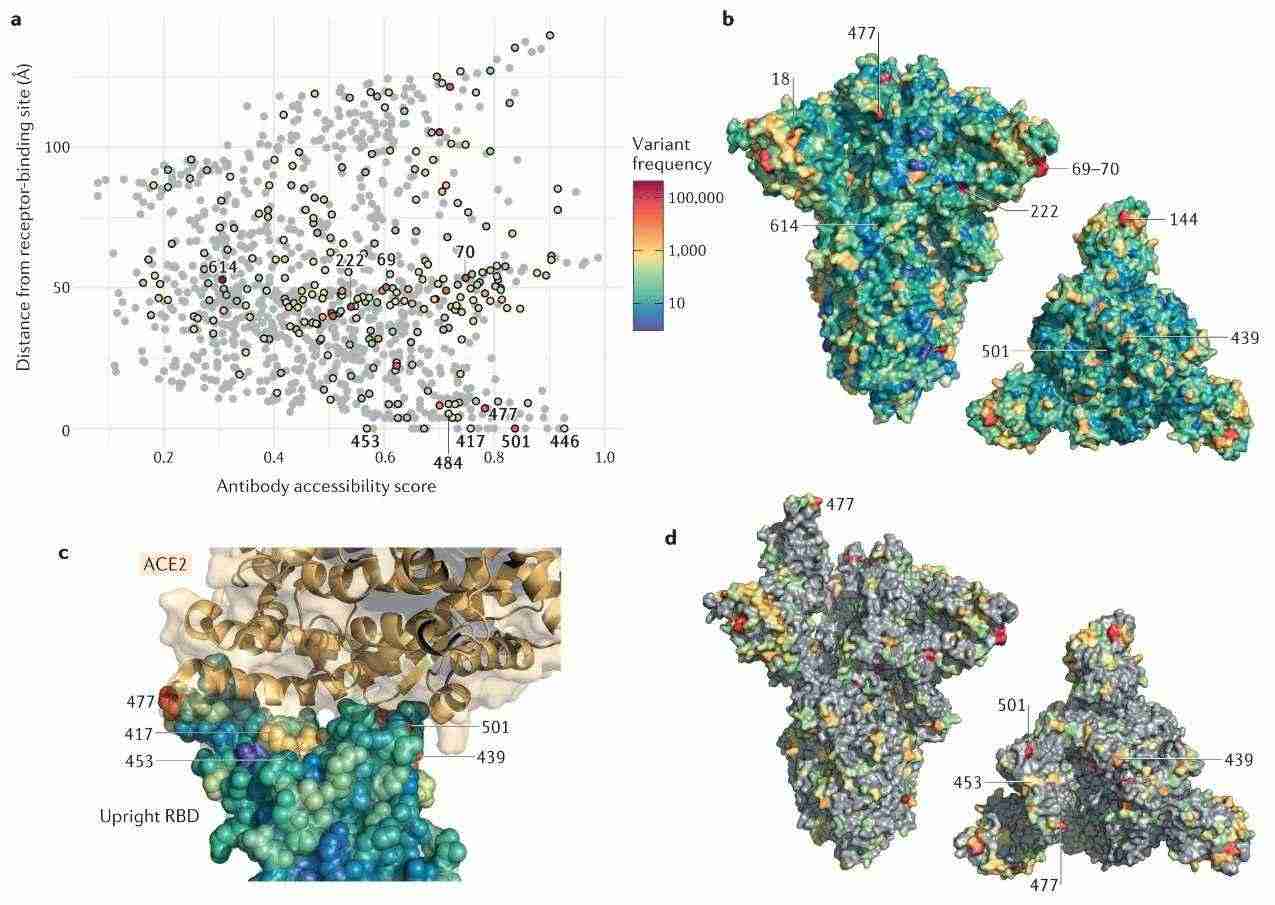 Figure 1. Structural context of spike amino acid mutations in the global severe acute respiratory syndrome coronavirus 2 (SARS-CoV-2) population. (Source: Harvey WT, et al. 2021)
Therefore, antigen mutation analysis is a crucial step in vaccine development, as it helps evaluate the effectiveness of existing vaccines against new variants, predicts potential vaccine escape phenomena, and provides theoretical support for vaccine optimization and updates. This is particularly important for rapidly mutating viruses such as influenza and SARS-CoV-2, as it helps researchers understand and counteract the mechanisms by which pathogens escape immune responses through mutations.
Creative Diagnostics' Protein Microarray Technology Supports Antigen Mutation Analysis.
Our high-throughput protein microarray platform provides strong support for antigen mutation analysis. It can simultaneously analyze changes in pathogen antigens under different mutation states, accurately assessing the impact of mutations on immune responses, antibody binding, and vaccine efficacy. Combined with advanced data analysis techniques, our products offer comprehensive solutions for vaccine development, vaccine optimization, and antigen mutation research.
Core Application Scenarios
- Efficient Screening of Mutation Sites
- Using protein microarray technology to analyze structural changes in pathogen antigens under different mutation states and identify key mutation sites.
- High-throughput screening of the immunogenicity of mutated antigens, providing data support for antigen design in vaccines.
- Immune Escape Mutation Analysis
- Studying how antigen mutations affect immune system recognition, revealing vaccine escape phenomena.
- Conducting antigen mutation analysis for different variant viruses to evaluate the effectiveness of existing vaccines.
- Vaccine Efficacy Prediction and Optimization
- Assessing the efficacy of existing vaccines against new variants through mutation analysis, providing reference data for vaccine updates and optimization.
- Predicting the immune escape mechanisms of mutated viruses to guide new vaccine development.
- Vaccine Antigen Design
- Optimizing antigen structures based on mutation analysis to improve the immune response and protective efficacy of vaccines against mutated viruses.
Application Areas
- Mutation Analysis for Infectious Disease Vaccines
- Antibody Therapy and Immune Escape Research
- Development and Optimization of Novel Vaccines
- Mutation-Induced Vaccine Escape Studies
- Basic Immunology Research
Array Example
| Panel | Example Mutant/Variant Combination | Target Application | Possible Sample Preparation |
| Variant-Based Protein Array | - Full-length WT protein - Variant #1 (e.g., "Alpha" strain) - Variant #2 (e.g., "Beta" strain) - … etc. | 1. Assess cross-reactivity of immune sera among multiple strains 2. Identify variants causing significant immune escape | - In vitro: Supernatants from B-cell/T-cell cultures stimulated with the WT antigen (to see if they cross-react to variants) - In vivo: Serum or plasma from vaccinated/infected animals or humans |
| Mutation-Scanning Peptide Array | - Overlapping 15mer peptides covering an immunodominant region - Single amino acid substitutions at each position - Combinatorial mutants in critical residues | 1. Fine-map mutation impacts on antibody or T cell epitopes 2. Identify minimal epitope sequences that lose or maintain reactivity | - In vitro: T-cell assays (proliferation/cytokine release) with each peptide variant - In vivo: Sera from immunized/infected subjects tested for Ig binding to each mutated peptide spot/feature |
| Domain-Focused Variant Array | - Receptor Binding Domain (RBD) WT - RBD mutants A, B, C (known escape or high prevalence in circulating strains) - Possibly incorporate hypervariable loops | 1. Rapid screen of domain-specific mutations that reduce neutralizing antibody binding 2. Prioritize future vaccine constructs targeting "escape-resistant" domains | - In vitro: Supernatants from memory B cell cultures or T cell lines focusing on domain-specific reactivity - In vivo: Serum from convalescent or vaccinated individuals tested against domain variants |
Our Technological Advantages
- Multi-Dimensional Mutation Analysis Capability
- Protein microarray technology supports the simultaneous detection of multiple mutation sites, providing a comprehensive analysis of how mutations affect antigen structure and function.
- High-throughput, multi-index detection capabilities allow for rapid screening and analysis of large numbers of mutation samples.
- Ultra-High Sensitivity and Accuracy
- Using laser confocal imaging and near-infrared fluorescence labeling technology, we ensure precise detection of low-abundance mutated antigens.
- Optimized chip design and data processing methods guarantee highly accurate detection results for each mutation site, ensuring reliable data.
- Immunogenicity and Functional Assessment
- In addition to detecting antigen mutations, we also evaluate how mutated antigens affect immune responses, providing quantitative analysis of immune escape potential.
- Combining immunogenicity testing, we offer direct evidence for vaccine efficacy optimization.
- Flexible Customization Services
- Custom-designed mutation analysis platforms for specific viral strains or antigens, supporting rapid response to emerging infectious diseases.
- Providing end-to-end services from antigen screening to mutation analysis, ensuring precise data support at every stage of vaccine development.
- Innovative Data Analysis Platform
- Combining advanced bioinformatics analysis tools, we provide intelligent data processing and visualization to help researchers quickly extract patterns regarding the impact of mutations on vaccine efficacy.
- Capable of handling complex mutation data, offering deep insights for vaccine optimization.
Why Choose Creative Diagnostics?
- Leading Technology Platform
- Efficient and Accurate Data Processing
- Comprehensive Service Support
- Flexible Customization and Rapid Response
Creative Diagnostics is committed to advancing vaccine development innovation and supporting the global fight against infectious diseases. For more information or to inquire about customized services, please contact us.
Reference
- Harvey WT, Carabelli AM, Jackson B, et al. SARS-CoV-2 variants, spike mutations and immune escape. Nat Rev Microbiol. 2021;19:409-424.
- Custom Protein Arrays
- Drug Screening and Toxicity Assessment
- Immunoprofiling
- Oncology Drug Screening
- Signaling Pathway Analysis
- Spatial Multi-Omics and Targeted Proteomics
- Vaccine Development
- Antibody Profiling
- Protein-Protein Interaction Studies
- Allergen Screening
- Protein-Nucleic Acid Interaction Analysis