Silica-Based Membrane as Protein Chip
Introduction
Protein chips, also known as protein microarrays, are powerful tools used in various fields such as proteomics, diagnostics, and drug discovery. These chips are made by binding proteins to a solid substrate to determine interaction, function and expression levels. Substrates used to be glass or polymer, but new work has introduced silica membranes as substrates for protein chips.
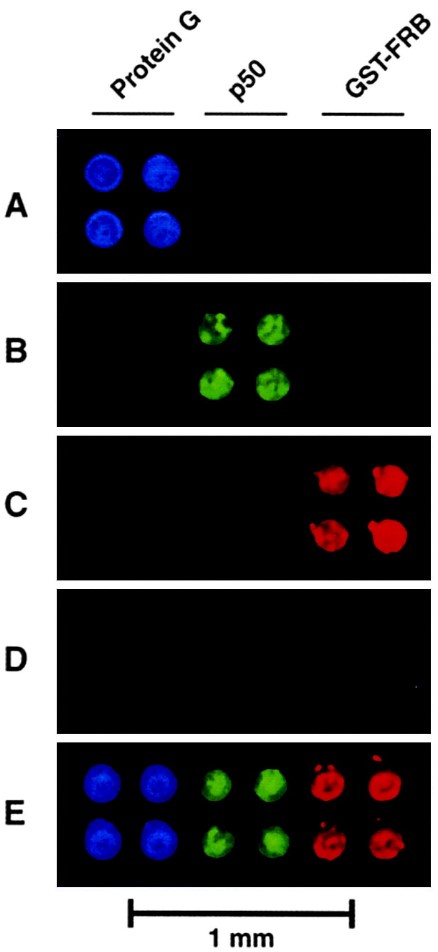 Figure 1. Example of a model protein function microarray and its use in probing protein–protein interactions. (Kodadek T., et al. 2001)
What is Silica-Based Membrane Protein Chip?
Silica-based membrane protein chip is protein chip technology fabricated with silica substrate. It's widely used for protein function studies, protein-protein interaction studies and drug target screening. The protein can be parallel analyzed and detected on this chip, by adhering proteins to a silica substrate.
This silica membrane protein chip preparation is complicated. The surface of the silica wafer first must be chemically modified so that the protein will fixate better. The protein, for instance, gets stuck to the chip surface by adsorption, chemical coupling or bioaffinity, and then its life persists.
This silica membrane protein chip preparation is complicated. The surface of the silica wafer first must be chemically modified so that the protein will fixate better. The protein, for instance, gets stuck to the chip surface by adsorption, chemical coupling or bioaffinity, and then its life persists.
Among them, chemical coupling is a commonly used modified method in silica membrane protein chip. Silica membrane chemical coupling is bonding silica materials to other substances like organic compounds or polymers using chemical connections. Silane coupling agents provide special structural and functional properties that enable interface strengthening and performance optimization.
Silane coupling agent is a bifunctional organosilicon compound, and the molecular structure is the Y-X-Si-Z format where X bonds to inorganic surfaces such as glass and silica and Y attaches to organic substances like resins and polymers while Z represents an alkoxy group that hydrolyzes to form hydroxyl groups. The molecular structure of silane coupling agents functions as a bridge between inorganic and organic materials which improves their adhesion at their junction.
Silane coupling agents achieve chemical coupling through the following steps:
- Hydrolysis reaction: During hydrolysis the alkoxy group (Z) from silane coupling agents breaks down when exposed to water which produces hydroxyl groups (-OH) and results in an active intermediate.
- Condensation reaction: Stable Si-O-Si bonds form when hydroxyl groups produced in the reaction interact with hydroxyl groups on inorganic material surfaces or metal oxide active sites.
- Cross-linking: The organic functional group (Y) establishes a durable bond with organic materials like resins and polymers through chemical reactions at the interface.
Silica-Based Membrane Protein Chip Design and Fabrication
Proteins will be bound onto Silica membranes to provide an elastic, resistant and biocompatible structure for immobilization. There are many phases of the fabrication:
- Material Selection: High purity Silica chosen because of its superior mechanical and biocompatible.
- Silica Surface Modification: The Silica surface is chemically modified to add functional groups that act as binding sites for the proteins. Common changes are silanization and polymer chain grafting.
- Protein Immobilization: Proteins are bonded onto the Silica surface by covalent, adsorbent, or affinity. This procedure keeps the proteins alive and distributed on the membrane uniformly.
- Microarray Printing: The high-density microarrays are printed on the Silica membrane with high-resolution inkjet or contact printing to deposit tiny amounts of protein solutions on to the silica membrane.
Advantages of Silica-Based Membranes
- Silica-based membranes are very different from other substrates in many ways:
- Flexibility: Silica's high elasticity allows for bendable and stretchable protein chips for novel wearable biosensors and flexible electronics.
- Biocompatibility: Silica is incredibly biocompatible and has little to no risk of unwanted reactions in biological test tubes or implantable devices.
- Prolongevity: Silica is very strong, so the membranes can handle extreme processing like high temperatures and chemical treatment.
- Better Sensitivity: Silica membranes can be fabricated with low autofluorescence and excellent optical transparency, which can give the fluorescence-based assays better sensitivity and precision.
- Modularity: The surface chemistry of Silica is modular, with the potential for flexibility and protein immobilization.
Our Featured Services
- Custom Silica-Based Membrane Protein Microarray Design and Fabrication
- Protein Immobilization Services
- Proteomics Analysis Services
- Interaction and Binding Studies
- Diagnostic Assay Development
- Drug Discovery and Screening Services
Application of Silica-Based Membrane Protein Chip
It's Silica membranes that lend themselves to a number of applications:
- Silica membrane protein chip for large-scale protein interaction research, biomarker discovery and functional analysis.
- Protein chips fabricated from Silica are used for diagnostic testing to isolate particular proteins or antibodies in samples from patients for the purpose of disease diagnosis and monitoring.
- Pharma firms use protein chips to screen drug candidates for binding and off-target effects.
- The wearable biosensors made from Silica membranes, which are flexible and biocompatible, can be designed for perioperative health monitoring that measures biomarkers in sweat, saliva or interstitial fluid.
- The membranes can be added to tissue engineering scaffolds for studying the cell-protein interaction that will lead to artificial tissues and organs.
References
- Andrea R Mazzocchi, et al. Porous Membranes Promote Endothelial Differentiation of Adipose-Derived Stem Cells and Perivascular Interactions. Cellular and Molecular Bioengineering. 2014, 7(3):369
- Liao W, et al. Novel probes for protein chip applications. Front Biosci. 2006, 11:186-97.
- Kodadek T. Protein microarrays: prospects and problems. Chem Biol. 2001 Feb;8(2):105-15.