
Introduction of CHIKV
The Togaviridae family contains the Alphavirus genus virus known as CHIKV (Chikungunya virus). The virus measures 70 nm in diameter while containing a single-stranded positive-sense RNA (+ ssRNA) genome that spans 11.8 kilobases. The viral genome contains two open reading frames which encode nonstructural proteins 1–4 (nsP1–4) together with structural proteins. The structural protein precursors undergo protease-mediated cleavage to produce C capsid protein and E1, E2 and E3 envelope proteins and the small 6K/TF protein. The nsP functions as an essential component for viral replication because it forms the RNA replicase complex. The nsP complexes with cellular elements to establish a replication complex which generates dsRNA replication products that function as templates for both positive-sense viral genome and subgenomic RNA synthesis.
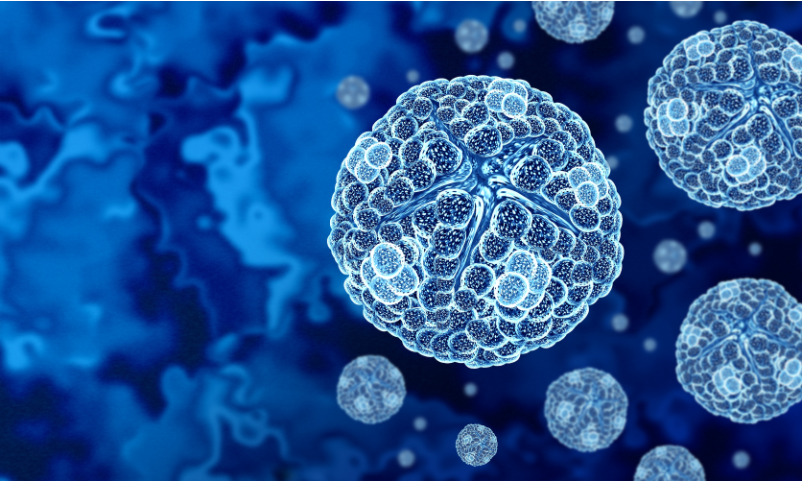
Among the structural proteins, the capsid protein participates in the formation of the icosahedron of the mature virion, encapsidating the viral RNA genome. The E1 and E2 glycoproteins associate as heterodimers, then form trimers that insert into the surface of mature virions and subsequently participate in viral attachment and entry into target cells during infection. The E1 protein contains a hydrophobic fusion peptide, which is required for fusion of the viral and cellular membranes, while the E2 protein is responsible for receptor binding. Therefore, the E1 and E2 proteins are considered key to the host humoral immune response and the design of most vaccines. A total of 80 trimers are present on the surface of mature virions. Homologous interactions between the E3 protein and the E2 protein direct the E2 protein to the endoplasmic reticulum for proper assembly and processing. The 6K protein acts as a cation-selective ion channel. During viral infection, it increases cellular permeability to monovalent cations, enabling budding and release of virions.
CHIKV Replication
The virus replicates in multiple animal cell types yet researchers have not discovered specific cell surface receptors for CHIKV. The cell surface glycosaminoglycans (GAGs) function as attachment factors which might boost CHIKV infectivity. The cell surface attachment of E2 protein enables viral particles to enter cells through clathrin-mediated endocytosis. The endosomal acidic environment triggers glycoprotein conformational changes which allow E1 protein to insert into the host cell membrane and create a viral envelope-endosomal membrane fusion. The viral nucleocapsid disassembles after viral release into the cytoplasm to free the viral genomic RNA which then enters the cytoplasm for translation. The CHIKV genome undergoes direct translation to produce the nonstructural precursor protein P1234 which gets cleaved into P123 and nsP4 through the protease activity of nsP2. The viral RNA replicase forms from P123 and nsP4 and host cell proteins to synthesize full-length negative-strand RNA. The 49S genome and 26S subgenome receive their templates from the negative-strand RNA.
The 26S subgenome produces structural protein precursors which undergo serine protease-mediated processing to release cytoplasmic capsid proteins. The remaining proteins receive importation into the endoplasmic reticulum for additional post-translational modification steps. The pE2 protein undergoes cleavage in the Golgi apparatus to generate the E2 and E3 glycoproteins. The E1 and E3-E2 proteins form a non-covalent heterooligomeric complex through their association. The post-translational modifications and conformational changes result in E3 release which forms the mature E1 and E2 glycoprotein heterodimer. This complex is then transported to the host cell plasma membrane, where it is anchored as a trimer on the viral surface. Within the cytoplasm, the capsid proteins form an icosahedral nucleocapsid containing the 49S genomic RNA. Mature virus particles aggregate at the plasma membrane and are released from the host cell by budding. The virus will acquire a double membrane structure from the host cell plasma membrane.
Phylogenetic Classification of CHIKV
Phylogenetic analysis reveals four distinct genotypes of CHIKV: West African (WA), East/Central/South African (ECSA), Asian, and the more recently emerged Indian Ocean (IOL). WA is one of the most primitive genotypes, first circulating in West African countries and still circulating in small populations there. ECSA has continuously spread to new regions, evolving into the Asian type upon reaching Asia. ECSA was responsible for the largest CHIKF outbreak in Kenya in 2004, also spreading the virus to countries in the Indian Ocean, India, and Southeast Asia. With increased population migration and tourism, ECSA has spread rapidly to countries such as Europe and the United States.
IOL represents a new branch within the ECSA phylogenetic tree. This genotype harbors a non-synonymous mutation in E1 (E1-A226V), which dramatically increases CHIKV transmissibility. During the 2006 outbreak on Réunion Island, 90% of isolates were identified as this genotype. Over the past few decades, the Aedes albopictus mosquito has spread to Europe, Asia, and other regions. The Asian type has also been gradually expanding its range. In addition to spreading in Southeast Asia, this genotype of CHIKV was also discovered in the Pacific region in 2011, causing outbreaks in multiple regions.
Immune Response to CHIKV Infection
During the acute phase of CHIKV infection, innate immunity plays a crucial role in defending against the pathogen, elevating type I IFN production and producing various cytokines. In particular, type I IFN signaling regulates viral replication. Elevated viral loads trigger pattern recognition receptors (PRRs) to induce type I IFN production, activating signaling pThe innate immune system takes the lead in fighting CHIKV during its initial infection stage by producing elevated type I IFN levels and multiple cytokines. The pathogen replication process depends on type I IFN signaling for its regulation. The activation of pattern recognition receptors (PRRs) by elevated viral loads leads to type I IFN production which starts a signaling cascade that results in interferon-stimulated genes (ISGs) controlling viral replication. The lymphatic system allows some viral particles to spread to muscle tissue and peripheral joints even though innate immunity clears most of the virus.
The immune response of acute CHIKV infection leads to increased production of IL-6 and MCP-1 and IL-2 and IFN-γ cytokines. The innate immune response generates excessive inflammatory factors in muscle and bone tissue which might lead to joint and muscle pain and damage. The levels of IL-6 directly increase with the amount of viral particles present in the body. The virus causes primary osteoblast infection results in elevated IL-6 and RANKL production which continues for 40 days following the initial infection. Medical tests show IL-6 exists in the joints of patients who have persistent CHIKV infections.athways that, through a cascade, produce interferon-stimulated genes (ISGs) that regulate viral replication. Even if innate immunity is able to eliminate most of the virus, some virus can still reach tissues such as muscle and peripheral joints through the lymphatic system.
Acute CHIKV infection also triggers elevated levels of various cytokines, such as IL-6, MCP-1, IL-2, and IFN-γ. Innate immunity leads to overexpression of certain inflammatory factors in muscle and bone tissue, potentially contributing to muscle and joint pain and injury. For example, IL-6 expression is positively correlated with viral load. When the virus infects primary osteoblasts, it produces high levels of IL-6 and RANKL, which persist up to 40 days after infection. IL-6 has also been detected in the joints of patients with chronic infection.
Macrophages and monocytes are considered drivers of chronic infection. Activated macrophages are the primary infiltrating cells in infected tissues and are target cells for CHIKV. CHIKV RNA and protein have been detected in synovial macrophages from chronically infected patients and non-human primates, further demonstrating that macrophages and monocytes promote persistent viral infection.
After a period of initial infection, innate immunity begins to take effect. The scientific community agrees that CD8+ T cells become activated and multiply during the acute phase but CD4+ T cells become dominant during the chronic phase. Research studies using in vitro and in vivo methods show that CD8+ T cells generate cytokines and perform cytotoxic functions following CHIKV exposure. The CD8+ T cell immune response failed to produce different viral load levels in spleen and joint tissues between wild-type mice and CD8α-/- mice. The transfer of CD8+ T cells or vaccination treatment led to better spleen CHIKV clearance but showed minimal impact on joint CHIKV infection. The immune system depends on CD4+ T cells to produce specific antibodies yet these cells also contribute to joint disease development. The immunization of B cell-deficient mice with inactivated CHIKV leads to CD4+ T cell activation but these animals develop worse joint symptoms when exposed to CHIKV again. The immune system depends on specific neutralizing antibodies to manage CHIKV viremia effectively. The vaccine generates IgM and IgG antibodies in human subjects and animal models including mice and non-human primates which helps control the virus and protects against different strains. The immune system produces IgM antibodies within 5 to 7 days of symptom appearance before their levels peak after multiple weeks while IgG antibodies become detectable between 7 to 10 days after infection.
CHIKV Vaccine Research
Although there are four genotypes of CHIKV, it is generally believed that there is only one serotype. Therefore, a vaccine developed using one genotype can provide cross-protection against other CHIKV serotypes, which simplifies development efforts to some extent. With the rapid spread of CHIKV to Europe, America, and other regions, developed countries have begun focusing on vaccine development, utilizing various strategies. Currently, several vaccines have entered the clinical stage.
Related Products
Antibodies
Antigens
| Cat. No | Product Name | Host | Applications | |
| DAGC421 | Inactivated Chikungunya virus Antigen | LFIA | Inquiry | |
| DAGA-3014 | Recombinant Chikungunya virus VLP | HEK293 cells | ELISA, LFIA | Inquiry |
| DAGA-161 | Recombinant Chikungunya virus E1 Antigen | E. coli | ELISA, LFIA | Inquiry |
| DAGA-162 | Recombinant Chikungunya virus E2 Antigen | E. coli | ELISA, LFIA | Inquiry |
| DAGA-163 | Recombinant Chikungunya virus E1 E2 Composite Antigen | E. coli | ELISA, LFIA | Inquiry |
| DAGA-160 | Recombinant Chikungunya virus E1 (Mutant, A226V) | Insect cells | ELISA, LFIA | Inquiry |
| DAGA-413 | Recombinant Chikungunya virus wild gp E1 [His] | Insect cells | ELISA, LFIA | Inquiry |
| DAGA-415 | Recombinant Chikungunya virus wild gp E2 [His] | Insect cells | ELISA, LFIA | Inquiry |
| DAGA-292 | Recombinant Chikungunya virus Capsid protein [His] | E. coli | ELISA, LFIA | Inquiry |
ELISA kits
| Cat.No | Product Name | Sample | Applications | |
| DEIA6128 | Human CHIKV IgG capture ELISA Kit | Serum | Qualitative | Inquiry |
| DEIA2162 | Human CHIKV IgG ELISA Kit | Serum, citrate plasma | Qualitative | Inquiry |
| DEIA2163 | Human CHIKV IgM ELISA Kit | Serum, plasma | Qualitative | Inquiry |
| DEIABL330 | Human CHIKV IgM µ-capture ELISA Kit | Serum | Quantitative | Inquiry |
| DEIA2163 | Human CHIKV IgM ELISA Kit | Serum or Plasma (citrate, heparin) | Qualitative | Inquiry |