
When people think about dangerous viral infections, diseases such as influenza, COVID-19, or Ebola often come to mind. Yet one of the most potentially deadly viruses remains relatively unknown to the general public. Hantavirus, a rodent-borne pathogen found in many parts of the world, can cause severe illness with a high mortality rate, particularly when diagnosis and treatment are delayed.
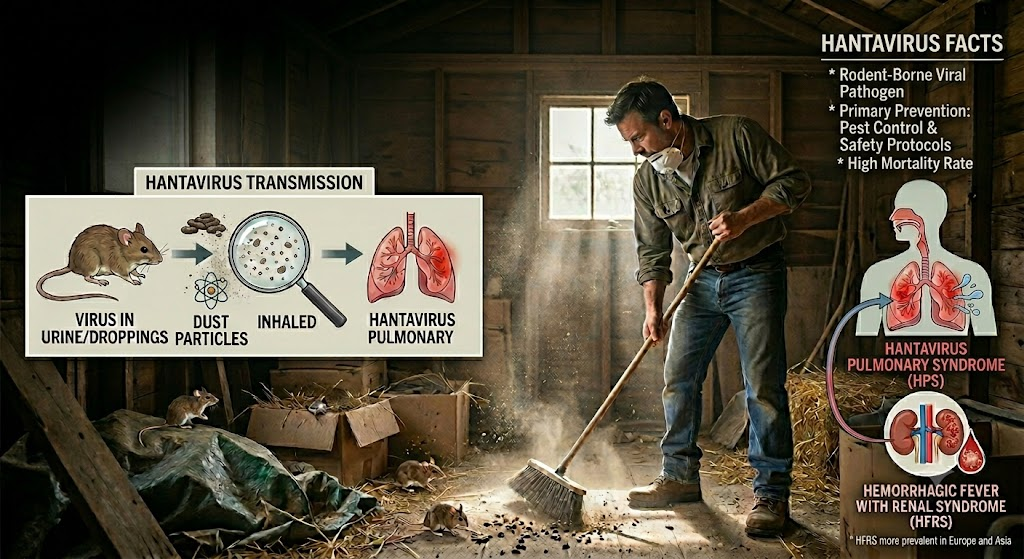
What makes Hantavirus especially concerning is that exposure can occur during ordinary activities. Cleaning an old shed, opening a seasonal cabin, organizing a garage, or working in agricultural environments may expose individuals to the virus without any obvious warning signs. Because the infection often begins with symptoms that resemble a common flu, many people fail to recognize the danger until the disease has progressed.
A Hidden Virus Carried by Rodents
Hantavirus is a group of RNA viruses naturally hosted by rodents. Different strains circulate across North America, South America, Europe, and Asia, causing distinct forms of disease in humans.
In the Americas, Hantavirus is most commonly associated with Hantavirus Pulmonary Syndrome (HPS), a severe respiratory illness that can rapidly become life-threatening. In Europe and Asia, the virus more frequently causes Hemorrhagic Fever with Renal Syndrome (HFRS), a disease that primarily affects the kidneys and vascular system.
Unlike many viral infections that spread easily from person to person, Hantavirus is typically transmitted through contact with infected rodents or their waste products. Rodents carrying the virus shed it in their urine, saliva, and droppings. When these materials dry and become disturbed, tiny particles can become airborne and be inhaled by humans.
This is why seemingly harmless activities such as sweeping a dusty storage room or cleaning a long-abandoned building can create an unexpected risk of exposure.
Importantly, most Hantavirus strains do not spread through routine human-to-human contact. Casual interactions in workplaces, schools, public transportation, or social settings generally do not pose a transmission risk.
What Happens Inside the Body After Infection?
The danger of Hantavirus lies not only in the virus itself but also in how the body responds to it.
After inhalation, the virus enters the respiratory tract and eventually reaches the bloodstream. Once inside the body, Hantavirus preferentially infects endothelial cells, which form the inner lining of blood vessels. These cells play a critical role in maintaining vascular integrity and controlling the movement of fluids between the bloodstream and surrounding tissues.
As the virus replicates, the immune system launches a defense response. Immune cells release signaling molecules known as cytokines to fight the infection. In some patients, however, this response becomes excessive and leads to widespread inflammation.
The result is increased vascular permeability, often described as “leaky blood vessels.” Instead of remaining inside the circulation, fluid begins to escape into nearby tissues.
In Hantavirus Pulmonary Syndrome, this leakage occurs primarily within the lungs. Fluid accumulates in the air spaces responsible for oxygen exchange, making breathing progressively more difficult. This process can develop rapidly and may lead to respiratory failure within a matter of days.
In Hemorrhagic Fever with Renal Syndrome, vascular leakage occurs throughout the body but particularly affects the kidneys. Reduced blood flow, inflammation, and fluid imbalance can impair kidney function and, in severe cases, contribute to bleeding complications.
Researchers believe that much of the damage caused by Hantavirus results from this combination of viral infection and an intense immune response. This unique mechanism explains why patients can deteriorate quickly even after appearing relatively stable during the early stages of illness.
Why Early Symptoms Are Often Misleading
One of the greatest challenges associated with Hantavirus infection is that the initial symptoms are remarkably similar to those of common viral illnesses.
Following an incubation period that typically ranges from one to eight weeks, infected individuals often develop fever, chills, fatigue, headaches, and muscle aches. The muscle pain is frequently concentrated in the thighs, hips, and lower back. Some patients also experience dizziness, nausea, vomiting, abdominal discomfort, or diarrhea.
At this stage, many people assume they have influenza or another routine infection. As a result, medical attention may be delayed.
Unfortunately, the disease can progress rapidly after this seemingly mild beginning.
When the Disease Becomes Severe
For patients who develop Hantavirus Pulmonary Syndrome, respiratory symptoms often emerge several days after the initial flu-like illness.
A persistent cough may develop, followed by chest tightness and increasing shortness of breath. As fluid continues to accumulate within the lungs, oxygen levels begin to decline. Without prompt medical intervention, respiratory failure can occur and may require intensive care support, including mechanical ventilation.
Patients with Hemorrhagic Fever with Renal Syndrome often experience a different pattern of disease progression. Severe headaches, lower back pain, pain behind the eyes, facial flushing, and redness of the neck and chest are common findings. As the illness advances, kidney function may deteriorate, and some individuals develop bleeding abnormalities due to damage within the vascular system.
Why Hantavirus Is Considered So Dangerous
Although Hantavirus infections are relatively uncommon compared with seasonal respiratory diseases, their severity makes them a major concern for public health professionals.
Hantavirus Pulmonary Syndrome has a reported mortality rate of approximately 30% to 38%, making it one of the deadliest rodent-borne viral infections known. The disease can progress from mild symptoms to life-threatening respiratory failure in a surprisingly short period of time.
Another challenge is the absence of a widely available vaccine or specific antiviral cure for most Hantavirus infections. Treatment currently focuses on supportive medical care, including oxygen therapy, fluid management, and close monitoring of organ function.
Because there is no targeted cure, early recognition and prompt hospitalization remain among the most important factors influencing patient outcomes.
Who Faces the Greatest Risk?
Anyone can become infected if exposed to contaminated rodent waste, but certain individuals face a higher risk because of their work or lifestyle.
Farmers, forestry workers, pest control professionals, construction workers, and outdoor enthusiasts frequently encounter environments where infected rodents may be present. Seasonal cabin owners, campers, and people cleaning neglected buildings may also unknowingly expose themselves to contaminated dust.
Many documented infections have occurred during routine cleaning activities, highlighting how easily exposure can happen when proper precautions are not taken.
Prevention Remains the Best Defense
Since effective treatment options remain limited, prevention plays a critical role in reducing the risk of infection.
Keeping rodents out of homes, storage buildings, and workplaces is one of the most effective strategies. Sealing cracks and openings, eliminating potential nesting sites, and properly storing food can help discourage rodent infestations.
When cleaning areas where rodents may have been present, it is important to avoid creating airborne dust. Experts recommend ventilating enclosed spaces before entering, using disinfectants to wet contaminated materials, and wearing appropriate protective equipment such as gloves and N95 respirators.
Simple preventive habits can significantly reduce the likelihood of exposure and infection.
When Should You Seek Medical Attention?
Because early symptoms often resemble common viral illnesses, individuals may not immediately suspect Hantavirus infection. However, anyone who develops fever, muscle aches, fatigue, or respiratory symptoms after potential exposure to rodents should seek medical care as soon as possible.
Providing healthcare professionals with information about recent rodent exposure, cleanup activities, or time spent in cabins, sheds, barns, or other rodent-prone environments can help support faster diagnosis and treatment.
Early medical intervention can be lifesaving, particularly for patients who begin to experience breathing difficulties.
Final Thoughts
Hantavirus may not attract the same level of public attention as many other infectious diseases, but its impact can be devastating. The virus often begins quietly, producing symptoms that resemble a routine flu, yet it has the potential to progress rapidly into a severe and life-threatening illness.
Understanding how Hantavirus spreads, how it affects the body’s vascular system, and why early symptoms should never be ignored is essential for reducing risk. While infections remain relatively uncommon, awareness, prevention, and prompt medical attention continue to be the most effective tools for protecting individuals and communities from this silent but serious threat.
References
- Sabino-Santos G Jr, et al.; Natural infection of Neotropical bats with hantavirus in Brazil. Sci Rep. 2018, 8(1):9018.
- Avižinienė A, et al.; Characterization of a Panel of Cross-Reactive Hantavirus Nucleocapsid Protein-Specific Monoclonal Antibodies. Viruses. 2023, 15(2):532.
Related Products
Hantavirus Antibodies
Hantavirus Antigens
Hantavirus ELISA Kits
| Cat. No. | Product Name | Size | Species Reactivity | Application | Detection Method | |
| DEIABL10 | Mouse Anti-Hantavirus ELISA Kit | 2×48T | Mouse | Qualitative | sELISA | Inquiry |
| DEIA-JY2451 | Mouse Hantavirus (HV) Antibody ELISA Kit | 96T | Mouse | Qualitative | iELISA | Inquiry |
| DEIA-JY2467 | Rat Hantavirus (HV) Antibody ELISA Kit | 96T | Rat | Qualitative | iELISA | Inquiry |
| DEIA2203L | Human Hantavirus Nucleoprotein (HVNP) IgG/IgM ELISA Kit | 96T | Human | Qualitative | iELISA | Inquiry |
Hantavirus PCR Kits
| Cat. No. | Product Name | Size | Species Reactivity | Application | Detection Method | |
| PCR-NS2618 | Andes virus Real Time PCR Kit | 50 Reactions | Andes virus | Qualitative | Real-Time PCR | Inquiry |
| PCR-WN-151 | Hantavirus Real Time PCR Kit | 50 Reactions | Hantaan, Seoul, and Puumala | Qualitative | Real-Time PCR | Inquiry |
Hantavirus NAT Standard Reference
| Cat. No. | Product Name | Size | Reference Range | |
| NA-GWP-SR-38-L1 | Andes virus (Hantavirus Pulmonary Syndrome (HPS)) Nucleic Acid Standard Reference | 1mL/vial | 1.6×10^3~1.6×10^4 copies/mL | Inquiry |
| NA-GWP-SR-38-S1 | Andes virus (Hantavirus Pulmonary Syndrome (HPS)) Nucleic Acid Standard Reference | 1mL/vial | 6.3×10^2~6.3×10^3 copies/mL | Inquiry |
| NA-GWP-SR-38-S2 | Andes virus (Hantavirus Pulmonary Syndrome (HPS)) Nucleic Acid Standard Reference | 1mL/vial | 3.2×10^2~3.2×10^3 copies/mL | Inquiry |
| NA-GWP-SR-38-S3 | Andes virus (Hantavirus Pulmonary Syndrome (HPS)) Nucleic Acid Standard Reference | 1mL/vial | 1.6×10^2~1.6×10^3 copies/mL | Inquiry |