
In nonclinical research for new drug development, experimental animal models play a crucial role. Mice, rabbits, and monkeys are familiar names. But you might not realize that in the field of anti-infective drugs, another furry little animal has quietly become a research star: the ferret.
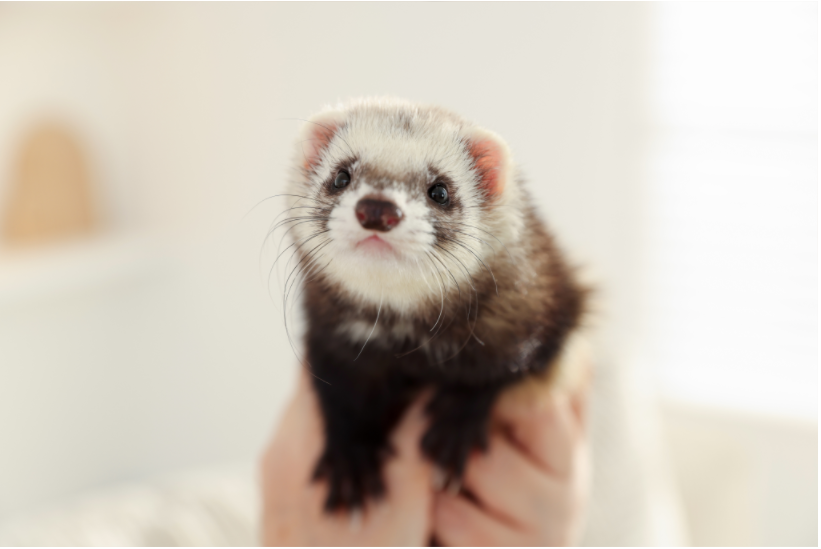
Ferrets are more than just the adorable pets of the pet world. Scientists consider them a natural “human simulator.” Ferrets offer unique advantages, making them an irreplaceable research subject, particularly in viral disease research and anti-infective drug evaluation.
Why Ferrets?
Ferrets are in the family Mustelidae, order Carnivora. Small in size, and with an average lifespan of 7 to 10 years, ferrets have a number of physiological and anatomical features that are close to that of humans. These features allow for ferrets to be superior models in anti-infective drug development studies:
- Respiratory tract structure: Ferrets have upper and lower respiratory tract proportions, bronchial structure and mucosal gland distributions, all similar to that of humans. Respiratory infections, whether influenza or COVID-19, can induce almost identical symptoms in ferrets to that in humans.
- Esophagus and digestive tract features: Ferrets also have a similar esophageal submucosal gland to that of humans which mice and rats, two of the most commonly used lab animals, do not. Ferrets are therefore especially suitable for the study of gastrointestinal pathogens’ infection process.
- Vomiting reflex: The majority of commonly used lab animals do not vomit, but like humans, ferrets can experience nausea, retching, and vomiting. This is of vital importance when studying GI drug reactions.
In other words, the “human” qualities of ferrets make them a natural “stunt double” for anti-infective drug research.
A History of Ferrets and Viruses
Ferrets have been repeatedly involved in research on important viruses in the last few decades.
- Influenza virus: Ferrets are the first choice as an influenza research model. Ferrets have almost the same symptoms (fever, runny nose, cough, and sneeze) as humans when they are infected with influenza virus, and more importantly, ferrets could cough and sneeze and pass the virus to others. This cannot be found in mice or other animals.
- Novel Coronavirus (SARS-CoV-2): ACE2 of ferrets is highly homologous to that of humans, and it can be combined with the spike protein of novel coronavirus to cause infection. The infected ferrets had high body temperature, acute bronchiolitis, and can transmit the virus through aerosols and direct contact. The transmission route is similar to that of human infection.
- Respiratory syncytial virus, measles-alternative virus (canine distemper virus), Mycobacterium tuberculosis… can cause ferrets to show symptoms similar to humans and become a dependable experimental model for drug research.
From influenza to COVID-19, ferrets have consistently played a central role in virology research, providing a solid scientific foundation for the development of countless anti-infective drugs.
Age Factor: Young vs. Old Ferrets
As in humans, ferret age is also related to their susceptibility to pathogens.
- Old ferrets: In some infections (such as novel coronavirus), older ferrets have a more serious disease course, higher viral load, more delayed clearance, and more complicated clinical symptoms. This is consistent with the epidemiological characteristics of increased susceptibility to severe COVID-19 with age.
- Juvenile ferrets: In other viral infections (such as respiratory syncytial virus), nasal viral replication is the dominant feature while pulmonary lesions are relatively mild, which is consistent with the clinical features of pediatric infection.
Therefore, when using ferrets, they choose the ferrets of the corresponding age according to the research object (infants, adults or the elderly). This “precise matching” enables the research results to have more clinical value.
Comparison with Other Animals
Why can’t mice be used for anti-infective drug research? The reason is: Although mice are cheap and easy to manage, the body’s response to infection in mice is very different from that in humans. For example, when mice are infected with influenza virus, they usually show lung lesions and weight loss, but they lack typical clinical symptoms such as cough, sputum, runny nose, and sneezing.
In contrast, ferrets not only display these clinical symptoms but also possess the ability to spread in groups, something that other animals lack. While primates like monkeys are also excellent at modeling human diseases, they are extremely expensive to maintain and are not as cost-effective as ferrets.
Thus, ferrets often serve as the “golden balance between mice and monkeys” in antiviral drug research.
Challenges
Despite the promising prospects of ferrets in anti-infective drug research, there are still some issues that need to be considered for their use:
- No unified laboratory animal standards: my country still lacks a complete set of national standards for the care and use of ferrets, which has hindered their wide use.
- Gap in reagents: In terms of diagnostic reagents and molecular tools, ferrets still fall far behind mice.
- Insufficient population resources: Ferrets are not as popular in the laboratory animal market as mice, and the breeding system still needs further development.
In other words, in order to let ferrets play their full scientific value, we need to invest more in aspects such as standardization, tool development and breeding system development.
Conclusion: Small Animals, Big Achievements
The value of ferrets lies in that they are not just a tool used in laboratories, but a bridge that can more closely link basic research with clinical practice. From influenza to COVID-19, from antiviral drugs to immunology research, ferrets have been repeatedly tested and verified in scientific research and have become real.
In the future, with the gradual improvement of the standardization system and the continuous enrichment of research tools, ferrets may also be able to play an important role in the development of more anti-infective drugs, and will continue to stand in the first line of scientific research, helping mankind face one infectious disease after another.
Related Products
| Cat. No. | Product Name | Application | |
| CABT-L0784Y | Rabbit Anti-Ferret IgA α heavy chain Polyclonal antibody | ELISA | Inquiry |
| CABT-L0785Y | Rabbit Anti-Ferret IgA α heavy chain Polyclonal antibody [HRP] | ELISA | Inquiry |
| CABT-L1083X | Mouse Anti-Ferret Igκ Monoclonal antibody, clone 5C21 | WB, ELISA, ELISPOT, FC | Inquiry |
| CABT-L1084X | Mouse Anti-Ferret Igλ Monoclonal antibody, clone 9I0 | WB, ELISA, ELISPOT, FC | Inquiry |
| CABT-L1085X | Mouse Anti-Ferret IgG Monoclonal antibody, clone 22F4 | WB, ELISA, ELISPOT, FC | Inquiry |
| CABT-L0866X | Ferret IgA Isotype control | IA, Control | Inquiry |