
 AAV Titration ELISA
Inquiry Basket
 Loading ......
Gene therapy is a cutting-edge medical technology that has made many important advances over the years. However, there are still some challenges and limitations in existing gene therapy technologies, such as transient expression, immune response and safety issues. AAV gene therapy is an emerging technology developed to address these problems, and its emergence is expected to redefine the future of gene therapy.
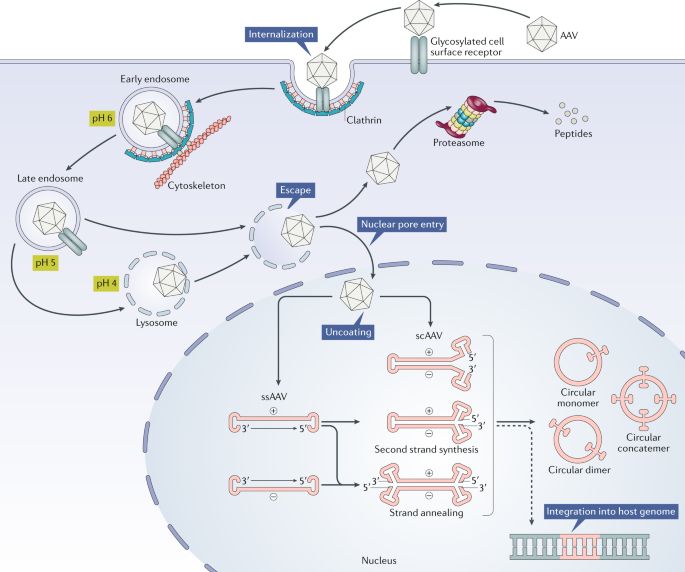 Figure 1. Diagram of rAAV transduction pathway. (Wang D, et al.; 2019)
Gene therapy refers to the introduction of exogenous normal genes into target cells to correct or compensate for diseases caused by defective and abnormal genes, thereby achieving the purpose of treating diseases. For a long time, traditional large/small molecule drugs mainly work on protein targets, which also makes their indications limited. Especially for hereditary diseases where genetic factors are the main cause, they cannot effectively exert their therapeutic effects. The number of people suffering from such gene-related diseases is actually not small. For example, rare diseases have as many as 350 million patients worldwide, and 80% of rare diseases are single-gene genetic diseases.
For these genetic diseases, the current treatment methods are limited, and they are basically treated from the perspective of improving symptoms, that is, treating the symptoms but not the root cause. The patient's disease will continue to progress and seriously affect the quality of life, and even eventually lead to death. In this context, gene therapy emerged as the times require, which can treat diseases from the root cause. Although gene therapy has relevant clinical application cases 20 years ago, it has only been widely studied and clinically tested in recent years.
Gene vectors are tools that introduce exogenous target genes (or therapeutic genes) into host cells for expression to study gene functions or treat diseases. They are mainly used in cell and gene therapy (CGT), biological research, biopharmaceuticals, genetically modified foods, etc. field.
Gene therapy can usually be divided into in vivo gene therapy and ex vivo gene therapy. Among them, in vivo treatment mainly delivers non-viral or viral vectors carrying therapeutic genes, such as the commonly used Adeno-Associated Virus (AAV), directly into the patient's body; while ex vivo treatment delivers the treatment outside the body. The gene is introduced into the patient's cells (lentivirus LV is often used), amplified and then infused back into the patient's body. Compared with in vitro treatment, in vivo treatment has higher requirements on gene delivery tools, namely vectors.
The selection of gene delivery tools is a key part of gene therapy. The final efficacy of drugs in the human body depends largely on a stable and efficient delivery system. Currently, commonly used vectors for gene therapy include viral vectors and non-viral vectors. Viral vectors are increasingly used in gene therapy research due to their wide host range and long action time, and can overexpress coding genes or non-coding genes. It can perform operations such as overexpression, interference, knockout and endogenous activation of coding genes or non-coding genes.
Currently, four commonly used viral vectors are AAV, AD, RV and LV. Among them, AAV is the most widely used delivery method for in vivo gene therapy due to its good tissue specificity, low immunogenicity and high safety.
Adeno-associated virus is a non-enveloped single-stranded DNA virus that cannot replicate autonomously. It has the following advantages:
High safety: AAV virus does not cause disease during the reproduction process of the human body, and the immune response to the human body is small, so AAV gene therapy is safer.
Long expression time: The genes carried by the AAV virus can be expressed in human cells for several years, thus achieving the purpose of long-term treatment.
Wide range of applications: AAV gene therapy can be used to improve and treat many different types of genetic diseases.
Currently, recombinant adeno-associated virus vectors (rAAV) are mainly used in gene therapy clinical trials. It is modified from non-pathogenic wild-type AAV, retaining only two inverted terminal repeats (ITRs) to replace the original genome with the target gene, maximizing the capacity to carry the target gene and reducing its immunogenicity and cytotoxicity.
The purified AAV viral vector can be used to infect cells. When infecting cells, the AAV capsid protein binds to specific receptors on the cell surface, activating intracellular signaling pathways, which in turn triggers AAV to enter the cell through receptor-mediated endocytosis, with the assistance of endosomes, Golgi apparatus and other organelles. Enters the cell nucleus, and the capsid protein is degraded by the proteasome.
Once the AAV viral vector enters the nucleus, it will uncoat and release its single-stranded genome, and convert it into a double-stranded DNA template, on which the transgene will be transcribed and translated to achieve the expression of the target gene.
Different serotypes of AAV have different tissue targeting specificities. Currently, 13 subtypes and nearly 200 variants of AAV have been discovered, and are gradually used in the research and development of genetic drugs. The process of AAV entering cells relies on the recognition of AAV capsid protein by glycosylated receptors on the cell surface, so the AAV capsid protein determines its tissue targeting specificity. New tissue-prone AAV serotypes are generated by modifying and mutating the capsid protein sequence of AAV. Currently, 13 natural serotypes of AAV (AAV1-13) have been discovered, with nearly 200 variants, each with different characteristics and tissue tropism, which can target different tissues. Currently, AAV2, AAV5, AAV8 and AAV9 are commonly used in clinical practice.
In recent years, AAV gene therapy has made significant progress in clinical and research, including the continuous expansion of application fields, continuous improvement of therapeutic effects, and continuous innovation of treatment options. It is considered to be one of the important directions for the development of gene therapy.
Judging from clinical trials, gene therapy using AAV as a vector mainly targets the eyes, brain, muscles and liver. Some studies have shown that AAV gene therapy can effectively treat some common genetic diseases. AAV gene therapy is also widely used in liver disease, retinal diseases, immunotherapy and other fields. It is expected to bring new hope for the treatment of some currently incurable genetic diseases. With the continuous innovation and advancement of technology, it is believed that AAV gene therapy will be able to redefine the future of gene therapy in the future.
Anti-AAV Antibody ELISA Kit
AAV Antibodies and Titration ELISA
Reference
| Target | Cat. No. | Product Name | Size | Species Reactivity | Application | Detection Sample | |
| AAV1 | DEIASL342 | AAV9 Titration ELISA Kit | 96T | Qualitative | serum, plasma | Inquiry | |
| AAV2 | DEIASL347 | AAV6 Titration ELISA Kit | 96T | Human | Qualitative | Serum | Inquiry |
| DEIASL347M | Mouse Anti-AAV8 ELISA Kit(Quantitative) | 96T | Mouse | Qualitative | Serum | Inquiry | |
| AAV5 | DEIASL343 | AAV8 Titration ELISA Kit | 96T | Qualitative | serum, plasma | Inquiry | |
| AAV6 | DEIAAV6 | Anti-AAV2 antibody ELISA Kit | 96T | N/A | Quantitative | cell culture supernatants, purified virus preparations | Inquiry |
| DEIASL344 | Anti-AAV9 antibody ELISA Kit | 96T | Human | Qualitative | Serum | Inquiry | |
| DEIASL344M | Anti-AAV1 Antibody ELISA Kit | 96T | Mouse | Qualitative | Serum | Inquiry | |
| AAV8 | DEIASL345MQ | Anti-AAV5 Antibody ELISA Kit | 96T | Mouse | Quantitative | Serum | Inquiry |
| DEIAAV8 | Anti-AAV6 ELISA Kit | 96T | N/A | Quantitative | cell culture supernatants, purified virus preparations | Inquiry | |
| DEIASL345 | Anti-AAV8 antibody ELISA Kit | 96T | Human | Qualitative | Serum | Inquiry | |
| DEIASL345M | Mouse Anti-AAV9 antibody ELISA Kit | 96T | Mouse | Qualitative | Serum | Inquiry | |
| AAV9 | DEIAAV9 | Mouse Anti-AAV2 antibody ELISA Kit | 96T | N/A | Quantitative | cell culture supernatants, purified virus preparations | Inquiry |
| DEIASL348 | Mouse Anti-AAV6 antibody ELISA Kit | 96T | Human | Qualitative | Serum | Inquiry | |
| DEIASL348M | Mouse Anti-AAV8 antibody ELISA Kit | 96T | Mouse | Qualitative | Serum | Inquiry |
Loading ......
