
Inquiry Basket
 Loading ......
Vitamins are a class of trace organic substances that humans and animals need to obtain from food in order to maintain normal physiological functions. They play important roles in human growth, metabolism, and development. Vitamins are classified into two categories based on their chemical structure and water solubility: water-soluble vitamins and fat-soluble vitamins.
Water-soluble vitamins: Vitamin B family (Vitamin B1, Vitamin B2, Vitamin B3, Vitamin B5, Vitamin B6, Vitamin B7, Vitamin B9, Vitamin B12), Vitamin C;
Fat-soluble vitamins: Vitamin A, Vitamin D, Vitamin E, Vitamin K
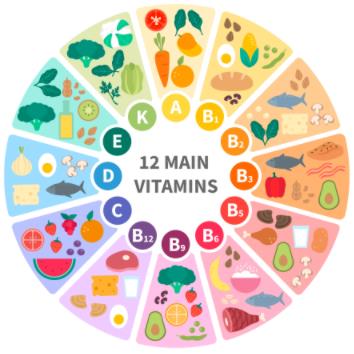
Vitamins have diverse biochemical functions. Both deficient and excess intake of vitamins can potentially cause clinically significant illness. For the most part, vitamins are obtained from the diet. Therefore, understanding the vitamin content in foods can help consumers better understand and control their daily vitamins intake. Many foods, such as juices, cereals, and dairy products, are often advertised to be enriched with vitamins and contribute to a healthy diet. There are various methods available to verify whether a product indeed contains the stated vitamin content on the label. The commonly used technologies for vitamin analysis in foods are chromatographic, electrophoretic, immunological, spectrophotometric, fluorometric, and microbiological methods.
Creative Diagnostics developed a portfolio of ELISA kits which allow a fast and precise quantitative analysis of single added vitamins by means of an antigen-antibody reaction.
Loading ......
