
Inquiry Basket
 Loading ......
CD3 was originally defined as a class of cell surface proteins that are present on mature T lymphocytes, and serve as a T cell surface marker. However, further investigation has shown that it is fundamentally a heteromultimeric protein complex that associates non-covalently, and in very close proximity, to the T-cell receptor (TCR, α/β or γ/δ heterodimer responsible for antigen recognition), and that together they form a functionally integrated TCR-CD3 complex. The intracellular domain of the TCR is very short and has no capacity for signal transmission by itself. This is compensated by the fact that each of the subunits of the CD3 complex has a relatively long intracellular domain, and the CD3 complex serves as a bridge that transmits signals from the extracellular milieu into the cell interior.
The TCR is the core receptor of T cells. It recognizes and binds to antigen peptides presented by MHC molecules, thereby initiating T cell activation. The TCR is composed of several parts, including the recognition component (TCRαβ) and the signaling component (the CD3 complex). While TCRαβ can recognize antigens, the intracellular "tail" is too short and does not possess signaling capabilities, thus being unable to activate T cells alone. The intracellular domains of the CD3 complex however do contain ITAM motifs. Only when ITAMs are phosphorylated by kinases such as LCK are downstream signaling pathways activated, eventually leading to full T cell activation.
A standard TCR-CD3 complex is composed of four distinct types of transmembrane protein chains, which together form six protein subunits:
The subunits are expressed separately and combine on the cell surface with defined stoichiometry to yield a complete complex. The complex is therefore sometimes notated structurally as TCRαβ-CD3γε-CD3δε-CD3ζζ. CD3γ, δ, and ε chains are members of the immunoglobulin superfamily, and thus their extracellular domains adopt an immunoglobulin-like fold. However, importantly their transmembrane regions each contain negatively charged aspartic acid residues that form electrostatic interactions with positively charged residues in the TCR transmembrane domains. These interactions are critical to stabilizing the assembly of the complete complex.
In artificial expression systems in which a reconstituted TCR/CD3 complex is expressed, a fully assembled complex could only be detected at the cell surface if all four chains, TCRαβ, CD3γε, CD3δε, and CD3ζζ, were transfected into the cells simultaneously. If even one subunit of the TCR/CD3 complex was either omitted or mismatched, the entire unassembled complex was retained in the endoplasmic reticulum (ER) and eventually transported to the lysosomes for degradation and is unable to reach the cell surface. The importance of these subunits is further reinforced by the fact that if any subunit is missing, there are biological consequences: If CD3ε is absent, there is a complete absence of mature T cells, while the CD3ζ chain is the last subunit to join the assembly line, playing a role similar to a "final quality control check", which is crucial for promoting the transport of the complex to the cell surface. The TCR cannot be detected at the cell membrane in the absence of CD3ζ.
The most critical structural feature of the CD3 complex lies in the Immunoreceptor Tyrosine-based Activation Motifs (ITAMs) present within its intracellular regions. An ITAM is a specific sequence motif (YXXL/I X6-8 YXXL/I) where the "Y" represents a key tyrosine residue. Each CD3γ, CD3δ, and CD3ε chain contains one ITAM in its intracellular domain, while each CD3ζ chain contains three ITAMs. Consequently, a complete TCR-CD3 complex harbors a total of 10 ITAMs. These tyrosines are then phosphorylated by Src family kinases (LCK, etc.) upon TCR engagement with antigen. Phosphorylated ITAMs now serve as "docking sites" for the next critical kinase, ZAP-70, to bind. This then initiates a complex signaling cascade (resulting in calcium flux, Ras activation, etc.) that ultimately leads to the activation of transcription factors (NF-κB, NFAT, AP-1, etc.), and the complete activation of the T cell. It should be noted that the two ITAMs on each CD3 subunit are not interchangeable. They actually seem to have non-overlapping functions, and may have an effect on driving the T cell towards a specific response. ITAMs on phosphorylated CD3γ may mainly be responsible for T cell proliferation, while one specific ITAM on phosphorylated CD3ζ may be more biased towards cytokine secretion or cytotoxic activity.
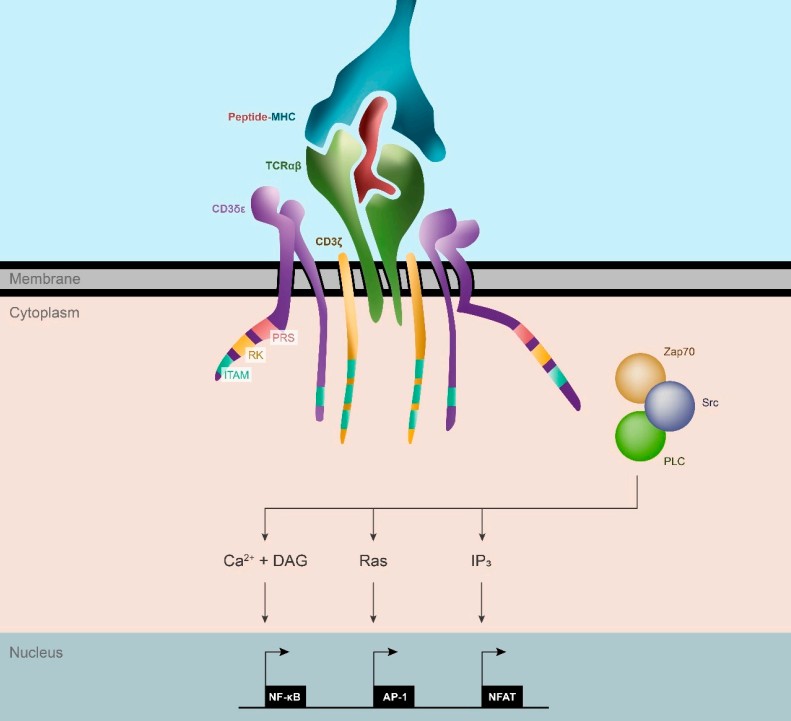 Figure 1. TCR structure and T cell activation pathway.
(Source: Menon AP, et al. 2023)
The core function of the CD3 complex in immunology is signal transduction. It acts as a vital intermediary, precisely converting the highly specific physical binding event of TCR-antigen recognition into a cascade of intracellular biochemical changes that ultimately determine the T cell's fate. This entire process can be thought of as a finely tuned molecular engine.
The phosphorylation of ITAMs on the CD3 subunits by the Lck kinase marks the beginning of all downstream signaling. The activity of Lck itself is tightly regulated by the phosphorylation status of its two key tyrosine residues: phosphorylation at Y394 activates it, while phosphorylation at Y505 suppresses it.
Binding of the TCR to the peptide-MHC complex (pMHC) triggers a conformational change in the TCR-CD3 complex. This conformational change opens up the TCR-CD3 complex to allow Lck access to and phosphorylation of the ITAMs in the intracellular domains of the CD3 chains. Because Lck is normally bound to the intracellular tails of CD4 or CD8 co-receptors, binding of the co-receptors to the pMHC complex in close proximity to their targets allows Lck to greatly facilitate ITAM phosphorylation.
Doubly phosphorylated ITAMs are a high affinity "docking site" for recruitment and activation of a second key protein tyrosine kinase, ZAP-70. ZAP-70 binds to phosphorylated ITAMs of CD3ζ chains with its two tandem SH2 domains. When docked, ZAP-70 is further phosphorylated by Lck, resulting in complete activation of ZAP-70. Activated ZAP-70 can phosphorylate critical adaptor proteins such as LAT and SLP-76. These phosphorylated adaptor proteins then function like a "scaffold" to assemble a huge signaling complex on the inner leaflet of the cell membrane, known as the "signalosome". Serving as a central platform, the LAT and SLP-76 signalosome simultaneously activates at least three major downstream signaling pathways:
Transcription factors such as NFAT, NF-κB, and AP-1 enter the nucleus, where they initiate extensive genetic programs that dictate T cell function. This leads to a series of critical biological effects, including:
The entire process, from initial TCR engagement to the alteration of gene expression, represents a cascade where signals are progressively amplified, precisely routed, and integrated. The CD3 complex and its ITAMs hold an absolutely central role in this entire operation. A defect at any point in this pathway can lead to severe immunological disorders.
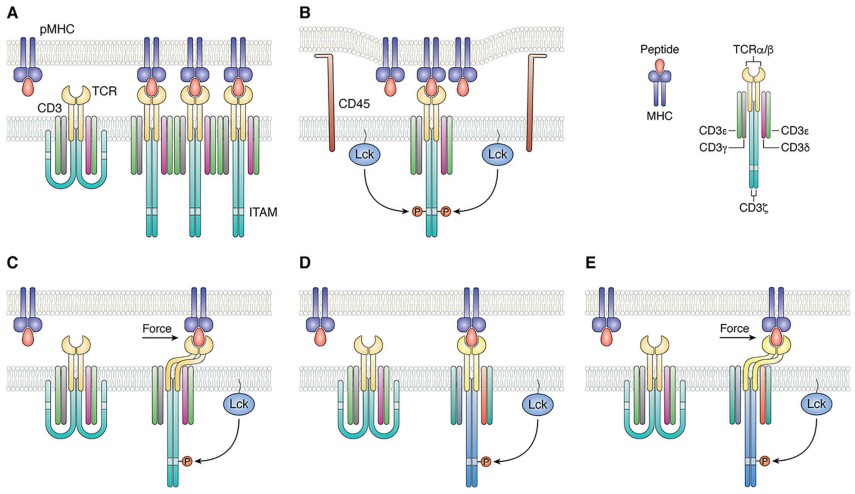 Figure 2. Mechanisms of TCR activation
(Source: Mariuzza RA, et al. 2020)
As the CD3 complex is necessary for the expression and function of the T-cell receptor (TCR) on all mature T cells (including both αβ and γδ T cells), expression of CD3 molecules is the most reliable and commonly used surface marker for T lymphocytes. For this reason, the term CD3-positive (CD3+) cells is usually interchangeable with T cells in clinical and basic research applications. The majority of adaptive T cells are CD4+ or CD8+ αβ T cells. In contrast, double-negative (DN) T cells represent a unique subset that is CD3-positive but lacks both CD4 and CD8 expression. Although they typically represent only a small fraction of T cells in peripheral blood, these DN T cells exhibit functional properties of both the innate and adaptive immune systems, distinguishing them from conventional CD4+/CD8+ T cells.
Diverse Functions of DN T Cells:
1. Exhibit regulatory T cell-like functions:
2. Exhibit helper T cell-like functions:
3. Exhibit cytotoxic T cell-like functions:
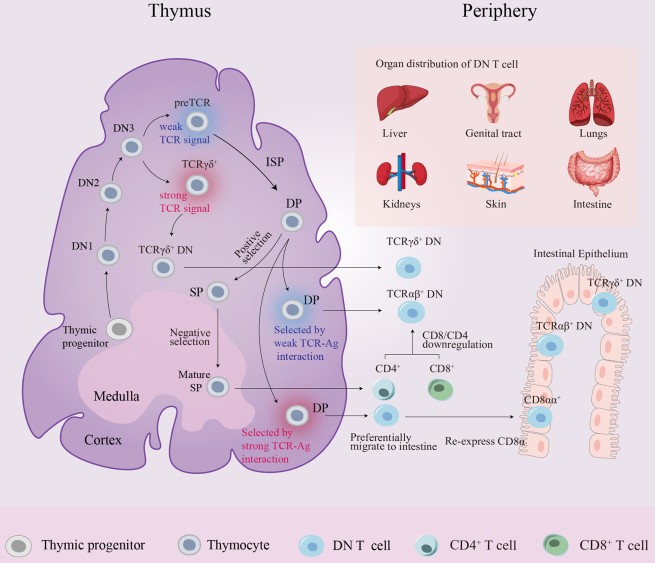 Figure 3. Schematic diagram of DN T cell origin and distribution
(Source: Wu Z, et al. 2022)
References
| Target | Cat. No. | Product Name | Size | Species | Application | Detection Sample | |
| CD3 | DEIA-BN2310-1 | Anti-CD3 Antibody ELISA Kit | 96T | N/A | Quantitative | Bioprocess manufacturing | Inquiry |
| DEIA-BJ2382 | Mouse Cluster of differentiation 3 ELISA Kit | 96T | Quantitative | Serum, plasma, cell culture supernatants, body fluid and tissue homogenate | Inquiry | ||
| DEIA-BJ2764 | Porcine Cluster of differentiation 3 ELISA Kit | 96T | Quantitative | Serum, plasma, cell culture supernatants, body fluid and tissue homogenate | Inquiry |
Loading ......
