
Inquiry Basket
 Loading ......
Venezuelan equine encephalitis virus (VEEV) is a mosquito-borne virus pathogen that causes Venezuelan equine encephalitis (VEE), and is prevalent in Central and South America. VEE can affect all equine species (horse, donkey, zebra, etc.) and humans. It contains six different subtypes (I to VI). Variants AB and C in subtype I are the epidemic strains. The virus is initially stored in the salivary glands of mosquitoes and transmitted to the host through bites. It first spread from local lymphocytes to peripheral organs to replicate, causing initial febrile disease. About 24-36 hours after infection, VEEV escaped into the olfactory canal and infected olfactory nerve endings, starting the second stage of central nervous system (CNS) infection.
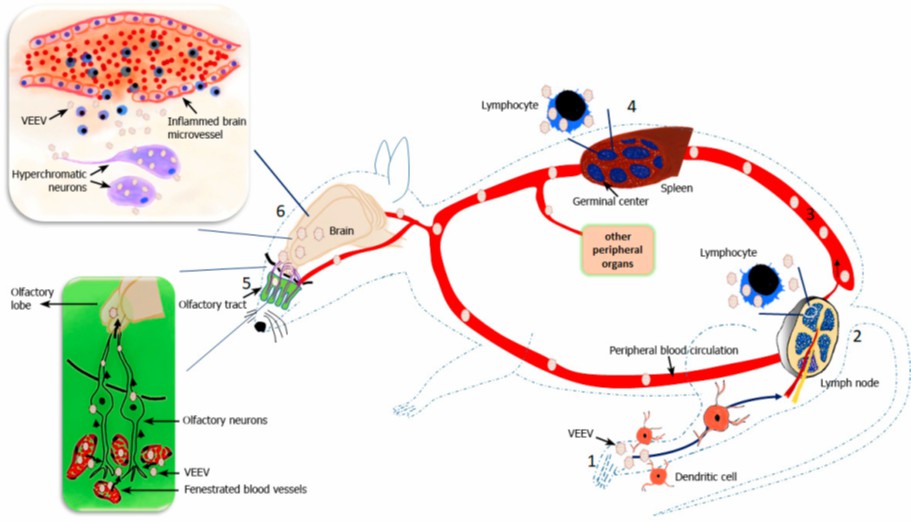 Fig. 1 Biphasic replication of VEEV in mice (Sharma A, et al. 2019)
VEEV is a member of the Alphavirus genus in Togaviridae family. Its genome is positive single-stranded RNA. The virus particles are spherical, about 70 nm in diameter, and have a 40 nm nucleocapsid. It has a lipid membrane and glycoprotein surface proteins are distributed outside. The genome has a 5 'cap, a 3' poly-A tail and two open reading frames (ORFs), encoding 4 nonstructural and 5 structural proteins, respectively. Non-structural proteins (nsP1-nsP4) are essential for viral RNA transcription and replication. Structural proteins include capsid, E1, E2, E3 and 6K proteins. E1, E2 and E3 constitute the spike of the virus.
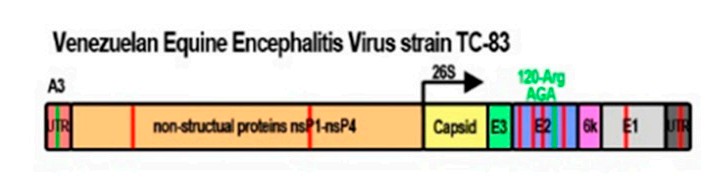 Fig. 2 Schematic diagram of the genomic structure of VEEV (Johnson DM, et al. 2020)
The detection of VEEV infection is complicated by its non-specific clinical manifestations and the lack of widely available diagnostic tools. It can be diagnosed by virus isolation, RT-PCR validation of viral genome sequences or detection of antibodies by enzyme-linked immunosorbent assays (ELISA). It is difficult to isolate viruses from clinical cases, except from the blood of early fever cases of infected herds of equine animals. Serological diagnosis is to prove the rise of IgG titer through standard technology, or to prove the existence of specific IgM through ELISA test, but it requires paired infected samples in acute phase and recovery phase. For VEEV, there is only animal vaccine at present, and no approved vaccine for human. Several candidate vaccines are at different stages of development. They can be categorized as live-attenuated virus, inactivated virus, recombinant subunit or chimeric virus, virus-like particles, or as passive immunization.
References
Loading ......
