
Inquiry Basket
 Loading ......
Varicella Zoster Virus (VZV), also known as human alphaherpesvirus 3 (HHV-3), belongs to the family of Herpesviridae. VZV is one of nine known herpes viruses infecting humans. It causes chickenpox (varicella) commonly affecting children and young adults, and shingles (herpes zoster) in adults but rarely in children. VZV is present worldwide and is highly infectious, and human is the only natural host of the virus. After the primary infection, the virus can latent in the spinal sensory ganglion of the host. Many years after the person has recovered from chickenpox, VZV can reactivate to cause neurological conditions.
VZV virions are spherical and 180–200 nm in diameter. Their lipid envelope encloses the icosahedral form of nucleocapsid. Its DNA is a linear, double-stranded molecule, and consists of approximately 125,000 bp with at least 71 open reading frames (ORFs). About two-thirds of VZV ORFs are necessary for replication in vitro, such as eight glycoproteins (gB, gC, gE, gH, gI, gK, gL, gN), proteins that are involved in DNA replication and other functions. Glycoprotein gB (gp II), gE (gp I), gH (gp III) can induce the body to produce neutralizing antibodies. gE is the main protein distributed on the surface of the envelope and has the associated epitopes with the virus. The content of gB and gH is less than gE but they can also be used to produce subunit vaccine. Please find the structure of VZV shown as in Figure 1.
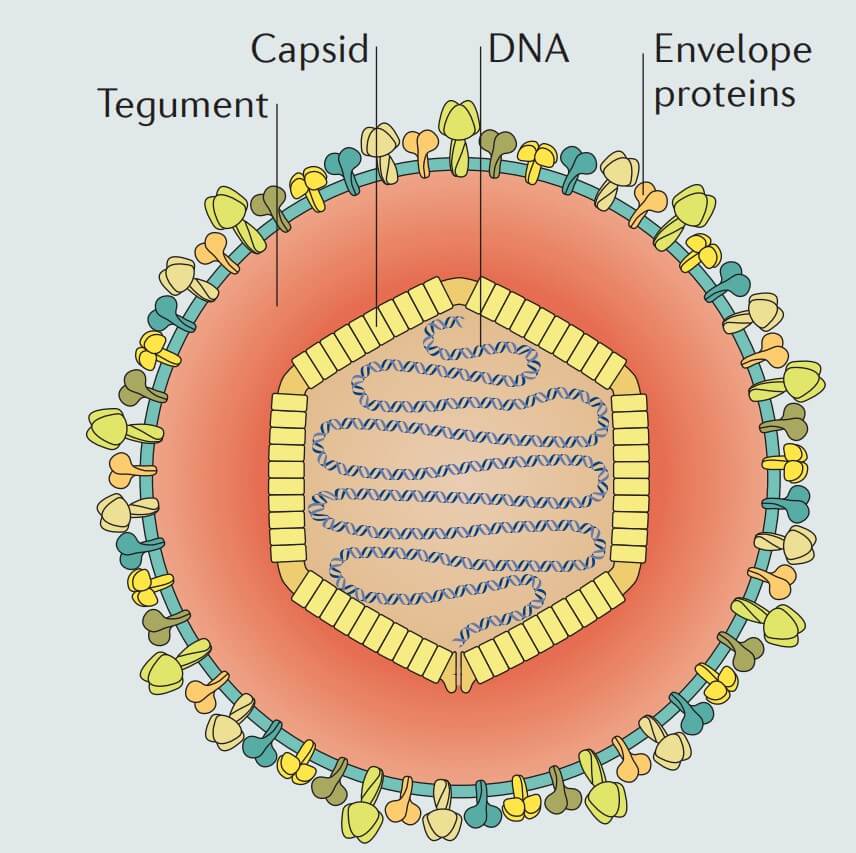 Fig. 1 Varicella Zoster Virus virion structure1
VZV infects the human host when virus particles reach mucosal epithelial sites of entry. Local replication is followed by spread to tonsils and other regional lymphoid tissues, where VZV gains access to T cells. Infected T cells then deliver the virus to cutaneous sites of replication. VZV establishes latency in sensory ganglia after transport to neuronal nuclei along neuronal axons or by viraemia. The virus life cycle begins with the entry of VZV, which is a current cognitive process based on herpes simplex virus (HSV) research. Viral envelope proteins are predicted to interact with cell surface molecules, such as mannose-6-phosphate receptor8 or myelin-associated glycoprotein9. The virus enters the host cell through the attachment of envelope glycoprotein. After entry, the virions undergo uncoating and might be transported to the nucleus. The virus DNA replication and nucleocapsid assembly occurs in the nucleus, followed by budding across the nuclear membrane. Virion assembly occurs in the trans-Golgi network, where nascent virions undergo secondary envelopment prior to vesicular trafficking to the plasma membrane. VZV differs from other herpesviruses in that assembled virions typically remain highly cell-associated.
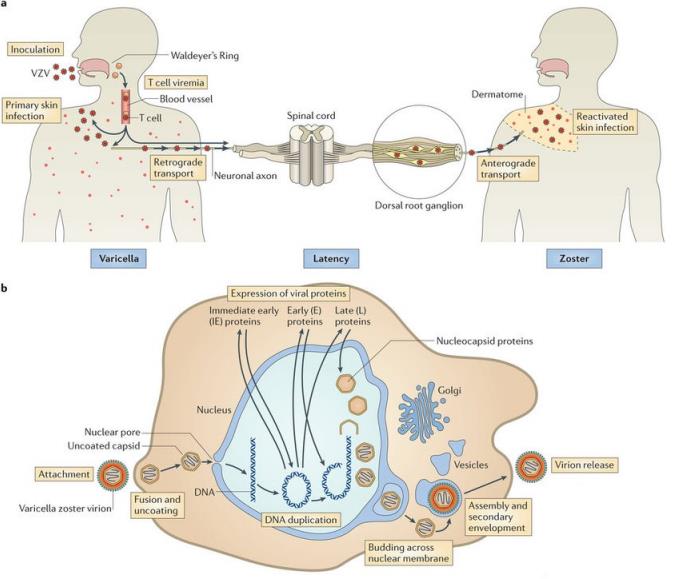 Fig. 2 Varicella Zoster Virus life cycle and replication1
Creative Diagnostics now can provide high quality Varicella Zoster Virus Antigens to scientists over the world for different applications and requirements. Welcome to contact our sales representative if you are in need of recombinant varicella zoster virus proteins, VZV active / envelope glycoprotein E and VZV Infected Cell Extract.
Loading ......
