
Inquiry Basket
 Loading ......
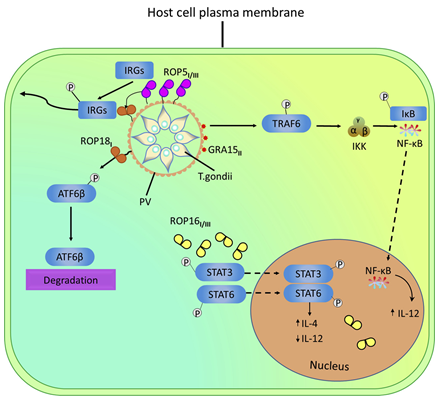 Fig. 1 Modulation of innate immunity by secretory proteins ROP5, ROP16 and ROP18 (Y. Zhang, et al. 2019)
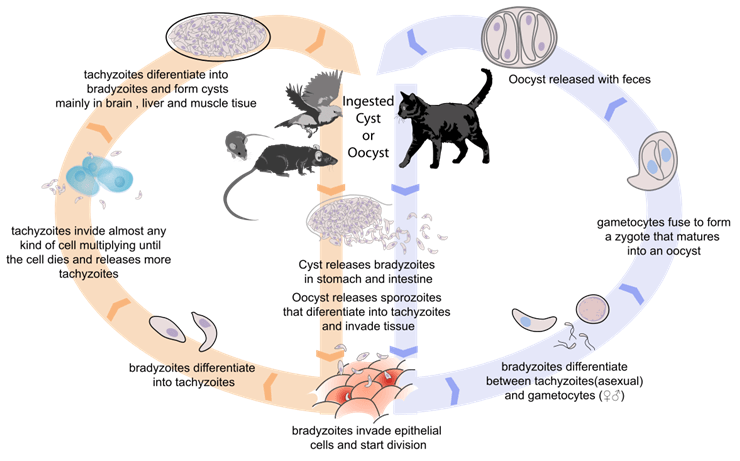 Fig. 2 Life cycle of T. gondii (Wikipedia, Public Domain)
Toxoplasma gondii (T. gondii) is a parasite that causes the disease toxoplasmosis. It is an obligate intracellular, alveolate parasite that belongs to the family Sarcocystidae, genus Toxoplasma. T.gondii is capable of infecting nearly all the warm-blood animals. However, sexual reproduction of this parasite can only be found in felids such as domestic cats. T. gondii is one of the most common parasites in humans, in developing countries. Serological studies suggest that 30% -50% of the global population were thought to be exposed to T. gondii and may be chronically infected.
T. gondii infections humans through several ways such as eating poorly cooked food that contains cysts, exposure to infected cat feces, and from infected mother to her child during pregnancy. The infection of T. gondii has three forms: acute toxoplasmosis, latent toxoplasmosis and cutaneous toxoplasmosis. More than 50% of the world population is thought to be infected but without any symptoms. Occasionally there may be a few weeks or months of mild flu-like illness. Symptoms may include fever, swollen lymph nodes, headaches, fatigue, muscle aches, etc. T. gondii is also capable of altering the behavior of infected rodents which will increase the rodents' chances of being preyed upon by felids.
The life cycle of T. gondii can be generally summarized into two components: the sexual component and the asexual component. The sexual component can only occurs in felids, wild or domestic cats, meaning that T. gondii can only proceed to the sexual reproduction within their definitive host, cats. While the asexual component can be found in virtually all warm-blooded animal hosts, including humans, cats, birds, rodents.
Three secretory organelles are present in the cytoplasm of T. gondii: microneme, rhoptry, and dense granule, which are known to function in the entry of the parasite and maintain intracellular host-parasite relationships, as unique to the parasites of the phylum Apicomplexa. T. gondii secretes a broad spectrum of proteins, including MICs, ROPs and GRAs. MICs, ROPs and GRAs differ in their localization and their time of release from the cell.
With years of protein and antigen production experience, professional science teams and stat-of-art platforms, Creative Diagnostics now can provide high-quality T. gondii antigens for academic and industry applications, including T. gondii Rhoptry proteins, T. gondii MIC, T. gondii p30 protein. Welcome to contact us for more details.
Loading ......
