
Inquiry Basket
 Loading ......
Tick-borne encephalitis virus (TBEV) is a member of the virus family Flaviviridae, genus Flavivirus. TBEV infection causes the tick-borne encephalitis (TBE), a virus infectious disease affecting humans in Europe and Asia. TBE often manifests as encephalitis, meningitis, or meningoencephalitis. TBE can also cause mild fever in some cases. There are three closely related groups of TBEV—Central European tick-borne encephalitis (TBEV-Eu), Russian (Siberian) spring-summer encephalitis (TBEV-Sib), and Far Eastern TBE (TBEV-FE). TBEV-FE infection is the most severe, which is associated with high rates of neurological sequelae, and up to 40% of cases are fatal. It is now known that in addition to ticks transmitting TBEV, TBEV can also infect a variety of hosts, including ruminants, carnivores, birds, rodents, horses and humans, and the disease may also be zoonotic.
TBEV is a positive-sense single-stranded RNA virus, contained in a 40-60 nm spherical, enveloped capsid. The TBEV genome is approximately 11kb in size, which codes for ten viral proteins, three structural proteins (capsid, C; precursor membrane, prM; and envelope, E), and seven nonstructural (NS) proteins (NS1, NS2A/B, NS3, NS4A/B and NS5). The role of some nonstructural proteins is known, NS5 serves as RNA-dependent RNA polymerase, NS3 has protease (in complex with NS2B) and helicase activity. It was shown that the glycosylation of the TBEV E-protein is important for the secretion of the virus from infected cells, and the C protein is essential for the assembly and maturation of viral particles.
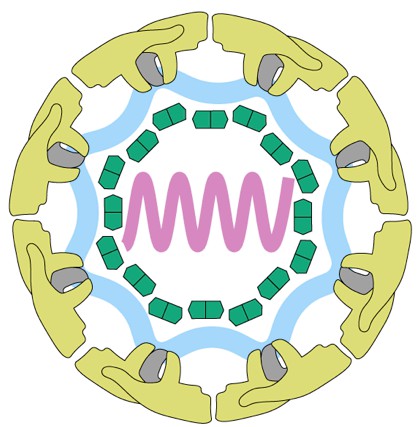 Fig. 1 Schematic representation of the TBEV virion1
In humans, the infection begins in the skin at the site of the bite of an infected tick, where Langerhans cells and macrophages in the skin are preferentially targeted, and then the virus replicate in the lymph nodes that drain the inoculation site, which is followed by development of plasma viraemia. During the viraemic phase, many extra-neural tissues are infected. The virus also crosses the blood–brain barrier to invade the central nervous system (CNS), where viral replication causes inflammation, lysis and cellular dysfunction. TBEV envelope (E) proteins recognize heparan sulfate (and likely other receptors) on the host cell surface and are endocytosed via the clathrin mediated pathway. Acidification of the late endosome triggers a conformational change in the E proteins, resulting in fusion, followed by uncoating, and release of the single-stranded RNA genome into the cytoplasm. Transcription, translation and replication occur in the rough endoplasmic reticulum (ER) region. The immature particles are transported through the Golgi network and maturate in the acidic trans-Golgi environment after a series of conformational changes and processing. The smooth mature particles egress from the infected cell along with partially mature and immature particles. The mature and partially mature particles can start a new infection cycle but the fully immature particles are non-infectious. Figure 2 shows the life cycle of TBEV.
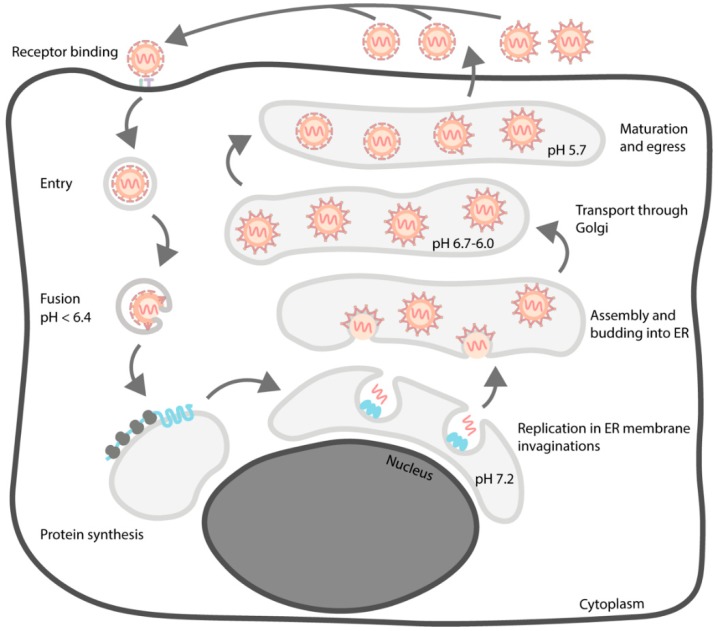 Fig.2 An overview of the TBEV life cycle1
With years of experience in the field of antigen production, Creative Diagnostics now provides both in stock and customized high-quality Tick-borne Encephalitis virus (TBEV) antigen products for multiple applications to support your biological programs. Welcome to contact us for more details.
Loading ......
