
Inquiry Basket
 Loading ......
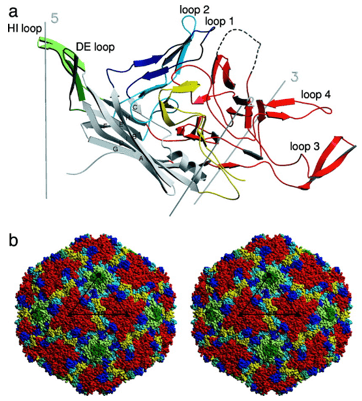 Fig. 1 Secondary structure of parvovirus B19
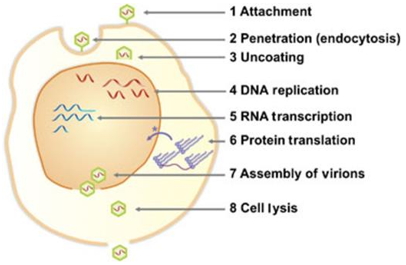 Fig. 2 Life cycle of B19V in an erythroid progenitor cell
Parvovirus is a linear, single-stranded DNA virus, which has an average genome size of 5,000 nucleotides. Parvovirus is a common name which applied to the viruses belongs to Parvoviridae taxonomic family. Different parvoviruses can infect humans, domestic animals and poultry. Parvovirus B19 is the name of parvovirus which can infect human. Canine can be infected by a small antigenic transfer and natural mutation of parvovirus. According to different infected carnivores, parvoviruses can be defined with different names: Parvovirus Feline panleukopenia virus (FPV), Canine parvovirus (CPV), Mink enteritis virus (MEV), Raccoonparvovirus (RPV), Raccoon dog parvovirus (RDPV), Blue foxparvovirus (BFPV), Aleutian mink disease virus (ADV) and Canine minute virus (MVC), etc.
The first known parvovirus which can infect human, was discovered in London by Australian virologist Yvonne Cossart in 1974. International Committee on Virology classified this virus into parvoviridae family and named B19 in 1985. Parvovirus B19 is a DNA virus consisting of a linear single-stranded DNA and capsid; the DNA strand is about 5.5 kb, containing 50% of the positive strand and the negative strand. B19V expresses three non-structural (NS1, 11- and 7.5-kDa) and two structural proteins (VP1 and VP2). This virus in some blood diseases and immunocompromised patients can cause a crisis of aplastic crisis in pregnant women can cause fetal edema and stillbirth.
Canine parvovirus type 2 (CPV2) was first isolated from dog feces which suffering from enteritis by Kelly of Australia and Canada's Thomson in 1978. In order to distinguish the canine parvovirus (MVC) (also known as CPV-1) isolated from healthy dog feces by Binn et al. In 1967, the later-discovered virus was named Canine Parvovirus Type 2 (CPV-2). CPV2 has a very high identity with feline panleukopenia (also a parvovirus), which is 98%, the only difference is two amino acids in the viral capsid protein VP2. There are two forms of Canine parvovirus type 2: intestinal type and cardiac type.
Porcine parvovirus (PPV) is a 25-nm diameter, non-enveloped icosahedral virus that contains ~ 5 kb of negative sense, single-strand DNA (ssDNA) with two large open reading frames (ORFs) in its genome. ORF1 codes for the nonstructural proteins NS1, NS2 and NS3, and ORF2 codes for the structural proteins VP1, VP2 and VP3. These structural proteins are responsible for the immunogenic properties of PPV. PPV infects pregnant gilts and sows, causing reproductive failure characterized by embryonic and fetal death, mummification and stillbirths, with delayed return to oestrus. The resulting reduction in reproductive capacity can significantly decrease pork production.
Creative Diagnostics now can provide high quality Parvovirus VP2 protein, Parvovirus B19, VP1, VP2 antigen and Parvovirus B19 protein. Welcome to contact our customer service to get a quote for desired viral antigens.
Loading ......
