
Inquiry Basket
 Loading ......
Metapneumovirus is a genus in the family Pneumoviridae, which also includes respiratory syncytial virus (RSV). It contains two species: avian metapneumovirus (AMPV) and human metapneumovirus (HMPV). HMPV was first identified in 2001 and has been recognized as a common cause of upper and lower respiratory tract infections (URTI and LRTI) in children and adults. It induces a variety of respiratory related clinical syndromes, including high fever, wheezing, severe cough, dyspnea, tachypnea, bronchiolitis and pneumonia.
 Fig. 1 Model structure of HMPV (Cheemarla NR, et al. 2015)
HMPV is an enveloped, negative single-stranded RNA virus. It has two major genetic lineages, namely subtypes A and B, which contain subtypes A1/A2 and B1/B2, respectively. The genome is about 13000n in size, encoding nine proteins in sequence: nucleocapsid (N), phosphoprotein (P), matrix (M), fusion (F), small hydrophobic (SH), second matrix (M2-1, M2-2), attachment (G), and RNA-dependent RNA polymerase (L). The G protein is the key molecule of virus replication, which is responsible for starting the attachment between virus-host cell membrane. The F protein is necessary for virus to fuse with host cell membrane and can be neutralized by antibody. The N, P, L and M2 proteins are involved in RNA synthesis.
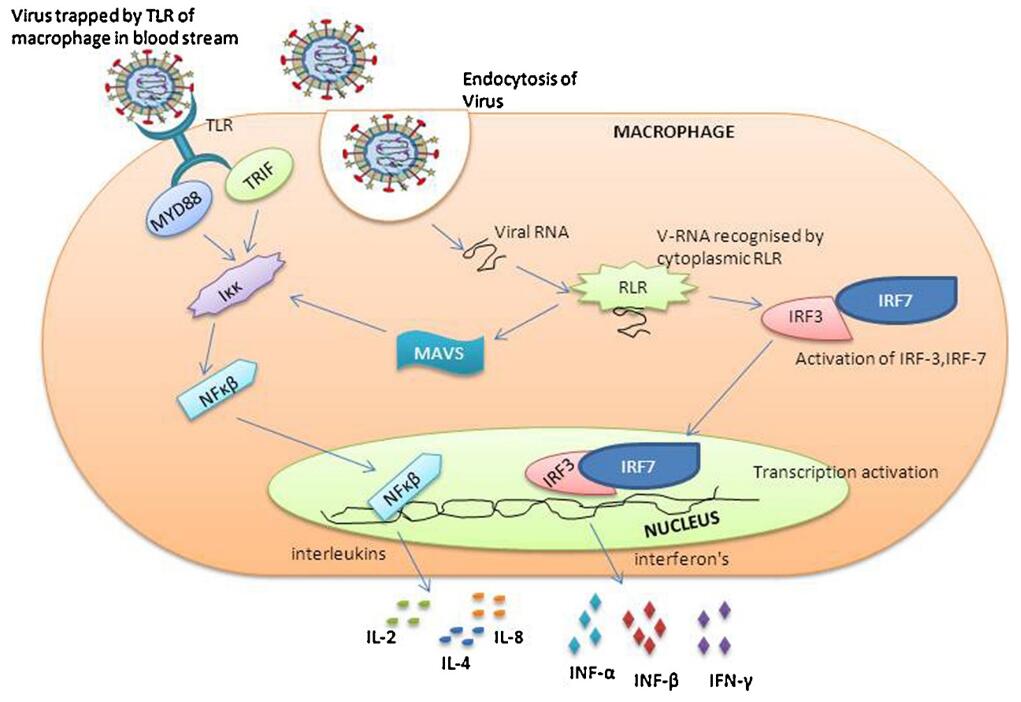 Fig. 2 Molecular events in the pathogenesis of HMPV infection (Panda S, et al. 2014)
There are several laboratory testing methods for HMPV. HMPV culture is most effective in rhesus monkey kidney cell lines (LLC-MK2) with exogenous trypsin. Respiratory virus antigen can be detected after only 2 days of culture with immunofluorescence staining of shell vial centrifugation culture (SVCC). Virus culture is the gold standard, but it is time-consuming. Immunofluorescence assay (IFA) and enzyme immunoassay (EIA) can also be used to detect HPMV. Although their sensitivity is lower than polymerase chain reaction (PCR), their ease, rapidity and lower cost make them available for clinical diagnosis in most microbiological laboratories. PCR was more sensitive than virus culture and IFA, and the primer used to amplify N gene sequence fragment was proved to be the most sensitive to detect HPMV. Enzyme linked immunosorbent assay (ELISA) can also be used to detect HPMV. The selection of highly conserved recombinant N protein between hMPV type A and type B as capture antigen improved the sensitivity and specificity of ELISA.
At present, several promising HMPV vaccines are being developed, including inactivated vaccines, live attenuated vaccines, vector vaccines, recombinant subunit vaccines, peptide vaccines, etc. Much effort is needed to develop safe and effective vaccines.
Loading ......
