
Inquiry Basket
 Loading ......
Marburg virus (MARV), which is very similar to Ebola virus, is a fatal cause of hemorrhagic fever named Marburg virus disease (MVD). MARV is a zoonotic virus with a fatality rate ranging from 24.0% to 88.0%. It has been recognized as one of the most important viruses by the World Health Organization (WHO). The incubation period of MVD is 2-21 days (usually 5 to 10 days), and the course is usually divided into three phases: initial generalization phase (day 1-4), early organ phase (day 5 to 13), and either a late organ or convalescence phase depending upon disease outcome (day 13 onwards).
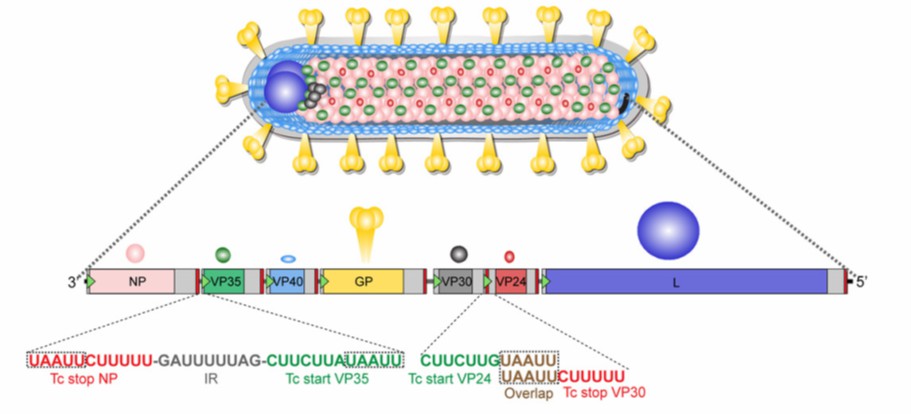 Fig. 1 Marburg virion structure and genome organization (Brauburger K, et al. 2012)
MARV belongs to Marburgvirus genus of Filoviridae family. Its genome is non-segmented negative-strand RNA. The virus particles are filamentous particles with a width of 80 nm and an average length of 790 nm. Marburg virions consists of seven structural proteins. The MARV nucleocapsid complex at the center consists of genomic RNA and four tightly associated proteins, nucleoprotein (NP) polymer, polymerase cofactor (VP35), transcriptional activator (VP30) and RNA dependent RNA polymerase (L). Ribonucleoprotein is embedded in the matrix formed by major (VP40) and minor (VP24) matrix proteins. The lipid membrane derived from the host cell membrane encloses these particles and anchors the 7 to 10 nm formed by trimers of the viral glycoprotein (GP) on the virus surface.
 Fig. 2 Replication cycle (Brauburger K, et al. 2012)
Direct IgG and IgM Enzyme-Linked Immunosorbent Assay (ELISA) are the most commonly used antibody detection methods. The IgM reaction indicates early illness (formed in the first week and reached the peak in the second week), while the virus-specific IgG appeared soon after IgM. The detection of filamentous virus by Polymerase Chain Reaction (PCR) can be used to distinguish different virus variants. It is possible to detect all known filamentous viruses in a single assay by using the combination of virus-specific primer groups in conventional RT-PCR. Other tests available include virus isolation and immunohistochemical analysis. It is essential to use multiple specific, sensitive and reliable diagnostic methods rather than a single test to confirm the diagnosis to avoid misdiagnosis of MARD.
References
Loading ......
