
Inquiry Basket
 Loading ......
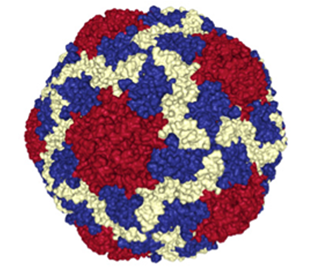 Fig.1 The structure of HAV capsid (PDB Data base)
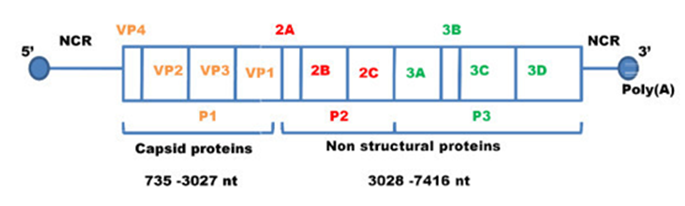 Fig.2 Genomic structure of hepatitis A virus
The Hepatitis A virus (HAV), or Hepatovirus A, is a member of the viral family Picornaviridae. It takes human and vertebrates as its natural hosts. HAV achieves about 1.4 million worldwide symptomatic cases per year and is the cause of Hepatitis A (formerly known as infectious hepatitis, an acute infectious disease of the liver). HAV is different from other picornaviruses, it targets the liver and can continue act as a source of mortality even after a successful vaccine. HAV can't shut down the protein synthesis of host cells, which is also different from other picornaviruses. HAV is usually stable both physically and genetically. However, its codon usage is highly deoptimized and its growth in tissue culture is usually poor, which makes the HAV very difficult to study.
HAV isolates all belong to a single serotype, seven genetic groups now have been defined, four for humans (genotype number: I-III, and VII) and three for simian (genotype number: IV-VI). For human genotype I-III, six subtypes are identified as IA, IB, IIA, IIB, IIIA, and IIIB. Most of the human isolates belong to the genotype I, and genotype III have been reported to exist in both humans and simians.
HAV is a nonenveloped picornavirus which contains only a single-stranded RNA packed within a protein capsid. The structure of HAV capsid has been solved by X-Ray Crystallography in 2015. The large open reading frame present in HAV genome can be divided into three (P1-P3) functional regions. The P1 region encodes capsid polypeptides VP1-VP3 and the putative VP4. The P2 and P3 regions encode nonstructural proteins which are necessary for virus replication.
With years of experience in the production of proteins and antigens, Creative Diagnostics now can provide various Hepatitis A virus (HAV) antigens and proteins with high-quality and lower cost for different applications. We always try our best to meet your requirements.
Loading ......
