
Inquiry Basket
 Loading ......
Drug abuse is used to describe a pattern of using a substance (drug) that causes significant problems or distress. It may lead to legal problems or interference with social relationships. Drugs of abuse can be recognized to two classifications, illegal drugs and legal drugs of abuse. The abuse of illegal drugs, such as marijuana, heroin, cocaine, or methamphetamine. The abuse of legal drugs, such as alcohol, nicotine, or prescription medicines. Alcohol is the most common legal drug of abuse.
Urine is the preferred type of specimen for drugs of abuse screening in the clinical setting because drugs and their metabolites are more concentrated in urine than in serum/plasma/blood so drugs can be detected for a longer duration in urine than in serum/plasma/blood. A non-invasive specimen collection is another advantage. But the drug concentrations in urine do not correlate well with the drug concentrations in the systemic circulation. While urine remains the most common body fluid used for testing of drugs of abuse, the use of alternative matrices such as blood, sweat, oral fluids, and hair has increased. Each biological matrix offers advantages and disadvantages for drug testing, and the most appropriate matrix frequently depends on the indications for the drug test.
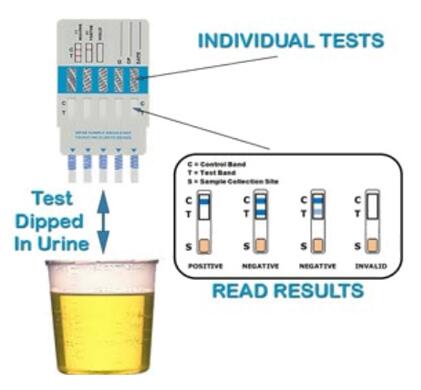 Figure 1. Urine rapid test for Drug of abuse [1]
The common approach to urine drug of abuse testing has consisted of a two-step process involving an immunoassay screen followed by confirmation of results by mass spectrometry (MS). Immunoassay screens use an antibody to screen for the presence of a drug in the urine, which allows for testing to be completed quickly (often in less than 20 min) and by automated analyzers or point-of-care devices. Common formats of immunoassays used for drugs of abuse testing include EMIT (enzyme multiplied immunoassay technique), CEDIA (cloned enzyme donor immunoassay), chemiluminescent immunoassays (CLIA), KIMS (kinetic interaction of microparticle in solution), etc. MS confirmation usually has a longer turnaround time and may not be available at all laboratories. Therefore, for clinical testing MS may not be performed depending on the scenario.
 Figure 2. Chemiluminescence based immunoassay for the detection of heroin and its metabolites [2]
References
Loading ......
