
Inquiry Basket
 Loading ......
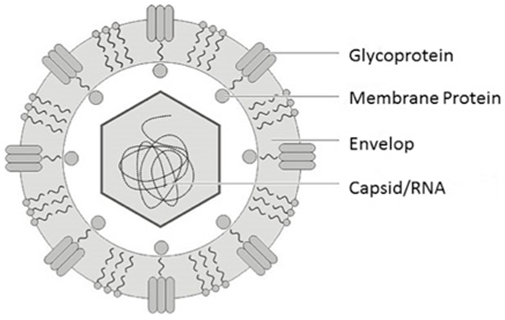 Fig. 1 Molecular model of dengue virus
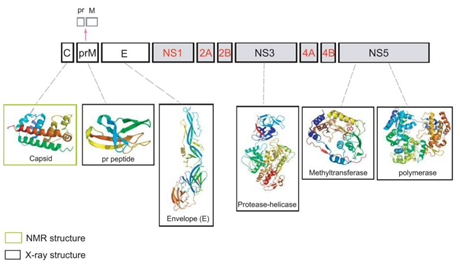 Fig. 2 Structural proteome of dengue virus
Dengue Fever virus, abbreviated as DENV, belongs to the family of Flaviviridae of genus of Flavivirus. DENV transmitted mainly by the mosquitos often causes mosquito-borne tropical disease. The host infected with DENV has a symptom, such as a high fever, vomiting, headache, muscle and joint pains, and a characteristic skin rash, typically begin three to fourteen days after infection. People often take two to seven days to recover from DENV associated diseases, but in some cases, that people infected with DENV may develop into the life-threatening dengue hemorrhagic fever, resulting in bleeding, low levels of blood platelets and blood plasma leakage, or into dengue shock syndrome, where dangerously low blood pressure occurs.
There are five serotypes of Dengue Fever virus of which the first four are referred to as DENV-1, DENV-2, DENV-3 and DENV-4. In 2013, another type, the fifth type has been found. Among those five serotypes, their antigenicity differs from each other even though they have a similar symptom after hosts infected with them.
Dengue Fever virus is a RNA virus and homogeneous to West Nile virus, Japanese encephalitis virus and yellow fever virus. Genome of the dengue virus contains about 11,000 nucleotide bases, which code three different types of protein molecules (C, prM and E) that form the virus particle and seven other types of protein molecules that are found in infected host cells only and are required for life cycle of the virus.
Loading ......
