
Inquiry Basket
 Loading ......
Crimean-Congo haemorrhagic fever (CCHF) is a widespread disease caused by Crimean-Congo hemorrhagic fever virus (CCHFV). The disease was first characterized in the Crimea in 1944 and given the name Crimean hemorrhagic fever. It was then later recognized in 1969 as the cause of illness in the Congo, thus resulting in the current name of the disease. The CCHFV is the most widespread tick-borne zoonotic virus, with a 30% case fatality rate in humans. CCHFV is maintained predominantly in Ixodid tick vectors, especially ticks of the genus Hyalomma. Numerous wild and domestic animals, such as cattle, goats, sheep and hares, serve as amplifying hosts for the virus. Human-to-human transmission can occur resulting from close contact with the blood or body fluids of infected persons.Hospital-acquired infections can also occur due to improper sterilization of medical equipment, reuse of needles and contamination of medical supplies.
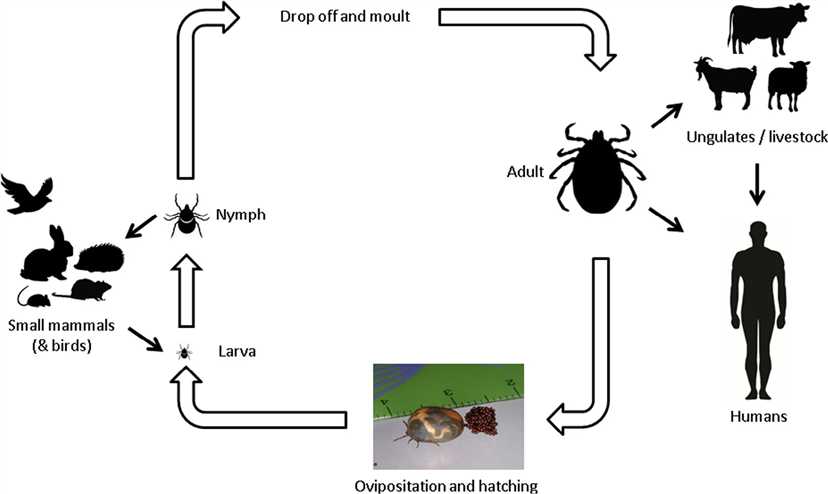 Fig. 1. Zoonotic cycle of Hyalomma tick species (Dowall SD, et al. 2017)
The onset of CCHF is sudden, with headache, fever, myalgia, dizziness, neck pain, backache, headache, sore eyes and photophobia. In severe cases, changes in mood and sensory perception. Beginning on about the fourth day of illness, large areas of severe bruising, severe nosebleeds, and uncontrolled bleeding at injection sites can be seen, and severely ill patients may experience rapid kidney deterioration, sudden liver failure or pulmonary failure. CCHFV infection can be diagnosed by several different laboratory tests: antigen-capture enzyme-linked immunosorbent assay (ELISA), real time polymerase chain reaction (RT-PCR), virus isolation cell by culture, and detection of antibody by ELISA (IgG and IgM).
 Fig. 2 Organization of the CCHFV glycoprotein precursor (Mishra AK, et al. 2022)
CCHFV is a member of the Orthonairovirus genus in the Nairoviridae family of the Bunyavirales order of viruses with a segmented, negative-strand RNA genome. The bunyavirus genomes consist of small (S), medium (M), and large (L) RNA segments, which encode a viral nucleocapsid protein (NP), glycoprotein precursor, and polymerase proteins, respectively. CCHFV infects host cells through its envelope glycoproteins Gn and Gc, which form a locally ordered lattice of heterodimers on the virus surface after they are cleaved from a poly-glycoprotein precursor by host proteases. Entry into target cells takes place by receptor-mediated endocytosis, with the acidic environment of the endosome triggering dissociation of the Gn-Gc heterodimer and the surface lattice, followed by a conformational change of Gc into a trimer of hairpin structures to drive membrane fusion. As the key structural components of the virus, the nucleoprotein and glycoproteins are identified as potential antigenic targets for inclusion in a vaccine against CCHFV.
References
Loading ......
