
Inquiry Basket
 Loading ......
An allergen is a substance that can cause an allergic reaction. In some people, the immune system recognizes allergens as foreign or dangerous. As a result, the immune system reacts by making a type of antibody called IgE to defend against the allergen. This reaction leads to allergic symptoms and diseases. Common allergens include foods (such as egg, peanut, milk, nuts, and wheat), Animal proteins and animal dander, Insect bites and stings (their venom), Pollen, etc. Of these allergens, ovalbumin (OVA) has been identified as an allergenic food protein, while house dust mite (HDM) is an important indoor allergen. In order to target these allergens, Creative Diagnostics offers a set of high-quality specific antibodies to aid allergy research and sensitization evaluation of allergens.
Among allergens, food allergens are an important type. Food allergens are typically naturally-occurring proteins in foods or derivatives of them. The immune system overreacts to a particular protein found in that food. Symptoms can occur when coming in contact with just a tiny amount of the food.
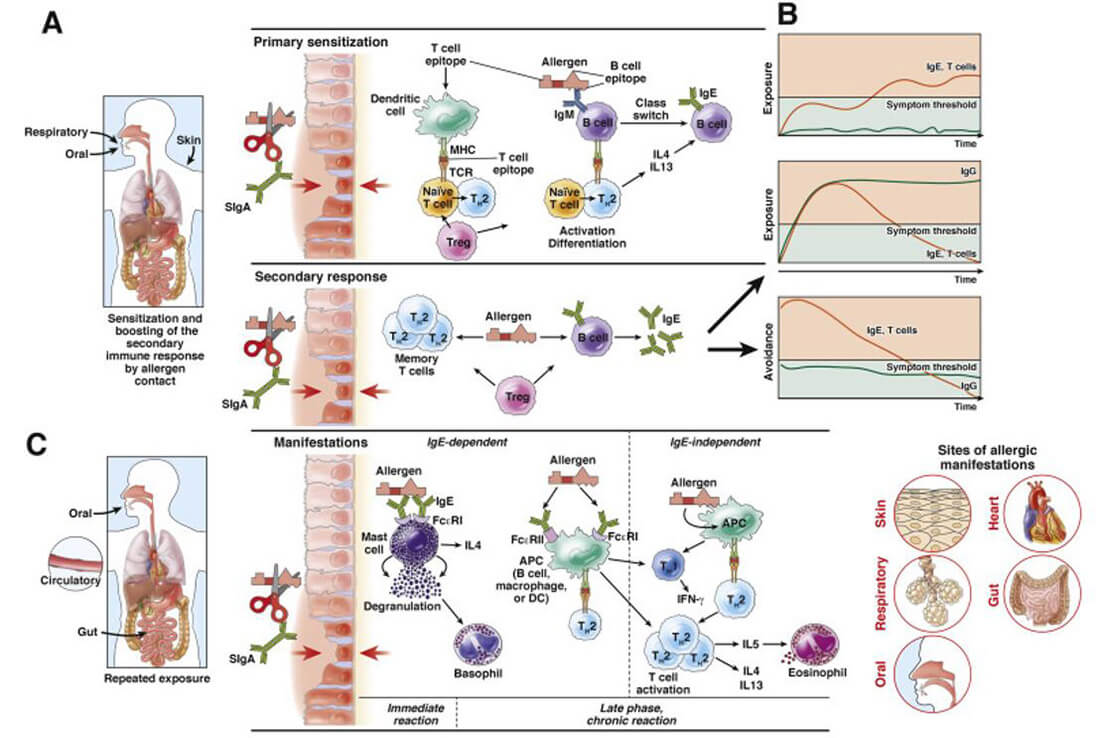 Fig. 1 Time course, pathogenesis, and manifestations of food allergies
Food allergy has become a global public health problem. According to reports, the incidence of allergic reactions in adults is about 3% to 4%, and the incidence in children is as high as 6%. At present, there are more than 180 types of allergic foods identified. According to the UN Food and Agriculture Organization's report, more than 90% of food allergens are found in milk, eggs, fish, crustacean aquatic products, peanuts, soybeans, nuts and wheat. Food allergic reactions are very harmful to the body, which can affect the respiratory system, gastrointestinal system, central nervous system, skin, muscles and bones, etc., and may even cause anaphylactic shock and endanger life. At present, allergy research focuses on the sensitization detection of food allergens. In view of the different sensitivity of each individual's immune response to allergens, the sensitization evaluation of food allergens is of great significance.
To detect allergens, food companies typically choose from a handful of analytical methods, including immunochemical assays, polymerase chain reaction methods for DNA, and mass spectrometry. So far, ELISA methods continue to be the most popular and perhaps the most robust methods for industry purposes.
References
Loading ......
