Medica 2026
Nov 16-19, 2026 - Düsseldorf, Germany
ADLM 2026
July 26-30, 2026 – Anaheim, CA, USA

T7 Epitope Tags Overview

Introduction to T7 epitope tag

A 11-residue peptide transcribed from the leader sequence of the T7 bacteriophage gene makes up the T7 tag, an epitope tag. This gene produces a T7 main capsid protein. When proteins are labeled and detected using immunoblotting, immunoprecipitation, and immunostaining methods, epitope tags are helpful. They are unlikely to alter the biochemical characteristics of the tagged protein due to their modest size. The T7 tag is frequently engineered onto the N- or C-terminus of a protein of interest to enable immunochemical analysis and visualization of the tagged protein. T7 Tag peptide can be used in different immunoassays and affinity purification.

The T7 tag peptide is an 11 amino acid peptide derived from the T7 major capsid protein that serves as a tag in many expression vectors based on the very efficient T7 RNA polymerase expression system.
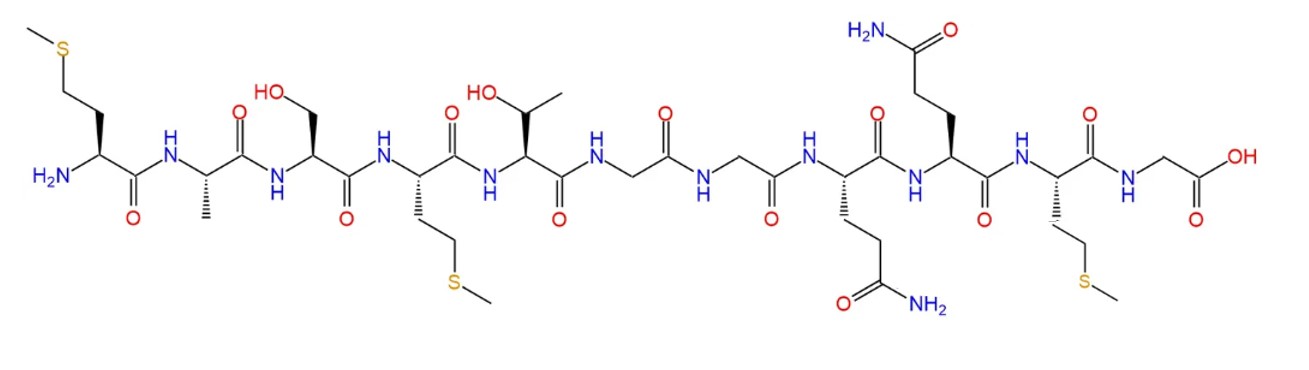
T7 Epitope Tags OverviewFig 1. T7 Tag peptide

T7 epitope tag for protein purification

The T7 epitope is a short amino acid sequence (MASMTGGQQMG) that is commonly used as a tag in protein expression and purification. It is derived from the T7 bacteriophage gene 10. The T7 epitope allows for efficient and specific detection, purification, and localization of the tagged protein. The main function of the T7 epitope is to facilitate the identification and isolation of recombinant proteins, and it has extensive applications in biomedical research, pharmaceuticals, and biotechnology.

Advantages of T7 epitope tag

  • Small size: With only 11 amino acids, the T7 epitope tag is a little peptide. As a result, it is less likely to affect the protein being tagged's structure or functionality.
  • High specificity: Because T7 epitope-tagged antibodies are so specific, they have low background levels and high signal-to-noise ratios.
  • Versatility: The T7 epitope tag can be utilized in a wide range of applications, including Western blotting, immunoprecipitation, and immunofluorescence, and can be used to tag proteins on both their N- and C-termini.
  • Simple detection: Using widely available antibodies, it is simple to detect the T7 epitope tag, eliminating the need for time-consuming and expensive purification processes.
  • Facilitates protein purification: The T7 epitope tag can be used to purify recombinant proteins using affinity chromatography, which is a rapid and efficient method of protein purification.

Reference

  1. Studier FW, Moffatt BA. Use of bacteriophage T7 RNA polymerase to direct selective high-level expression of cloned genes. J Mol Biol. 1986 May 5;189(1):113-30.

T7 Epitope Tag Antibodies

TargetCat. No.Product NameHostIsotypeApplicationInquiry
T7 Epitope TagCABT-BL8805Anti-T7 tag polyclonal antibodyRabbitIgGELISA, IEP, WB, IHCInquiry
CABT-BL8806Anti-T7 Tag polyclonal antibody [HRP]RabbitIgGELISA, IHC, WBInquiry
DPAB4094Anti-T7 tag antibody [HRP]Goat ELISA, WB, ICC/IHCInquiry
DPATB-H83185Anti-T7 tag antibodyRabbitIgGICC/IF, FCInquiry
DPATB-H83310Anti-T7 tag antibodyRabbitIgGICC/IF, ELISA, WBInquiry
DPATB-H83313Anti-T7 tag antibodyGoat ELISA, IP, WB, ICC, ChIPInquiry
DPATB-H83315Anti-T7 tag antibodyGoatIgGELISA, WB, ICC, IHC-PInquiry
DPABT-H20443Anti-T7 tag antibodyRabbitIgGIP, WB, ICCInquiry
DPATB-H82307Anti-T7 tag antibodyRabbitIgGELISA, WB, ICCInquiry
Inquiry Basket