
Inquiry Basket
 Loading ......
Staphylococcus aureus (SA) is an important human pathogen. It can cause human purulent infection, pneumonia, pseudomembranous colitis, pericarditis, and even systemic infections such as sepsis and sepsis through the secretion of various virulence factors. Staphylococcus aureus virulence factors are mainly divided into microbial surface component recognition adhesion matrix molecules (MSCRAMMS) and extracellular secreted proteins (exotoxins). MSCRAMMS include fibrin binding protein (FnbA/B), extracellular adhesion protein (Eap), protein A (SpA), etc.; secreted toxins include hemolysin, leukocidin, plasma coagulase, deoxyribonuclease, and enterotoxin, epidermal exfoliation toxin and toxic shock syndrome toxin 1 (TSST-1), etc. These virulence factors are involved in pathogenic processes such as bacterial adhesion, internalization, inflammatory response, tissue damage, immune evasion, and cytotoxicity. In the initial stage of SA infection, the bacterial density is low, and the bacteria secrete a large amount of adhesion-related proteins to promote bacterial colonization; as the infection process continues, the bacterial cell density increases to a certain threshold, the expression of adhesion-related proteins is inhibited, and the bacteria begin to secrete large amounts of adhesion-related proteins. Exotoxins and degradative enzymes facilitate bacterial dispersion in tissues and evasion of the host's immune system. This article summarizes the clinical virulence factors of SA and the molecular regulation of SA virulence factors published in recent years.
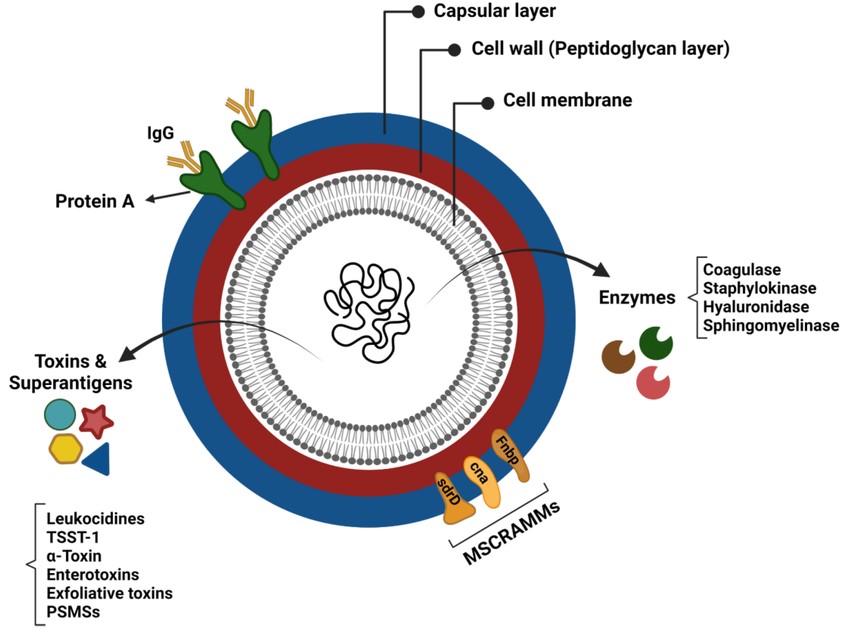 Figure 1. Virulence factors of Staphylococcus aureus. (Shaghayegh G, et al., 2022)
1. Fibrin Binding Protein (FnbA/B)
Fibronectin-binding protein FnbA/B is a typical adhesion protein and has been confirmed to be closely related to the process of bacterial invasion of host cells. FnbA and FnbB are encoded by the fnbA and fnbB genes respectively, and are abundantly expressed in the logarithmic phase of bacterial growth. Fnb can bind to host fibrin, and then directly binds to the fibronectin receptor α5β1 integrin to promote the uptake of bacteria by the host cell, and with the assistance of a variety of surface-related protein molecules, the bacteria can successfully enter the cell. In addition, Fnb can also bind to elastin and promote bacterial adhesion to platelets by binding to fibronectin and fibrinogen.
2. Extracellular Adhesion Protein (Eap)
Extracellular adhesion protein (Eap), also known as major histocompatibility complex antiprotein (Map), can bind to a variety of blood proteins, fibroblasts and epidermal cells to promote their aggregation. During bacterial infection, leukocytes will migrate from the blood to the infection site through the recognition of Mac-1, LFA-1 and ICAM-1 molecules of epithelial cells. Eap protein can combine with ICAM-1 molecules to reduce the migration ability of leukocytes. Thereby inhibiting the extravasation of leukocytes. In addition, Eap can also bind to T cells and affect their proliferation and function. These molecules also play an important role in S. aureus internalization by fibroblasts and epithelial cells.
3. Protein A (SpA)
Protein A (SpA) is also a cell wall-associated protein that can interact with multiple host factors. For example, it can bind to the Fc segment of IgG. As an opsonin, IgG can promote neutrophils to recognize bacteria and swallow saliva. SpA binding to IgG will weaken the mediated chewing effect; SpA binds to plasma vascular factors (Von Willebrand factor) is associated with intravascular diseases caused by Staphylococcus aureus; SpA can also activate B cells and increase B cell recognition of TLR2 ligands; in addition, SpA can also bind to tumor necrosis factor receptor 1 (TNFR-1), is a major causative factor in staphylococcal pneumonia. It has many functions and plays a role in multiple processes of SA infection.
Exotoxins, divided into four types: α, β, γ, and δ, can damage red blood cells, destroy platelet lysosomes, and cause ischemia and necrosis. These four hemolysins can be used as evaluation criteria for the prevalence and severity of the disease. They are used in metal Staphylococcus aureus plays a very important role in colonization and pathogenesis. HL can alter platelet morphology and is associated with thrombotic events that occur in SA-induced sepsis. γ-HL is often detected in cases of toxic shock syndrome (TSS) and plays a role together with toxicshock syndrome toxin-1 (TSST-1) in the pathogenesis of TSS.
PVL is a unique exotoxin secreted by Staphylococcus aureus. It is a member of the two-component toxin family and consists of Luk S-PV and Luk F-PV. PVL kills leukocytes and macrophages by forming pores in the cell membrane. Studies have shown that PVL plays an important role in diseases such as necrotizing skin lesions and necrotizing pneumonia caused by Staphylococcus aureus.
When Staphylococcus aureus invades the human body, this enzyme causes fibrin in the blood or plasma to deposit or coagulate on the surface of the bacteria, hindering the phagocytosis of phagocytes. Coa can promote abscess formation in SA infection, and abscess is one of the characteristics of SA infection.
The DNA enzyme produced by Staphylococcus aureus can withstand high temperatures and is often used as a detection marker to determine whether food is contaminated with SA. When SA is infected, nucleic acids are released during apoptosis and disintegration of tissue cells or white blood cells, which increases the viscosity of the exudate. TNase can quickly decompose nucleic acids and convert them into nutrients for their own growth, which is conducive to the spread of pathogenic bacteria.
Staphylococcus aureus can produce several proteinaceous enterotoxins that cause acute gastroenteritis, divided into five serotypes: A, B, C, D, E and F. Enterotoxins can withstand boiling at 100°C for 30 minutes without being destroyed. Eating food contaminated with SA can cause food poisoning with vomiting and diarrhea as the main manifestations. SE enters the gastrointestinal tract as contaminated food. It is not digested by pepsin and is absorbed into the blood. After reaching the central nervous system, it stimulates the vomiting center, leading to food poisoning dominated by vomiting. SE can also stimulate T cells to release IL-2 and Interferon inhibits humoral and cellular immunity, causing monocytes and macrophages to eliminate dysfunction and allow bacteria to proliferate in large numbers. SE serotypes A, B, and C are respectively encoded by related genes such as sea, seb, and sec. The sea gene code is carried by a polymorphic temperate phage. The transcription of sea is related to the life cycle of the phage. The phage fuses sea into the gene sequence of SA. When the external conditions are suitable, the prophage induces gene replication and releases new Phage. The seb gene encoding SEB is located in the virulence island SaPI3-2 of SA; the genes encoding C1, C2 and C3 subtypes of SEC are located in the virulence island SaPI4, SaPInl/ml and SaPIbov respectively. The sed gene encoding SED is located in the penicillinase plasmid Pib485.
ET is an exotoxin with serotypes A, B, C, and D, which can cause severe staphylococcal scalded skin syndrome (SSSS). SSSS is mainly caused by ETA and ETB. ETA is encoded by bacterial chromosomes, and ETB is encoded by plasmids. The two have 40% homology. SSSS mainly occurs in infants and young children, but adults with immunodeficiency can also be affected. According to its clinical manifestations, it can be divided into localized type and generalized type.
TSST-1 is one of the superantigens secreted by SA that causes TSS. TSS is a serious disease that can lead to multiple organ dysfunction and shock, mainly characterized by rapidly progressive fever, hypotension, generalized rash, circulatory failure, vomiting, diarrhea, hypoalbuminemia, and multiple organ failure syndrome. If timely treatment is not performed in the early stages of the disease, fatal septic shock may occur within 24 hours.
Reference
| Target | Cat. No. | Product Name | Expression System | Tag/Conjugate | Application | |
| SEB | DAG-WT627 | Recombinant Staphylococcus aureus Enterotoxin B (SEB) | E. coli | His | ELISA | Inquiry |
| DAGB111 | S. aureus Enterotoxin Type B Toxoid | S. aureus | Unconjugated | ELISA | Inquiry |
Loading ......
