Sjögren's Syndrome (SS) is a progressive autoimmune disorder that mainly affects the glands of the exocrine system (salivary and lacrimal). The primary clinical symptoms are lymphocytic invasion and autoimmune destruction of these glands causing progressive glandular degeneration and dry mouth (xerostomia) and eyes (keratoconjunctivitis sicca). SS may manifest as anything from localisation of exocrine glands to multiorgan involvement. SS patients can progress to systemic disease in as many as half, and 5% on average will develop lymphoma. What's more, tiredness drastically affects the patient's quality of life.
SS has an intricacy to its pathogenesis: it has a combination of genes, environmental and immune triggers. Intense B-cell dysregulation – that is, B-cell overexpression and autoantibodies – lies at the core of the disorder. SS carries a high ratio of B cell-activating factor (BAFF) and proliferation-inducing ligand (APRIL). The overstimulation of the type I interferon (IFN) system instigates BAFF/APRIL production and drives B cell hyperactivity. It involves the T- and B-cell synapse as well. CD40 and CD40L interaction, TLR activation, and cytokines including IL-21 enhance B cell proliferation and plasma cell differentiation. Second, B cells act as a host for T cells in an effort to elicit the immune response and BAFF exaggerates the immune response through activation of plasma cells and the production of antibodies.
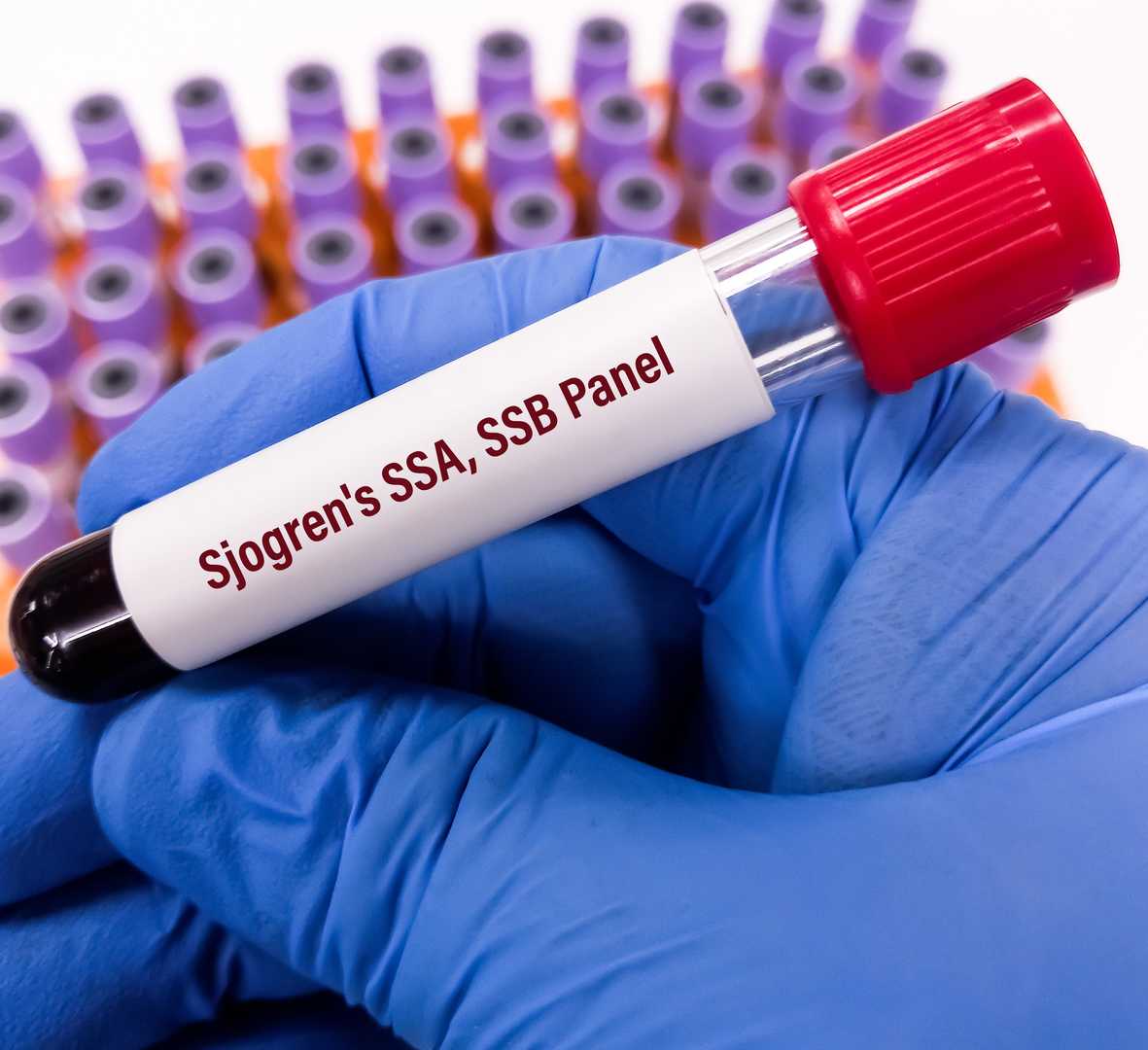
SS patients may not present with typical symptoms early on, and diagnosis often occurs only when obvious dry symptoms and lymphocytic infiltration of the salivary glands are observed, delaying timely treatment. Therefore, early diagnosis is critical for effective treatment. The diagnosis of SS mainly relies on serological autoantibodies and glandular tissue pathology. When SS is suspected, testing for anti-Ro/SSA and anti-La/SSB antibody titers is essential.
Detection Methods We Offer
Creative Diagnostics offers a variety of testing methods for Sjögren's Syndrome:
Enzyme-Linked Immunosorbent Assay (ELISA):
ELISA is the recommended testing method for Sjögren's (SS) due to its high sensitivity, specificity, quantitative capability, high-throughput detection, and automation, making it widely applicable in SS diagnosis and research.
High Sensitivity and Specificity ELISA efficiently detects low concentrations of autoantibodies such as Anti-Ro/SSA, Anti-La/SSB, ACA, and Anti-β2-GP1, which are crucial serological markers for SS. Compared to other assays, ELISA provides more precise quantification of these autoantibodies, improving the accuracy of early disease screening, especially in patients who may not yet exhibit obvious symptoms but have developed antibodies.
Quantitative Analysis Capability Unlike immunoblotting or immunofluorescence, ELISA provides quantitative data on antibody concentrations, helping researchers and clinicians to:
-Assess disease activity (higher antibody levels may indicate disease progression).
-Monitor treatment effectiveness (a decrease in antibody levels after treatment suggests a weakened immune response).
High-Throughput Detection ELISA can be performed in 96-well or 384-well plates, allowing for simultaneous analysis of large sample batches. This makes it ideal for large-scale screening and clinical research, significantly improving testing efficiency.
High Automation Reduces Human Error Modern ELISA systems support fully automated processes, including Automated sample loading, Standardized incubation and washing, Automated optical reading and Data calculation and analysis
This automation reduces human error and enhances reproducibility and reliability, which is particularly important in research-based SS testing.
Broad Applicability, Including SS-Related Comorbidities ELISA is not only effective for detecting primary SS autoantibodies (Anti-Ro/SSA, Anti-La/SSB) but also useful for identifying autoantibodies associated with SS-related conditions, such as ACA and Anti-β2-GP1, which help assess whether an SS patient also has Antiphospholipid Syndrome (APS), a condition linked to an increased risk of thrombosis.
Emerging SS biomarkers (e.g., Anti-SP1, Anti-CA6, Anti-PSP), which can aid in diagnosing SS in seronegative patients, improving early detection rates.
Compatibility with Multiple Sample Types ELISA can be used with various biological samples, including serum, plasma, and saliva. In particular, salivary antibody testing via ELISA provides a non-invasive diagnostic approach for SS, supporting the development of more convenient diagnostic strategies.
Indirect Immunofluorescence (IIF):
A widely used method for detecting ANA, anti-Ro, and anti-La antibodies. It involves observing fluorescence patterns under a microscope and is known for its high sensitivity, making it a common choice in SS diagnostics.
Western Blot (Immunoblotting):
A method to confirm antibody specificity, often used to verify results from IIF and ELISA.
Enzyme Immunospot Assay:
This method allows for the detection of multiple antibodies simultaneously and is ideal for evaluating complex immune responses.
Immunoturbidimetry:
A rapid, high-throughput method for quantifying antibody concentrations, suitable for large-scale screenings.
Protein Chip:
A high-throughput, multi-target detection method that can analyze various antibodies simultaneously, ideal for large-scale diagnostics.
Multiple Antibodies: Including anti-Ro/SSA, anti-La/SSB, and ANA, for comprehensive immunological analysis.
Detection Targets and Their Role
Ro-SSA (Anti-Ro Antibody): This antibody is associated with both SS and systemic lupus erythematosus (SLE). It is particularly linked to symptoms such as dry mouth and dry eyes. Anti-Ro/SSA antibodies are one of the hallmark autoantibodies in SS and are highly sensitive in detecting the disease, especially the subtypes anti-Ro52/TRIM21 and anti-Ro60/SSA. These antibodies can be detected early in the disease and are closely related to extra-glandular manifestations (e.g., arthritis, skin vasculitis) and elevated levels of immunoglobulin, indicating B cell activation. A positive anti-Ro/SSA test is often correlated with disease activity and the strength of the autoimmune response.
La-SSB (Anti-La Antibody): Often tested together with anti-Ro/SSA antibodies, anti-La/SSB is critical for confirming a diagnosis of SS. It is closely linked to chronic dry symptoms. Like anti-Ro/SSA, the presence of anti-La/SSB antibodies correlates with high autoantibody titers, elevated immunoglobulins, and B cell activation. Testing for anti-La/SSB helps differentiate SS from other autoimmune diseases.
ANA (Anti-Nuclear Antibody): ANA is a common marker for SS and other autoimmune diseases. ANA testing is typically used as a preliminary screening tool, especially when distinguishing SS from other diseases like SLE. In SS, the presence of ANA is often linked to early disease stages, elevated immunoglobulin levels, and the detection of anti-Ro/SSA and anti-La/SSB antibodies. ANA testing is highly sensitive, making it a crucial tool for screening autoimmune diseases, including SS. Over 80% of SS patients test positive for ANA.
Anti-U1 RNP (Anti-U1 Ribonucleoprotein Antibody): U1 RNP is a part of the small nuclear ribonucleoprotein (snRNP) complex involved in pre-mRNA splicing. The presence of anti-U1 RNP antibodies often suggests the possibility of mixed connective tissue disease (MCTD). In SS patients, these antibodies are typically associated with lymphocytic infiltration of the salivary glands and glandular dysfunction. When anti-U1 RNP is found alongside anti-Ro/SSA and anti-La/SSB, it may indicate the presence of other systemic autoimmune conditions.
Anti-Cardiolipin Antibody (ACA): These antibodies target cardiolipin, a phospholipid found in cell membranes. Their presence in SS patients may suggest an increased risk of thrombosis and early pregnancy loss or fetal development issues. Testing for ACA is crucial for assessing thrombotic risk and guiding research results.
Anti-β2 Glycoprotein I Antibody (Anti-β2-GP1): This antibody is associated with antiphospholipid syndrome (APS). β2-Glycoprotein I plays a key role in interactions with platelets and endothelial cells and is involved in blood clotting and immune responses. The presence of anti-β2-GP1 antibodies indicates increased risk for thrombosis and cardiovascular events, helping diagnose and assess the risk of APS.
Anti-SP1, Anti-CA6, Anti-PSP Antibodies: Newer antibodies like anti-SP1, anti-CA6, and anti-PSP are emerging as potential early biomarkers for SS. Studies show that these antibodies are more common in patients who are negative for anti-Ro/SSA and anti-La/SSB, making them useful for early diagnosis and detection of the disease before traditional antibodies are detectable.
High-quality Analysis Service
With a combination of academic expertise and industry experience, we are confident in delivering high-quality analysis and ensuring your complete satisfaction. We are eager to understand your specific analysis needs and support your research and product development efforts. Tell us exactly what you want.

 Loading ......