
Inquiry Basket
 Loading ......
S. pneumoniae (Streptococcus pneumoniae) is a gram-positive, encapsulated, facultative anaerobic, lancet-shaped coccus that was first isolated from patient sputum in 1881. It is a significant human pathogen responsible for various invasive and non-invasive infections, including pneumonia, bacteremia, meningitis, otitis media, and sinusitis. On the surface of S. pneumoniae, there are three major surface layers: plasma membrane, cell wall, and polysaccharides capsule. The polysaccharides capsule is the dominant surface structure and plays a crucial role in its pathogenicity and evasion of the host immune response.
S. pneumoniae possesses several virulence factors that contribute to its ability to cause disease in humans. These factors enable the bacterium to colonize host tissues, evade the immune system, and cause tissue damage.
Capsular Polysaccharides
The capsular polysaccharides are the major virulence factor of S. pneumoniae. These complex carbohydrate structures surround the bacterial cell and provide protection against phagocytosis by immune cells, such as neutrophils and macrophages. These polysaccharides exhibit extensive structural diversity, with over 95 different capsular serotypes identified to date. Each serotype is characterized by unique variations in chemical structure and genetic mutations, resulting in differences in immunogenicity, antigenicity, and epidemiological properties. For example, capsular types with higher charge-to-carbon ratios tend to be physically larger and more resistant to neutrophil clearance.
Pneumolysin
Pneumolysin is a cytotoxic protein secreted by S. pneumoniae. It is a cholesterol-dependent pore-forming toxin that can damage host cell membranes. Pneumolysin disrupts the integrity of epithelial cells and immune cells, causing cell lysis and tissue damage. It also activates the host immune system, leading to inflammation and the recruitment of immune cells to the site of infection.
Pneumococcal Surface Proteins (PspA and PspC)
These proteins play a crucial role in immune evasion by interfering with host immune responses. PspA and PspC prevent the activation of the complement system, a crucial part of the innate immune system, by inhibiting complement deposition on the bacterial surface. This evasion strategy allows S. pneumoniae to resist opsonophagocytic killing by neutrophils and macrophages, enhancing its survival and persistence within the host. These surface proteins also contribute to the evasion of antibody-mediated immunity by interfering with the recognition and binding of antibodies to S. pneumoniae.
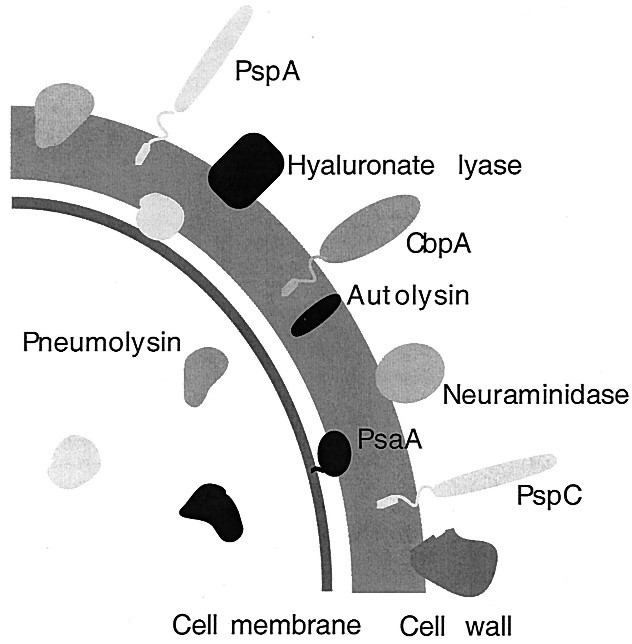 Figure 1. Schematic diagram of the virulence factors of S. pneumoniae.
(Source: Jedrzejas, M. J. et al., 2001)
The development of pneumococcal vaccines began with the identification of the immunogenicity of S. pneumoniae cell wall polysaccharides. Early vaccines were based on the purified polysaccharides from different serotypes of S. pneumoniae. However, these polysaccharide-only vaccines had limitations, particularly in young children and immunocompromised individuals, as they were less effective in inducing a robust immune response.
To overcome these limitations, conjugate vaccines were developed. Conjugate vaccines combine S. pneumoniae polysaccharides with carrier proteins, such as diphtheria or tetanus toxoid, to enhance the immune response. This approach enables the activation of T-cell-dependent immune pathways, leading to the production of high-affinity antibodies and immunological memory. PCVs have been developed in various formulations, including 7-valent (7vPCV), 13-valent (13vPCV), 15-valent (PCV15), and 20-valent (20vPCV) vaccines, each targeting different combinations of S. pneumoniae serotypes.
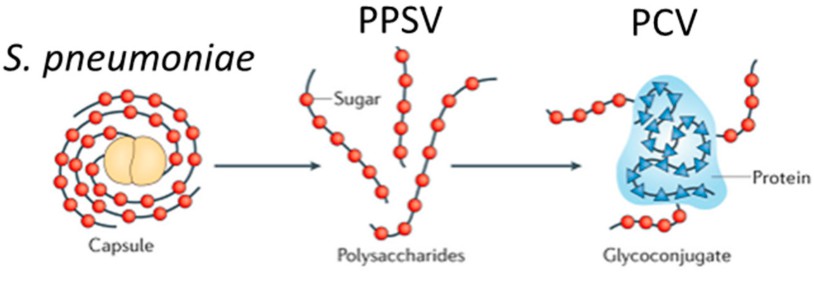 Figure 2. Vaccines for pneumococcal disease derived from polysaccharide content of S. pneumoniae to generate either pneumococcal polysaccharide vaccine (PPSV) or pneumococcal conjugate vaccine (PCV) clinical options.
(Source: Jedrzejas, M. J. et al., 2001)
Despite the success of pneumococcal vaccines, challenges remain. S. pneumoniae exhibits a high degree of serotype diversity, and the current vaccines cover a limited number of serotypes. Ongoing research aims to develop next-generation vaccines that provide broader coverage against a wider range of serotypes. Additionally, there is a need to address the emergence of non-vaccine serotypes and the potential for serotype replacement. Monitoring the epidemiology of pneumococcal strains and adapting vaccine formulations accordingly is crucial to maintaining the effectiveness of pneumococcal vaccines. Moreover, ongoing research focuses on optimizing vaccine schedules, evaluating the duration of immunity, and exploring the potential of novel adjuvants to enhance vaccine efficacy.
References
Loading ......
