
Inquiry Basket
 Loading ......
MMAE shows obvious cytotoxicity in different cancer cells of human and mouse origin, and performs better in human cancer cells. When MMAE is used to block the normal cell cycle, it can be observed through the gene enrichment analysis results that compared with the control group, it will cause changes in cellular gene expression. Therefore, in order to avoid damaging normal cells so that they can interact with specific targets to tumor tissue, spatially targeted MMAE drug conjugates need to be constructed to strictly limit the toxicity of MMAE to tumors and their related immune environment. Therefore, more and more studies hope to reduce the toxicity of MMAE to normal cells in the body by constructing ADCs. This article will introduce a MMAE drug conjugate constructed using tumor-homing antibodies and cell-penetrating peptides ACPP and MMAE, and verify that in addition to the anti-tumor effect (chemotherapy effect) of its toxic head itself, the MMAE drug conjugate also has It has the effect of increasing the sensitivity of tumor cells to DNA damage induced by ionizing radiation (radiotherapy effect), as well as shaping immune infiltration and enhancing immune checkpoint inhibition (immune effect).
The linker choice used by the researchers for the MMAE drug conjugate was maleimidocaproyl valine-citrulline-p-aminobenzylcarbamoyl (MC-VC-PABC). The reasons for choosing this linker are: 1. This linker has been used in clinically approved ADC drugs; 2. The valine-citrulline (VC) part of this linker can be cleaved by endolysosomal cathepsin B. Subsequently, p-aminobenzylcarbamoyl is partially degraded and releases the free drug MMAE in the tissue that can be quantitatively detected by LC–MS/MS. In this step, MC-VC-PABC-MMAE (linker-payload) can be obtained.
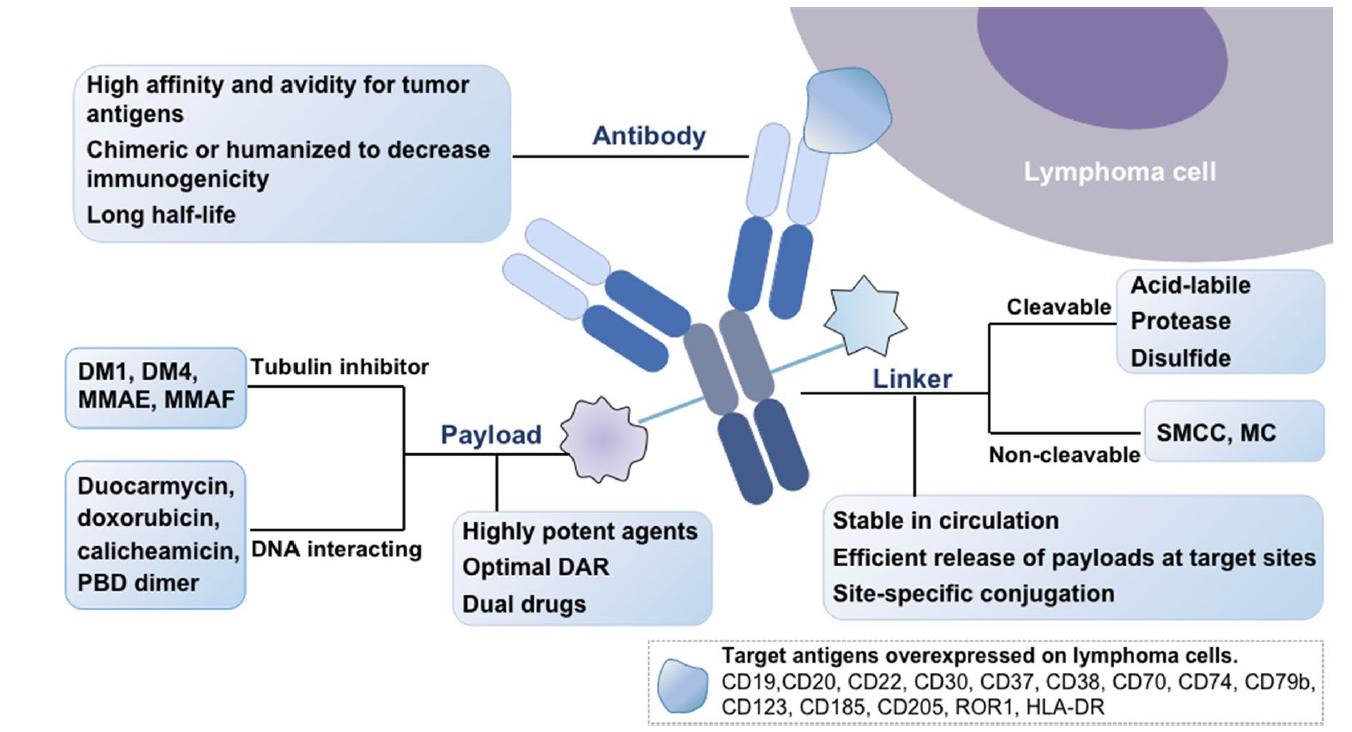 Figure 1. Structure and properties of an antibody-drug conjugate.(Source: Chu Y, et al. 2021)
The researchers used an anti-HER3 antibody (CDX3379) to combine with the product obtained in the previous step to obtain a HER3-targeted MMAE ADC (antibody drug conjugate). There is a question here, why choose HER3 as the surface target? First, CDX3379 can recognize human and mouse HER3 receptors very well, so it can be used to study MMAE warheads in human tumor xenografts and mouse syngeneic tumor systems simultaneously; second, HER3 has been clinically confirmed as a cell surface receptors. The connection ratio between CDX3379 and MMAE is: 1 molecule of antibody can simultaneously connect 4 molecules of MMAE and 1 molecule of Cyt5 (marker).
ACPP consists of three parts: a polycationic cell-penetrating peptide, an intervening protease-sensitive linker, and an anionic self-inhibitory domain. MMAE is connected to the polycationic end. When the linker breaks, the MMAE end of the originally electrically neutral ACPP becomes positively charged, thereby activating ACPP so that it can be taken up and internalized by tumor tissue. Moreover, because MMAE is connected to antibodies and peptides in the same way, researchers can connect amino-containing warheads similar to MMAE into PDC through a linker. At the same time, since tumor cells preferentially enrich the activity of extracellular matrix metalloproteinases MMPs, an MMP2/9-sensitive peptide is inserted between the two charged domains of ACPP to achieve tumor targeting.
In order to verify the efficacy of the MMAE drug conjugate in mouse cancer models, the researchers tested its blood clearance and anti-tumor effect in the mouse model.
Blood clearance: Using Cy5 as the detection signal, it can be observed that in nude mice and immunodeficient tumor mice, the blood Cy5 signal decreases exponentially after the initial peak and returns to background fluorescence on day 7 after intravenous injection. And it was verified by LC-MS/MS method that CDX3379-MMAE released its bound drug.
Anti-tumor effect: Using tumor models with different resistance to CDX3379 to study the anti-tumor effect of CDX3379-MMAE, it can be found that in the anti-CDX3379 antibody experimental group, CDX3379 alone has almost no obvious effect, while the CDX3379-conjugated MMAE ADC has no obvious effect. It still has a certain anti-tumor effect. This validates the advantage of the MMAE warhead in bypassing receptor signaling resistance mechanisms and killing tumor cells without being affected by sensitivity to antibody-receptor signaling inhibition.
In a fully immune mouse model, mice transplanted with syngeneic MOC2 tumor cells in the tongue were administered the drug separately, and it was observed that the ADC showed a certain degree of tumor suppression. Immune infiltration analysis showed that there was an antibody-driven effect, and only this ADC could upregulate some cellular immunity. To evaluate the specificity of CDX2279-MMAE, the researchers prepared another MMAE drug conjugate targeting human subtypes of anti-EGFR antibodies, cetux-MMAE. Compared with the control group, the ADC showed a better survival curve and specificity. And its specificity shows obvious dose dependence. Finally, to evaluate the impact of MMAE independent of antibody effects or delivery limitations, ACPP-MMAE be used. The final result found that the PDC could also improve tumor growth.
The main mechanism of action of MMAE is potent cytotoxicity, and it can arrest the cell cycle in the radiosensitized mitotic stage. And as the MMAE dose increases, but under a certain radiation (IR) dose condition, the maximum decrease in tumor cell survival rate with the MMAE dose is significantly lower than that without irradiation, indicating that MMAE has a radiosensitizing effect. In three syngeneic mouse tumor models, the anti-tumor effect of PDC combined with IR was better than that of each alone.
The researchers selected an inducible tumor mouse model and induced tumors in the tongues of fully immune mice. The tumor tissue after treatment was evaluated and found that compared with the control group, the PDC+IR group could significantly reduce tumor weight. Given the ability of ACPP to deliver MMAE to radiosensitize syngeneic tumors, the investigators then tested the ADC delivery platform. The results showed that the results of ADC administration were consistent with those of PDC administration in the B16 tumor model.
To investigate the immune role of radiosensitized MMAE in tumor control, researchers describe how MMAE and IR affect tumor immune infiltration. Flow cytometry analysis of the content of immune cells in different experimental groups found that when PDC was combined with IR, the number of immune cells in the tumor tissue increased significantly. Further studies showed that IR can increase the infiltration of most immune cells, while PDC alone enhances the limited effect of infiltration and cannot increase CD8+ T cell infiltration. The combination of MMAE and IR can further enhance the immune infiltration of some cells. In view of this PDC, the researchers investigated whether CDX3379-MMAE also had similar results in enhancing immune infiltration. The results showed that the combination of ADC and IR also had a certain degree of enhanced infiltration, and the effect was significant compared with the control. And the antibody carrier or peptide alone cannot achieve enhanced CD8 T cell infiltration, further indicating that the immune infiltration of the irradiated tumor immune microenvironment is stimulated by the MMAE drug warhead rather than the carrier or antibody.
References
| Target | Cat. No. | Product Name | Host | Isotype | Application | |
| MMAE | CABT-B8992 | Anti-MMAE monoclonal antibody, clone 3F3 | Mouse | IgG1 | ELISA | Inquiry |
| CABT-B8993 | Anti-MMAE monoclonal antibody, clone 3F3 [Biotin] | Mouse | IgG1 | ELISA | Inquiry | |
| CABT-L3100 | Rabbit Anti-vc-PAB-MMAE polyclonal antibody | Rabbit | IgG | ELISA | Inquiry | |
| CABT-L3101 | Mouse Anti-vc-PAB-MMAE monoclonal antibody, clone C22G22 | Mouse | IgG | ELISA | Inquiry | |
| CABT-L3103 | Mouse Anti-MMAE / F monoclonal antibody, clone C23B3 | Mouse | IgG | ELISA | Inquiry | |
| CABT-ZB1143 | Mouse Anti-MMAE monoclonal antibody, clone 3F3 [HRP] | Mouse | IgG1 | ELISA | Inquiry | |
| CABT-ZB1144 | Mouse Anti-MMAE monoclonal antibody, clone 3F3 [AF647] | Mouse | IgG1 | ELISA | Inquiry | |
| CABT-B8997 | Anti-MMAE polyclonal antibody | Mouse | IgG | ELISA | Inquiry |
| Target | Cat. No. | Product Name | Size | Species Reactivity | Application | Detection Sample | |
| MMAE | DEIABL312 | MMAE ADC EIA Kit | 96T | Quantitative | tissue cell cultures, serum | Inquiry | |
| DEIABL314 | Intact MMAE ADC ELISA Kit | 96T | Human | Quantitative | Serum | Inquiry |
Loading ......
