
Inquiry Basket
 Loading ......
Immunohistochemistry has become a standard technique in research and diagnostic pathology to identify protein expression in tissues. It is widely used as a routine method in most laboratories and has, in some instances, replaced older histochemical or empirical methods due to the many advances in antibody and detection technologies. There are many variables to consider when choosing a technique suitable for a specific target and/or application. The purpose of this chapter is to provide guidance choosing the appropriate technique and primary antibody best suited for it. Furthermore, we will present target-specific blocking protocols to prevent staining of endogenous peroxidase, alkaline phosphatase, biotin, and nonspecific background staining.
Immunofluorescence
Direct immunofluorescence (DIF) is a useful technique of identifying proteins using a primary antibody conjugated with a fluorescent label (fluorochrome). The most commonly used fluorochromes are fluorescein isothiocyanate (FITC) and rhodamine. Direct immunofluorescence is typically used with unfixed frozen tissue sections, as many antigens are soluble in aqueous solutions, precluding prolonged fixation in aqueous fixatives. Antigenic reactivity is strongest and minimally impaired in frozen section preparations. Formalin-fixed, paraffin-embedded (FFPE) tissue sections are less commonly used for immunofluorescence due to inconsistent results attributed to decreased antigenicity following fixation and processing. DIF is a simple method to detect soluble proteins, however, some consideration must be made to the following: (1) fluorochromes are fragile, do not produce permanent signals, and care must be taken to preserve them; (2) interpretation of DIF requires a dark-field microscope equipped with an ultraviolet light source and appropriate filters capable of viewing the specific fluorescent conjugate; (3) morphology preservation of frozen sections may be suboptimal compared with FFPE sections, which generally result in superior tissue architecture than that of unfixed frozen sections.
Unconjugated primary antibodies may be used in indirect immunofluorescent staining methods using fluorochrome labeled secondary antibodies, though for the abovementioned considerations, indirect immunoperoxidase staining methods are preferred and most suitable for bright-field microscopy of those antigens that can withstand fixation and processing.
Immunoperoxidase
Indirect immunoperoxidase staining techniques on FFPE tissue sections are the most widely used techniques in diagnostic laboratories due to superior tissue architecture preservation, permanent reaction product, and convenience of use in routine light microscopy. For these reasons, it is generally a primary consideration when choosing an immunohistochemical technique. Advancements in hybridoma antibody production, polymer/multimer detection systems, and amplification techniques have further improved assay sensitivity and specificity to make it a method of choice in most diagnostic laboratories. However, immunoperoxidase (IP) techniques present difficulty with antigen masking that occurs during fixation. Fixation with aldehyde fixatives causes steric changes or "cross-linking" of proteins that greatly affect the ability of antibodies to bind to their antigenic sites (epitopes). Many methods and combinations of methods of antigen retrieval and enzymatic digestion have been developed to overcome the adverse effects of aldehyde fixation. Therefore, this should not be an overt deterrent to development of a FFPE IP protocol.
Primary antibody selection is of utmost importance for the development of an immunohistochemical procedure. Selection of the most appropriate antibody may determine the success or failure of an assay. Understanding the differences in types of antibodies, their clones, and tested applications will allow for an educated choice. There are also many resources available to help filter thru the choices such as the current scientific literature, antibody specification sheets, NordiQC, and the Human Protein Atlas. Regulatory classification of an antibody may also be an important selection criterion for diagnostic laboratories. Concentrated antibodies are generally preferred over prediluted, allowing flexibility of final working dilutions that may be easily adjusted per individual protocol.
Polyclonal Antibodies
Polyclonal antibodies are a heterogeneous mixture of clones directed against various epitopes of the same antigen. They are produced in a variety of animals including rabbits, goats, swine, and cow. Rabbits are frequently used for polyclonal antibody production, as they produce a larger amount of antiserum and do not share many human antibodies to rabbit proteins as compared to other species. They are produced by immunizing the animal with an antigen to stimulate antibody production. Following 3–8 months of immunogenic boosting, the antisera are harvested and purified by a variety of techniques. This resulting mixture of antibodies have slightly different affinities and specificities for the antigen. The benefit of this polyclonal population allows for broader recognition of a variety of epitopes of the same antigen, establishing a high degree of sensitivity. This quality also may be an advantage when staining for those antigens that may be more difficult to detect. The disadvantages to polyclonal antibodies are that they may produce unwanted cross-reactivity with other proteins that are not of interest, and are a batch-dependent limited resource causing variability between different lots of antibody.
Monoclonal Antibodies
Monoclonal antibodies are generally produced in mice by immunizing and boosting the mice with an antigen over a period of 2 months. Following an adequate immune response, B lymphocytes are removed from the mouse spleen and fused with an immortal cell line (myeloma cell line) to produce what is known as a hybridoma. This hybridoma cell line has the unique ability to produce specific immunoglobulins from the B cells as well as immortality from the myeloma line when grown in cell culture. The hybridoma line is sub-cultured to select the most stable population producing a homogeneous monoclonal antibody supernatant. The hybridoma cell population is then maintained indefinitely in cell culture. These hybridoma cell lines are generally more time consuming to produce, from the lack of adequate mouse immune response to the difficulty in creating the fused cell line. The high selectivity of the hybridoma production process creates a highly specific antibody-antigen reaction, and a stable lot to lot consistency with indefinite access to identical antibody clones, as compared with the polyclonal antibody production process.
Rabbit Monoclonal Antibodies
Rabbit monoclonal antibodies are produced much like their mouse counterparts, except that the hybridoma cell line is produced using immunized rabbits instead of mice. This production technology combines the advantages of rabbit polyclonals with that of the mouse monoclonals. As a result, these antibodies exhibit the high sensitivity and affinity of rabbit polyclonals due to their diverse epitope recognition, and the specificity and lot to lot consistency of the mouse monoclonals derived from the hybridoma technique.
Regulatory Classifications
Regulatory classifications of primary antibodies are another important consideration in diagnostic laboratories due to accreditation standards.
The multistep nature of immunoperoxidase protocols introduce several opportunities for unwanted staining reactions. Mitigating these undesired staining patterns and reducing signal to noise ratio in FFPE sections may be achieved by using the following targeted blocking techniques.
Endogenous Peroxidases
Endogenous peroxidases exist in many normal and neoplastic tissues, especially in blood cell-rich tissues such as the spleen and bone marrow. They produce problematic staining when using horseradish peroxidase (HRP)-driven detection systems. Quenching this enzyme activity is accomplished by incubating tissues with a hydrogen peroxide–methanol solution prior to application of the enzyme labeled detection component.
Endogenous Alkaline Phosphatases
Endogenous alkaline phosphatase (AP) activity present is bowel, kidney, lymphoid tissue, etc. Blocking of endogenous AP activity is not necessary in FFPE sections, as the fixation and processing procedures inactivate AP activity. Suppression of endogenous AP staining in frozen sections may be accomplished by adding levamisole to the chromogen substrate solution.
Endogenous Biotin
Endogenous biotin is present in a variety of tissues including liver, kidney, and lymphoid tissue. It may cause unwanted staining reactions when using biotin or streptavidin-based detection methods. It is best suppressed by sequential incubations with avidin followed by biotin solution. Extra biotin binding sites are blocked using this procedure prior to application of detection system reagents. The use of downstream nonbiotin detection systems precludes the need for biotin blocking steps altogether, due to the lack of biotin in the reaction for chromogen visualization.
Nonspecific Proteins
The cross linking of proteins that takes place during formalin fixation results from an increase in the hydrophobic charge of proteins that occurs during exposure to aldehydes. The extent of cross linking has a direct relationship to the type of fixative, pH, temperature, and exposure time. Immunoglobulins frequently used as secondary antibodies are also quite hydrophobic. A common strategy for suppressing nonspecific protein staining is to block the nonspecific hydrophobic binding sites with a normal immune serum. The normal serum blocker must be an immunoglobulin identical in species and isotype to the species of the secondary antibody and administered to tissue sections immediately prior to secondary antibody application. This prevents nonspecific binding of the secondary antibody to charged nonspecific binding sites. Commercially prepared serum free blocking reagents are available that offer the convenience of not having to match blocker species with the link antibody and are often more effective at reducing nonspecific protein staining (see Super Block reagent noted in Materials). An additional measure for reducing nonspecific protein staining is the addition of bovine serum albumin (BSA) to the primary antibody diluent.
All reagents and buffers should be prepared and stored in clean glassware using deionized or clinical laboratory reagent water (CLRW). Primary antibody incubations and blocking procedures should be performed in a humid chamber or petri dish lined with a moistened filter paper to create a moist environment.
Development of a multistep immunohistochemical assay requires thoughtful consideration of each step of the assay, from technique and primary antibody selection, to signal detection and techniquedriven blocking procedures. The following is a guide suggesting resources available to aid in the primary antibody selection process, which should be considered a starting point that methodically builds the steps of a complete protocol. Likewise, the following blocking techniques are dependent on the type of detection method selected and unwanted staining observed. Additional methods of reducing unwanted staining reactions caused by the primary antibody itself may also include decreasing primary antibody concentrations, decreasing incubation times or temperatures, or switching from a polyclonal to a monoclonal primary antibody.
The choice of technique may largely be dependent on the following factors: availability of fresh/unfixed tissue vs FFPE tissue; availability of manufacturer tested antibody per technique (WB vs IP vs IHC, etc.), and availability of desired conjugate (FITC, HRP, AP), if any at all. Resolving these, sometimes limiting factors will likely direct the technique employed.
The following steps may serve as a guide to choosing the most appropriate primary antibody for a specific technique and not necessarily meant to be performed in any certain order. They each provide different information about the primary that may lead to the development of a complete protocol.
Endogenous Peroxidases
Endogenous Alkaline Phosphatases
Endogenous Biotin
Nonspecific Proteins
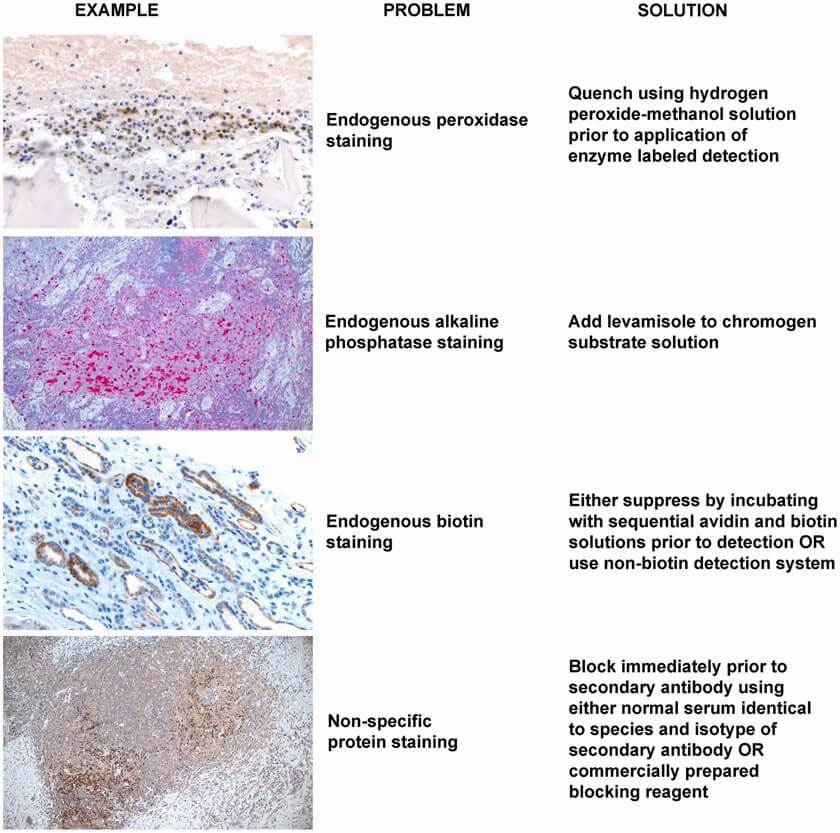 Figure 1. Examples of common problems in immunohistochemistry and their solutions.
4. If nonspecific protein staining remains problematic, Superblock reagent may be applied for 10 min or more, ensuring that sections do not dry out during incubation.
Reference
Loading ......
