
Inquiry Basket
 Loading ......
Plasma cells play a crucial role in the immune system, producing antibodies that protect the body against pathogens. Understanding the markers associated with plasma cells is essential for diagnosing and monitoring various diseases, including multiple myeloma and autoimmune disorders.
Plasma cells are derived from B lymphocytes and are responsible for the production and secretion of antibodies following antigen exposure. These terminally differentiated cells are non-proliferative and express little or no surface immunoglobulins. They are large in size and are considered more mature compared to plasmablasts. There are two types of plasma cells: short-lived and long-lived. Short-lived plasma cells emerge in the red pulp of the spleen immediately after infection, while long-lived plasma cells develop weeks after antigen exposure and typically reside in specialized niches within the bone marrow.
When mature B cells differentiate into plasma cells, some markers on the B cell surface disappear, such as CD19 and CD20, and some plasma cell-specific markers appear. Plasma cell markers are proteins or molecules that are specifically expressed or associated with plasma cells. They serve as valuable tools for identifying and studying these cells in various research and clinical settings. Identifying and characterizing plasma cells is essential for understanding immune responses, diagnosing diseases, and developing therapeutic strategies.
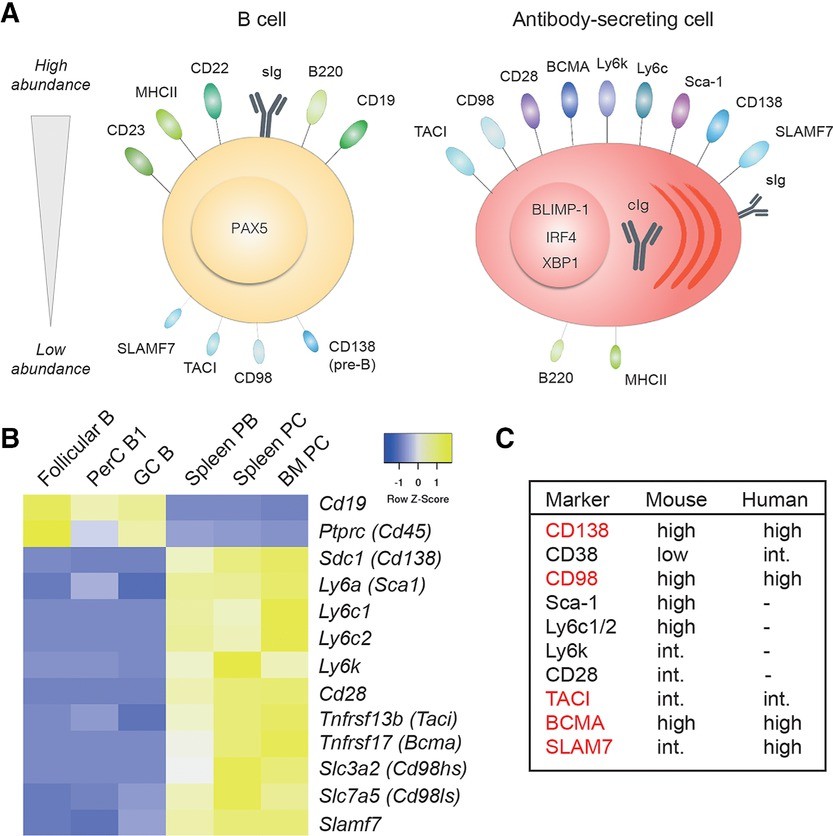 Fig. 1 Markers of murine B cells and plasma cells. (Tellier J, et al., 2017)
Plasma cell markers can be classified into different categories based on their expression patterns and functions.
| Human | |
| Mouse |
Plasma cells, both in mice and humans, can be identified based on specific markers. In both species, plasma cells are commonly characterized as CD19-Syndecan-1/CD138+ cells. Additionally, human plasma cells express high levels of CD38, while mouse plasma cells express Ly6k, CD98, and Sca-1/Ly6, and lose expression of B220/CD45R.
Furthermore, plasma cells in both mice and humans share certain characteristics. They lack expression of IgD and exhibit low levels of MHC class II. On the other hand, they express high levels of CD27, CXCR4, BCMA, and specific transcription factors such as XBP1, IRF4, and BLIMP1.
Plasma cells can be identified by the expression of surface markers CD27 and CD38, as well as transcription factors BLIMP1, XBP1, and IRF4. Various techniques are employed to detect and analyze plasma cell markers, including flow cytometry, immunohistochemistry, and molecular assays. Each method has its advantages and limitations, and the choice of technique depends on the specific research or diagnostic requirements.
Plasma cell markers have widespread applications in clinical research and diagnostics.
Plasma cell markers play a crucial role in the identification, characterization, and monitoring of plasma cells in health and disease. They are invaluable tools in the diagnosis, prognosis, and research of plasma cell disorders. As a leading company in the field of biological research, Creative Diagnostics strives to provide high-quality antibodies meticulously developed to target key markers on plasma cells as well as other reagents for the detection and analysis of plasma cell markers, empowering scientists and healthcare professionals in their pursuit of better understanding and managing plasma cell-related diseases.
Reference
Loading ......
